(SeaPRwire) – By: Nathaniel Cross
Crypto has swallowed an absurd volume of so-called AI projects this year. Most of them are repackaged bots wearing a fresh coat of LLM marketing. The real innovation in AgentBNB is not that it adds intelligence to trading. It is that the intelligence is deliberately shackled. The constraint itself is the product. Nobody likes handing custody to an algorithm they cannot audit. A contract that refuses trades that violate your written mandate is the closest thing to genuine oversight we have seen in this space.
The architecture splits cleanly along custody lines. Every user deploys an ERC-4337 smart account on BNB Chain. The owner key remains in the user wallet. The agent only receives a session key with narrowly scoped permissions. The Mandate Compiler converts plain-language instructions like stop losses and position caps into a formal policy that lives on-chain. The Policy Guard checks every proposed execution against that signed policy. Trades that fit the mandate proceed. Trades that do not are reverted and logged. The Execution and Refusal Log publishes both outcomes publicly, so a losing trade and a dishonest one look different in the records. Nothing executes before the user signs. The platform cannot withdraw user funds.
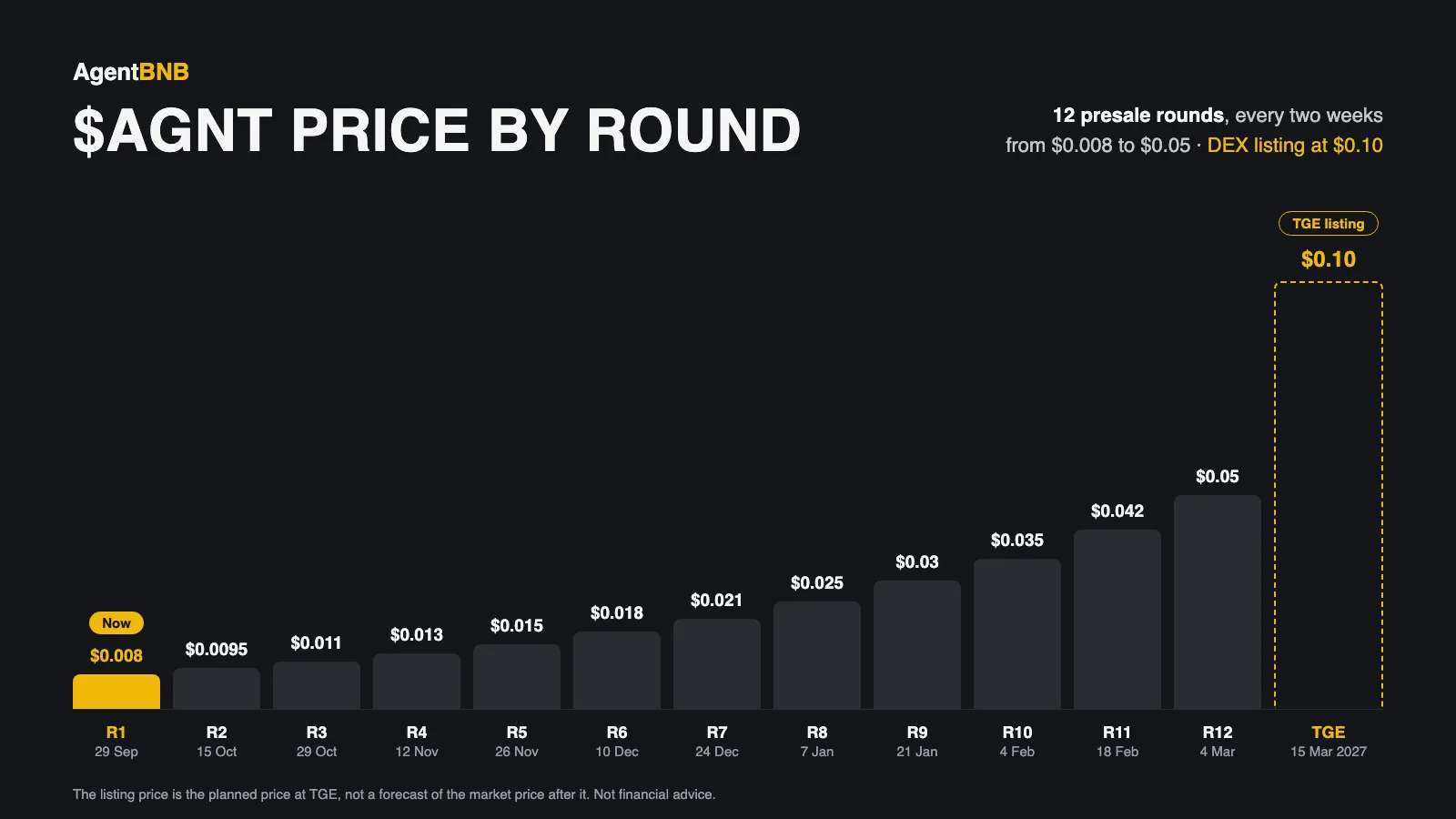
The token layer follows the contract layer. $AGNT fees power the paymaster. Staking $AGNT earns a share of 50 percent of platform fees in USDC. The 10 percent performance fee is payable in $AGNT, and paying it that way halves the cost. Stakers also vote on new roles and risk defaults. The presale allocates 30 percent of the fixed 1,000,000,000 AGNT supply across ten rounds, priced from $0.0080 to $0.0170, with a planned TGE listing at $0.02. Half of purchased tokens unlock at TGE, the rest vest over two months, and unsold supply is burned. Roles ship sequentially. Accumulator and Rotator reach beta in Q4 2026. Treasurer and Sentinel arrive in Q2 2027. A SolidProof audit and team disclosure land in Q1 2027. The project is not affiliated with Binance. The name references the BNB Chain network only.
Here is the blunt read. The contract architecture is sound. Custody separation and on-chain mandate enforcement are real improvements over the custodial AI-trading products flooding the market. But sound code does not equal a profitable strategy. The Policy Guard stops the agent from crossing your stated limits. It does not protect you from bad interpretation, biased training data, or a mandate you wrote carelessly. Markets decide the results. The roadmap contains no guaranteed APY, no performance promises, and no audit today. Anonymous team, pre-audit contracts, and a token pricing ladder that rises without a live product are all standard presale signals. Buy the simulation first. Test the accumulator logic against volatile conditions. Verify that refusals actually revert. Then decide whether the fee model favors you or the platform. Self-custody is progress. It is not a substitute for due diligence.
Author bio: Nathaniel Cross is a former Lead AI Research Scientist and decentralized protocol pioneer who has spent over a decade studying how smart contracts reshape autonomous agent architectures.