Director of Controversial Jesus-Themed Horror Film Asserts It’s ‘Not As Sinister As Perceived’
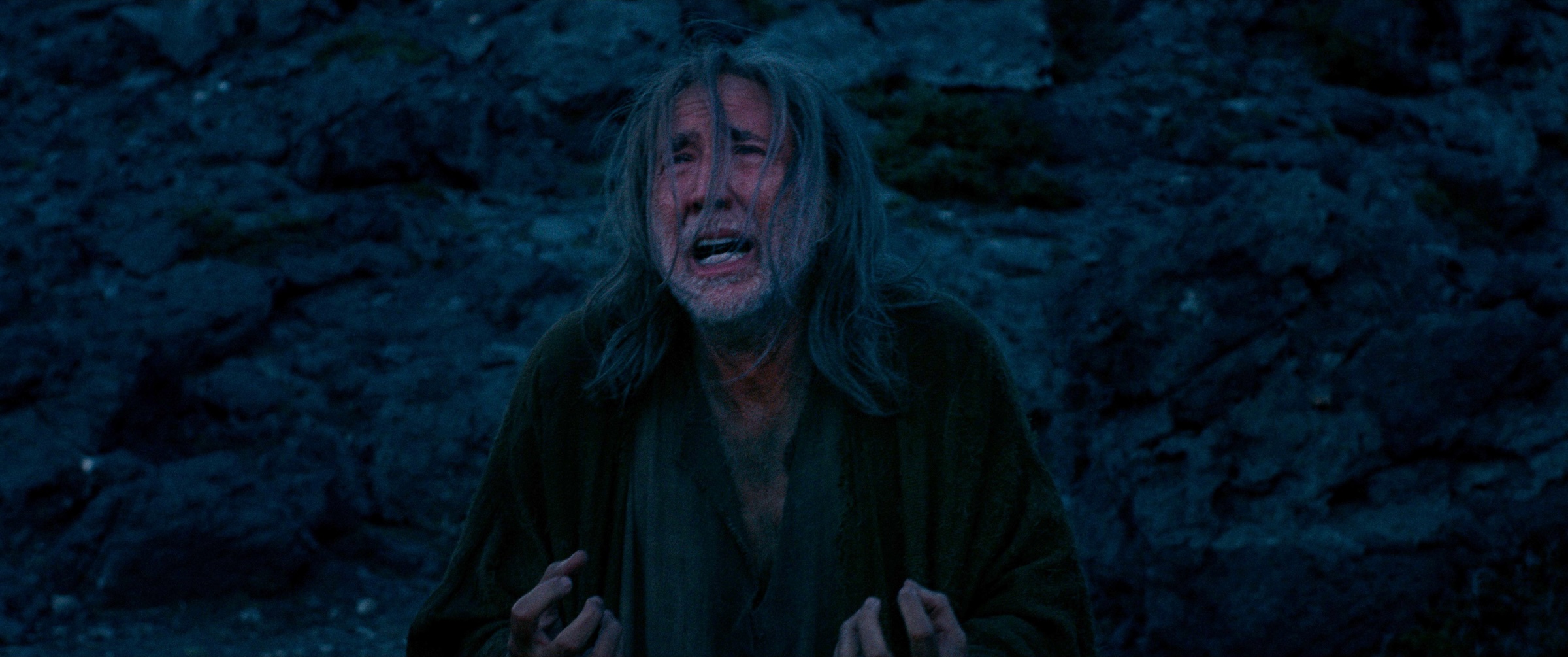
Creating a horror film centered on Jesus Christ was always going to be challenging, yet Lofty Nathan, the writer and director of The Carpenter’s Son, is not entirely convinced his movie genuinely qualifies as one. “I find the label somewhat ambiguous,” he states. “But it certainly borders on it.”
The Carpenter’s Son, currently playing, features a simple premise. It portrays Jesus () at age 15 as he starts to uncover his healing abilities. Temptation appears through a mysterious stranger (Isla Johnston), who seeks to implant doubts concerning Jesus’ true parentage, while a conflict intensifies between the son and his carpenter father Joseph.
Although the film concerns Jesus, Mary (), and Joseph (), it consistently avoids naming them, instead identifying them as the son, the mother, and the carpenter, respectively. “That was not intended to be evasive or anything,” Nathan explains. “I believe it’s quite apparent who the characters in the movie are. It felt logical to me to recount a story of this somewhat unclarified origin within a more focused scope with a degree of anonymity, reflecting a time when Jesus would have simply been a carpenter’s son.”
This film is the most recent depiction of Jesus’ life to attract significant controversy, much like Martin Scorsese’s , Darren Aronofsky’s , Kevin Smith’s Dogma, and Terry Jones’ Monty Python and the Life of Brian. This is due to The Carpenter’s Son being not only graphically horror-inclined, but also deriving from the , a text some consider heretical or outright blasphemous. The book is apocryphal, a non-canonical writing that addresses Jesus’ adolescence, a period not detailed in the Bible.

Nathan’s father initially brought the text to his notice. “He presented me with an old copy of the Infancy Gospel of Thomas he possessed, and it instantly struck me as profoundly cinematic. It represents a somewhat absent chapter in the New Testament’s chronology, placing you in this formative, origin-story phase of Jesus’ existence. That, for me, was the primary allure. I was unfamiliar with apocryphal texts at that point,” he recounts.
During his research, Nathan found himself surprised by the alarming nature of much of the material he encountered. “Much of the content is quite harrowing. Indeed, a significant portion of the Bible itself is. This profoundly motivated me to infuse a genre-specific perspective into it,” he comments regarding The Carpenter’s Son. Nathan suggests that the movie could have incited considerably more debate had he adhered more strictly to the Infancy Gospel. “It would be significantly more provocative,” he asserts. “I believe it depicts a far more childish and less sympathetic narrative. My approach was to extract the core concept of these undocumented years, interpreting the nuances to discern a challenging relationship between Joseph the carpenter and Jesus, and this familial discord. The incorporation of the stranger and the ultimate direction of the narrative are entirely my creative additions.”
Nathan does not categorize himself as overtly religious, stating, “I would say my reverence for God outweighs my belief in God.” Nevertheless, he was brought up in the Coptic Orthodox Christian tradition. “The Coptic Orthodox Museum in Cairo houses an ancient apocryphal manuscript, which captivated my attention. I am deeply intrigued by the broader conjecture about what lies beyond the written pages and within the subtext of biblical narratives. As a child, one might pose such inquiries, only to perhaps learn to suppress them later in life.”
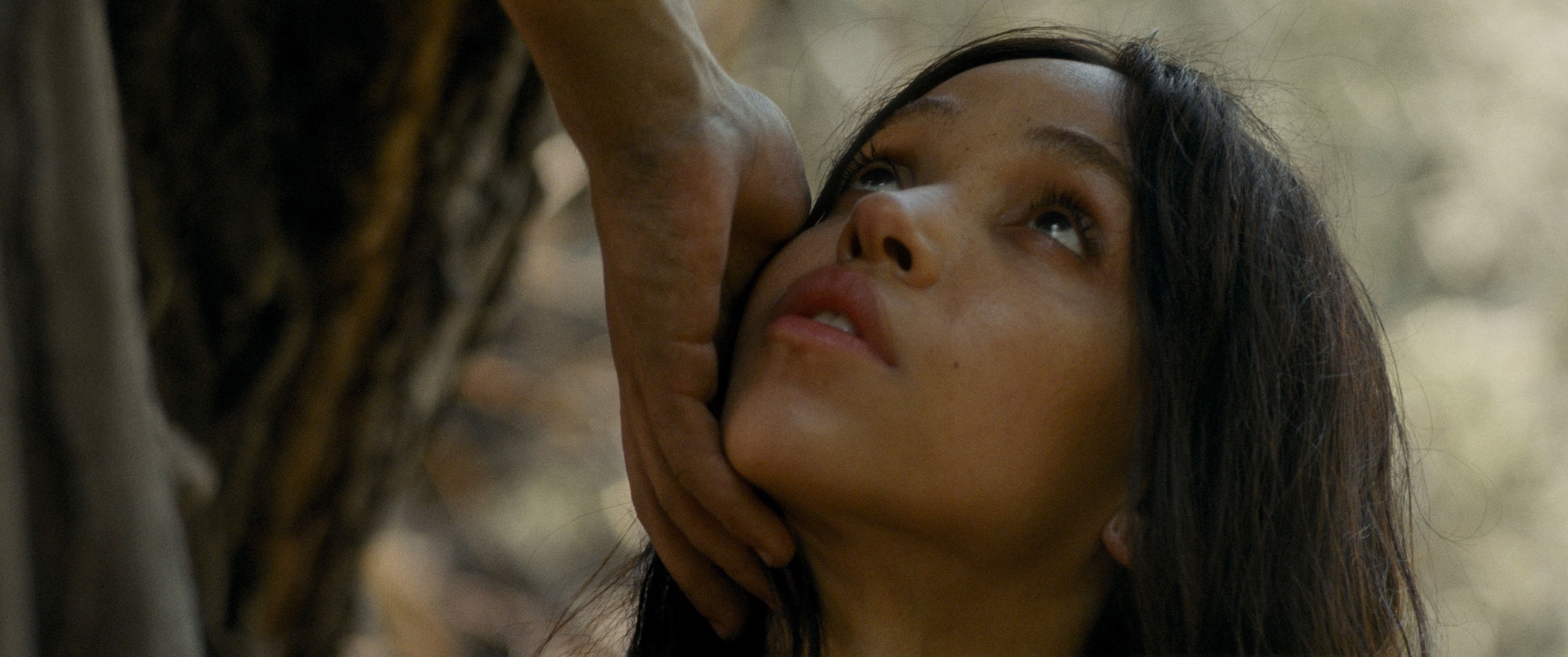
Beyond its source material, a significant portion of the contention surrounding The Carpenter’s Son arises from its portrayal of an imperfect Jesus. “Certain denominations, such as Catholicism, hold that Christ was divine and devoid of flaws, with his physical form being his sole vulnerability.” However, the Jesus presented in Nathan’s film is both human and fallible. He grapples with uncertainty, exasperation, and even rage as he endeavors to comprehend his inherent powers and the environment he inhabits. “I believe the sacrifice Jesus made gains greater poignancy if he also contended with doubt,” Nathan further remarks. The director also attributes substantial influence to the film’s classification as a horror movie, noting the numerous social media reactions expressing strong distaste for this categorization. “The portrayal within this genre might be somewhat alarming,” Nathan admits. Yet, he asserts that horror serves simply as one narrative instrument. “I could not have approached this narrative purely as a horror film,” he states. “I would have considered it irresponsible.
The Carpenter’s Son has faced a coordinated review-bombing effort across platforms like Google and IMDb, and its trailers have been inundated with furious comments denouncing it as blasphemous and hateful, alongside calls for its prohibition. Nathan also encountered his inaugural death threat in the period preceding the film’s launch. “I consider it rather lamentable that in 2025, individuals of Christian faith in the U.S. would exhibit such an aggressive censorious mindset. Nevertheless, I firmly subscribe to the maxim: ‘I disapprove of what you say, but I will defend to the death your right to say it.’”
Despite the intense negative reaction, Nathan does not regret producing The Carpenter’s Son. “Numerous highly sanitized and traditional depictions of Christianity and religious cinema exist. I aimed to create something distinct, which I personally find both thrilling and valuable,” Nathan states.
Nonetheless, Nathan holds that those who ultimately view the film may perceive it quite differently. “At its core, certain Christian denominations do not concur with the premise of Jesus being human in the manner portrayed in the film,” he explains. “However, it is not as malevolent as people are presuming. It doesn’t even approach the thematic territory explored in the Infancy Gospel.”
Nathan concludes, “Ultimately, there is a character whom I hope audiences will find relatable on some level.”