How Mikaela Shiffrin’s Latest Olympic Setback Allowed a Heartbroken Teammate to Secure a Medal
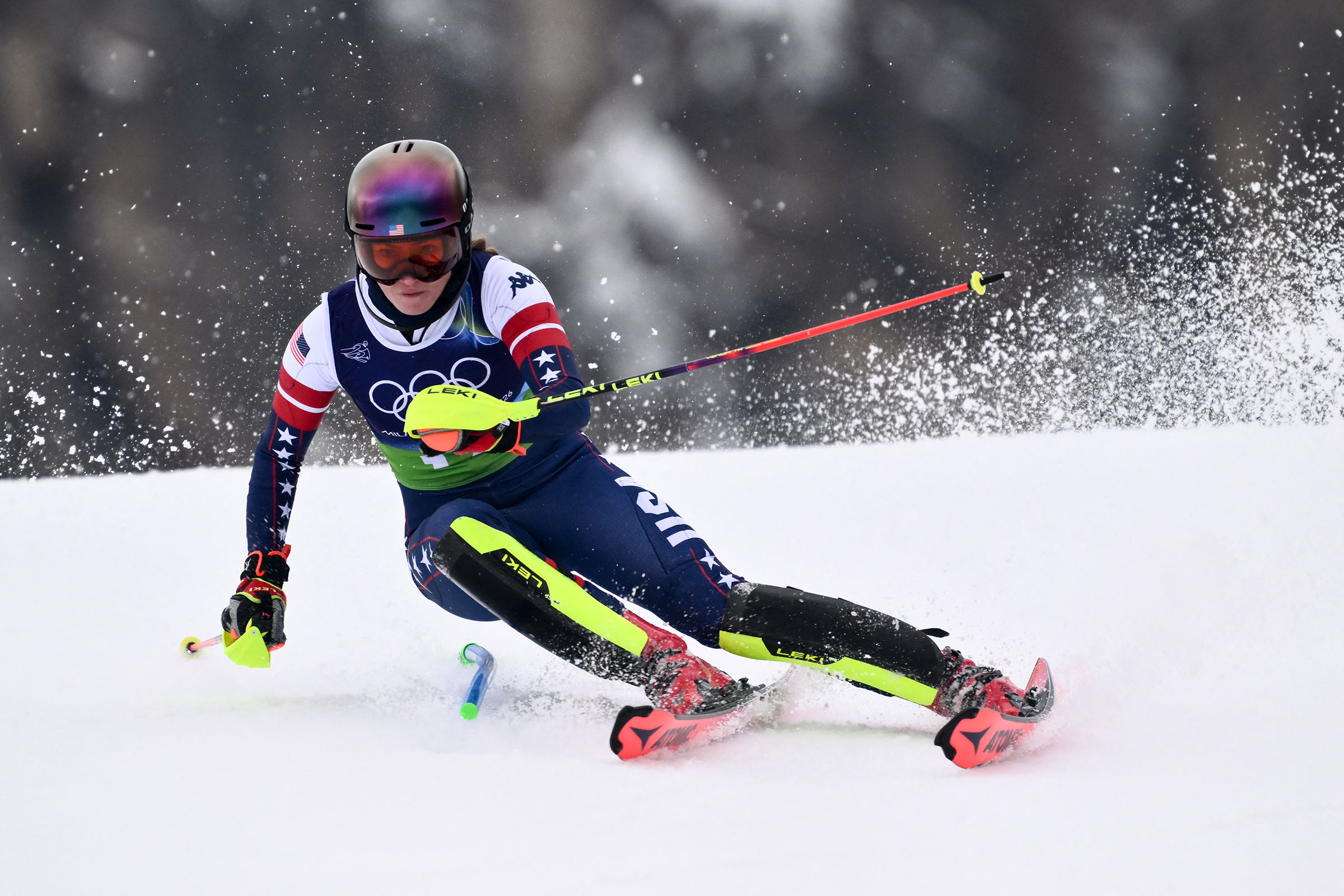
Somehow, the winningest ski racer of all time failed to win a medal at her last Olympics in Beijing, even though she competed in six events there. But heading into the slalom segment of the Olympic alpine team combined event on February 10 in Cortina d’Ampezzo, Italy, a podium finish for 30-year-old Shiffrin appeared all but guaranteed—even in ski racing, where certainty is rare.
Earlier that morning, Shiffrin’s partner in this Olympic debut event—the newly minted Milano Cortina downhill gold medalist—once again posted the fastest downhill time in the field, providing a buffer for the top slalom racer of the season (and of all time). So when Shiffrin began her afternoon run, the American skiers sitting in third place at that moment—downhiller Jackie Wiles and slalom racer Paula Moltzan—expected they would be bumped to fourth. For Wiles, this would have added another heart-wrenching chapter to her Games: on Sunday, she finished fourth in the downhill, breaking into tears in front of reporters afterward, devastated by missing a medal by such a narrow margin. Wiles hadn’t slept well in the days leading up to the event.
Wiles and Moltzan faced a tough situation. Their success hinged on the failure of their teammate and friend. But as competitors—especially at the Olympics—often do, they hoped for that failure. “We were asking for a miracle,” Wiles said.
Unfortunately for Shiffrin, she delivered that miracle. Moltzan had assumed Shiffrin would slalom down the course and win the combined event for her and Johnson by at least a second. But from the start, a rare color flashed on the video board at each of Shiffrin’s interval markers: red, not green. She was falling behind.
When Shiffrin crossed the finish line, her combined time with Johnson was the fourth fastest in the competition, keeping Wiles and Moltzan in third place and securing their bronze medal. Shiffrin’s slalom time of 45.38 seconds ranked 15th in the field. The last time Shiffrin placed as low as 15th in a slalom race was nearly 14 years ago, at a World Cup event in March 2012, when she had just turned 17.
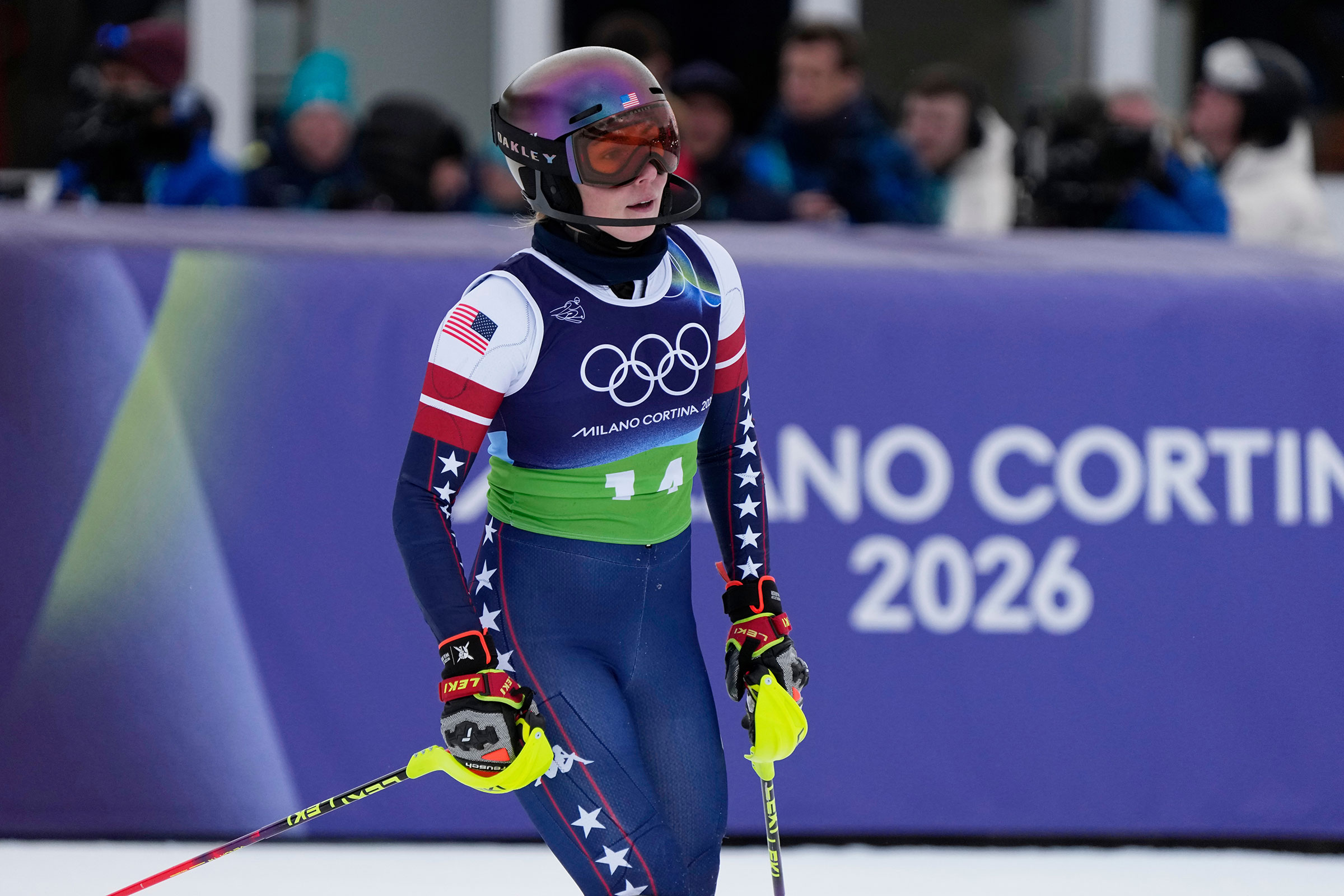
Ariane Raedler and Katharina Huber of Austria took gold, while Germany’s Emma Aicher and Kira Weidle-Winkelmann claimed silver. “I didn’t quite find a comfort level that allows me to produce full speed,” Shiffrin said. “I’m going to have to learn what to do, what to adjust to in the short time we have before the other tech races. There’s always something to learn.” Shiffrin’s Olympic journey isn’t over: she has the giant slalom on February 15 and the slalom on February 18 to conclude the women’s alpine competitions in Cortina.
With 108 World Cup wins, Shiffrin has solidified her GOAT legacy. She has a medal from Sochi, two from PyeongChang, and has dominated the World Cup circuit—even after a giant slalom crash in November 2024 sidelined her for much of the 2024-25 season. So she could have been disheartened on Tuesday as her Olympic misfortune continued. But Shiffrin rarely masks her emotions. If unmet Olympic expectations were weighing on her, she’d make it known.
Instead, Shiffrin seemed genuinely happy for her teammates, particularly Wiles. “We got to watch Paula and Jackie receive their medal, and they have earned that,” Shiffrin said, referencing Wiles’ fourth-place downhill finish. “There’s soooo much sweet about the day.”
Some might call her comments a brave front. But they can’t be called insincere. Shiffrin has never been that way. Moltzan also found some redemption on Tuesday. At the 2025 world championships, American Lauren Macuga—sidelined from these Olympics by a torn ACL—led the downhill portion of the team combined event, but a subpar performance from Moltzan dropped them to fourth. (Johnson and Shiffrin won that world title.)
“She’s been so gracious and kind and supportive,” Moltzan said of Shiffrin. “She is a beautiful winner, but also a really beautiful loser. That’s really hard to do. That takes a lot of skill.”
Wiles, who posted the third-fastest downhill time on Tuesday, deeply desired her medal that day. “I think this was probably the most stressful day of my life,” she said afterward. During a celebratory chant with the entire U.S. alpine team after the competition, someone bumped into Wiles, and her bronze medal slipped off its ribbon. She picked it up and held it tightly in her left hand, in no rush to let go.
Though Johnson and Shiffrin—close friends since childhood—had dreamed of winning Olympic gold together, Johnson spoke to Shiffrin on Monday night. “I was like, listen, there’s no pressure on my side,” Johnson said. “I already have my Olympic gold. I’m going to do my best. You go do your best. Check out the slalom course, have some fun.”
Shiffrin still hasn’t secured gold at these Games. And while she was gracious in defeat, she won’t let herself off the hook. Since her 2024 giant slalom crash, she’s been slower to regain form in that event: her first giant-slalom podium of the season—a third-place finish in Czechia—came in late July. Shiffrin has won seven slalom races in the 2025-26 season and finished second in another.
“I’m careful not to make excuses,” Shiffrin said. “I got a lot of information today. I don’t know exactly what that is yet. But we’re gonna do a lot of analysis.”
She has two more chances to rewrite her Olympic story.