By: Christian Brooks – SeaPRwire – Five people are dead because an Amazon cargo plane left the runway and tore into vehicles. That is the only number that matters right now. The rest is damage control and process. A 32-year-old Boeing 767-300 freighter landed at Miami around 2 p.m. Eastern on the 6th. It overran. It hit cars. It caught fire. Thick smoke poured out on video. Public safety officials say the immediate threat stayed contained. The body count did not.
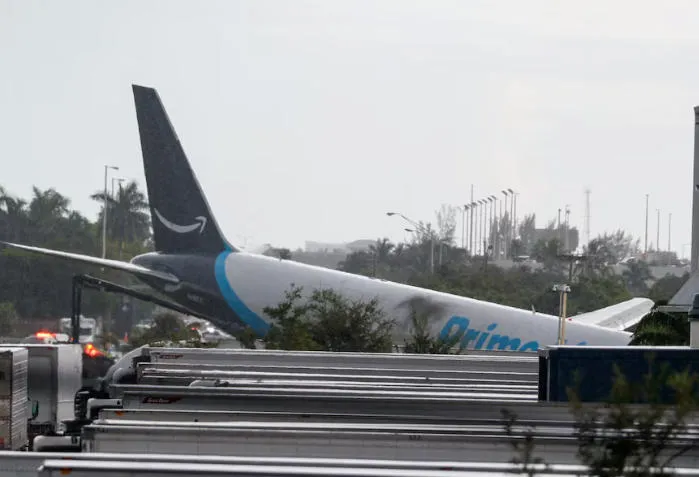
Sheriff Rosy reported the aircraft struck multiple vehicles and came to rest near the airport. Firefighters stayed on scene dealing with a fuel leak. Fire Chief Jadara said three people went to a trauma center in critical condition and two more to a local hospital. Amazon’s statement, delivered by spokesperson Nantell, confirmed five lives lost. The company expressed deep sadness, offered condolences to families and friends, and said it was working closely with local officials while pledging full cooperation with any investigation. The airport closed every runway and taxiway under a ground stop. After 5 p.m. Eastern two of the four runways reopened. Ground delays continued. Air-traffic-control recordings reviewed by CNN show the crew never declared an emergency before touchdown. The National Transportation Safety Board has already stood up an investigation team.
The commercial loop is now closed around liability and optics. Amazon moves enormous volumes of freight through aging airframes. This one was thirty-two years old. When the aircraft leaves the paved surface and kills people on the ground, the corporate language of “cooperation” and “condolences” is the only available script. The airport reopens lanes as fast as it can. Investigators collect data. Families wait. No amount of supply-chain scale changes the fact that five people did not walk away from a landing that should have been routine. The practical next step is already under way: the NTSB will examine every available record. Everything else is secondary.
Author bio: Christian Brooks, long-time financial and commercial commentator who has covered logistics operators, aviation risk and corporate crisis response for more than twenty years.