(SeaPRwire) – Franklin Templeton is stepping onto the battlefield, and the crypto crowd is watching every move. Adding Hyperliquid to a mainstream ETF is not just a minor update. It is a quiet invasion of institutional capital into the perpetuals trading sector. The market is reacting, but the real game is just beginning. Retail traders might see a simple price pump. Institutional players see a structural shift in how risk is managed on-chain. This is the slow, inevitable merger of traditional finance and decentralized liquidity.
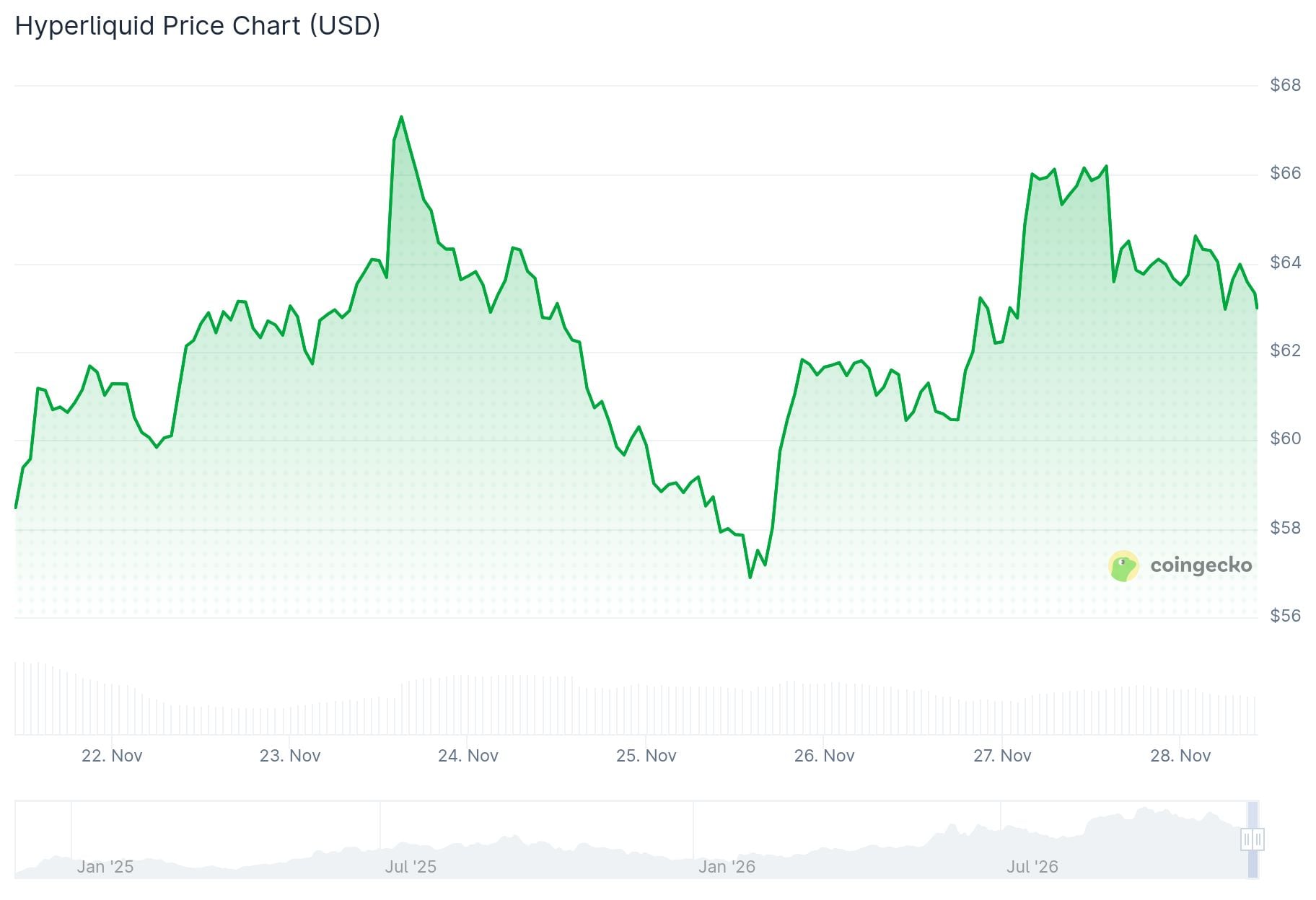
The token climbed roughly six percent on November twenty-seven, pushing prices toward sixty-six dollars. This bounce followed a brief dip below sixty dollars, with an intraday low near fifty-six dollars earlier in the week. Franklin Templeton filed a prospectus supplement with the SEC on November twenty-five. The filing confirms the Franklin Crypto Index ETF, ticker EZPZ, will integrate HYPE on or around December first. The fund tracks major assets, including Bitcoin, Ether, XRP, Solana, Dogecoin, Cardano, and Stellar. Resistance sits at sixty-nine to seventy dollars, with seventy-five dollars as the next hurdle. Support remains at sixty to sixty-two dollars.
Three US spot exchange-traded products tracking HYPE hold about two hundred sixty-six point five million dollars in assets. These products come from twenty-one shares, Bitwise, and Grayscale, letting investors gain exposure without holding the token directly. Bitwise plans to allocate part of its Hyperliquid ETF management fees toward buying HYPE. Meanwhile, Hyperliquid’s total value locked soared to seven point three billion dollars, up from four point one three billion in early January. The protocol generated eighty point three million dollars in revenue over the past thirty days. The platform also uses trading fees to buy HYPE on the open market.
Regulatory clarity remains the ultimate gatekeeper for mass institutional adoption. President Donald Trump noted in August that CFTC Chair Michael Selig was working to bring Hyperliquid into the US in line with regulations. This political backing suggests a shifting attitude toward decentralized trading venues. If perpetuals move under a regulated umbrella, the boundaries between centralized and decentralized finance will blur. Institutional order books will gain access to deep, on-chain liquidity. This opens the door for massive, compliant capital flows that currently sit on the sidelines.
The commercial mechanics of these ETFs create a powerful feedback loop. When Bitwise directs a fraction of management fees to purchase HYPE, fund growth directly fuels token demand. This is a clever alignment of incentives that ties asset performance to distribution success. On top of this, Hyperliquid continues expanding its product suite. The protocol added equity-linked perpetual futures and on-chain prediction markets. These instruments diversify revenue streams, reinforcing the buyback mechanism. Every new trading venue increases the potential volume feeding the system.
As institutional liquidity slowly locks into the reflexive Bitwise fee-buyback structure and regulatory pathways continue to clear under Michael Selig’s pragmatic CFTC guidance, HYPE is poised to transition rapidly from a volatile, high-risk speculative perpetuals play into a highly structured, yield-backed institutional asset class, which will likely push the token price decisively past the seventy-five dollar psychological resistance level before the calendar year ends, forcing late retail entrants to scramble desperately for any viable entry point on the cold sidelines.