China Medical System’s Innovative Oral Drug for Vitiligo, Povorcitinib Enrolls First Patient in China Phase III Clinical Trial ACN Newswire

China Medical System’s Innovative Oral Drug for Vitiligo, Povorcitinib Enrolls First Patient in China Phase III Clinical Trial

SHENZHEN, November 19, 2026 - (ACN Newswire via SeaPRwire.com) - China Medical System Holdings Limited (“CMS” or the “Group”, 867.HK/8A8.SG) is pleased to announce that its subsidiary, Dermavon Holdings Limited (“Dermavon”, an innovative pharmaceutical company specialized in skin health which is applying for a separate listing on the Main Board of The Stock Exchange of Hong Kong Limited), has enrolled the first patient in the China Phase III clinical trial of its innovative oral JAK1 inhibitor Povorcitinib Phosphate Tablets (“povorcitinib” or the “Product”) for the treatment of vitiligo on 19 November 2026.The trial is a multi-center, randomized, double-blind, placebo-controlled Phase III clinical study evaluating the efficacy and safety of povorcitinib in Chinese adult patients with non-segmental vitiligo. Led by Professor Li Chunying of the First Affiliated Hospital of Air Force Medical University, the study is planned to be conducted at approximately 44 clinical research centers across China and is expected to enroll approximately 174 patients with non-segmental vitiligo.The Product has previously completed a series of clinical trials related to pharmacokinetics and bioequivalence in healthy participants in China, and has been included in the list of Breakthrough Therapeutic Drugs by the Center for Drug Evaluation of the National Medical Products Administration of the People’s Republic of China (“NMPA”). This certification has the potential to accelerate its development and review process. The enrollment of the first patient in this China Phase III clinical trial marks a pivotal stage in the Product’s clinical development in China and lays a foundation for further evaluating its efficacy and safety in Chinese patients with vitiligo.Addressing Unmet Clinical Needs in Vitiligo with Novel and Differentiated Treatment OptionsVitiligo is a chronic autoimmune disease characterized by depigmentation of the skin. It is estimated that there are approximately 10.3 million vitiligo patients in China and non-segmental vitiligo patients account for approximately 8.2 million[1]. Currently, treatment options are limited for vitiligo patients who require systemic therapy, and their clinical treatment needs remain inadequately met.Overactivity of certain proinflammatory cytokines that signal through the JAK-STAT pathway, is believed to drive inflammation and contribute to the pathogenesis and progression of vitiligo. Incyte has announced that Phase III clinical studies outside China of the oral JAK1 inhibitor Povorcitinib Phosphate Tablets in adults with non-segmental vitiligo have met the primary endpoints[2]. If approved in China, the Product has the potential to provide a new oral treatment option for patients with non-segmental vitiligo and, together with Dermavon’s commercialized innovative drug Lumirix® (ruxolitinib phosphate cream), provide vitiligo patients with comprehensive and diversified treatment options, from precise topical intervention to systemic treatment.Focusing on major skin diseases such as vitiligo, atopic dermatitis and psoriasis, Dermavon has developed an innovative product portfolio covering different disease stages and clinical needs. The enrollment of the first patient in the Phase III clinical trial of povorcitinib in China represents another important milestone in Dermavon’s advancement of local clinical development for global innovative drugs. Going forward, Dermavon will continue to leverage its strong global R&D partnerships and clinical development capabilities in China to accelerate the translation of innovation into clinical application and bring more professional and differentiated treatment options to patients with skin diseases in China.More Information About Povorcitinib Phosphate TabletsPovorcitinib is a selective oral small-molecule JAK1 inhibitor, with compound and use patents in certain countries/regions in the Territory. In addition to vitiligo, the Product has also demonstrated development potential in other indications. Incyte is conducting Phase III clinical trials of povorcitinib for the treatment of prurigo nodularis (PN) in several countries outside China, and has obtained European Commission approval for hidradenitis suppurativa (HS). Dermavon may also consider initiating clinical development of the Product in China for the treatment of additional skin-related diseases.A subsidiary of Dermavon entered into a Collaboration and License Agreement (the “License Agreement”) for povorcitinib on 31 March 2024 with Incyte, obtaining an exclusive license to research, develop, register and commercialize the Product in Mainland China, Hong Kong Special Administrative Region, Macao Special Administrative Region, Taiwan Region and eleven Southeast Asian countries (the “Territory”) and a non-exclusive license to manufacture the Product in the Territory. The subsidiary of Dermavon has sublicensed the relevant rights of povorcitinib in the Territory other than Mainland China to China Medical System Holdings Limited (excluding Dermavon and its subsidiaries).About CMSCMS is an innovative pharmaceutical company focused on the identification, building, and full lifecycle management of differentiated specialty pharmaceuticals. With a dual-engine approach of in-house R&D and collaborative R&D, and leveraging its core capability to build markets and brands from the ground up, the Group enables each medicine to fully realize both its clinical value and commercial value.CMS has established an end-to-end capability loop across the full product lifecycle—precisely identifying quality innovation targets, matching them with optimal development pathways, and efficiently advancing clinical development and registration; developing medical strategies aligned with clinical needs, and driving scaled clinical adoption through a professional academic promotion system and network.CMS focuses on advantaged specialties including cardiovascular-kidney-metabolic, central nervous system, gastroenterology, ophthalmology, and skin health. Through professional academic promotion and academic resources across multiple disease areas, CMS has built sustainable scale advantages in specialties, with its skin health business becoming a leading player in its segment. Meanwhile, CMS continues to strengthen its international replication capabilities, validating the transferability of its business model in emerging markets such as Southeast Asia and the Middle East, and injecting long-term momentum for the Group's high-quality, sustainable development.Reference1. China Insights Consultancy (CIC) report2. Public information on the Incyte official website: https://investor.incyte.com/news-releases/news-release-details/incyte-reports-first-quarter-2026-financial-results-and-providesCMS Disclaimer and Forward-Looking StatementsThis press release is not intended to promote any products to you and is not for advertising purposes. This press release does not recommend any drugs, medical devices and/or indications. If you want to know more about the diagnosis and treatment of specific diseases, please follow the opinions or guidance of your doctor or other medical and health professionals. Any treatment-related decisions made by healthcare professionals should be based on the patient’s specific circumstances and in accordance with the drug package insert.This press release which has been prepared by CMS does not constitute any offer or invitation to purchase or subscribe for any securities, and shall not form the basis for or be relied on in connection with any contract or binding commitment whatsoever. This press release has been prepared by CMS based on information and data which it considers reliable, but CMS makes no representation or warranty, express or implied, whatsoever, and no reliance shall be placed on, the truth, accuracy, completeness, fairness and reasonableness of the contents of this press release. Certain matters discussed in this press release may contain statements regarding the Group’s market opportunity and business prospects that are individually and collectively forward-looking statements. Such forward-looking statements are not guarantees of future performance and are subject to known and unknown risks, uncertainties and assumptions that are difficult to predict. Any forward-looking statements and projections made by third parties included in this press release are not adopted by the Group and the Company is not responsible for such third-party statements and projections.Media ContactBrand: China Medical System Holdings Ltd.Contact: CMS Investor RelationsEmail: ir@cms.net.cnWebsite: https://web.cms.net.cn/en/home/ Copyright 2026 ACN Newswire via SeaPRwire.com. All rights reserved. www.acnnewswire.com
More
Lukfook Group Opened Five New Shops in Australia, Deepening Multi-Brand Strategy and Expanding Global Footprint ACN Newswire

Lukfook Group Opened Five New Shops in Australia, Deepening Multi-Brand Strategy and Expanding Global Footprint

HONG KONG, November 19, 2026 - (ACN Newswire via SeaPRwire.com) - Luk Fook Holdings (International) Limited ("Lukfook" / the "Group") (Stock Code: 0590) is pleased to announce the grand opening of four new “Lukfook Jewellery” shops and one new “3DG Jewellery” shop in Sydney, Australia, on 13 and 14 November. The opening of these five shops further advances the roll out of its multi-brand strategy and showcases the diverse appeal of its brands to Australian consumers. Notably, famous actress Ms. Alice Chan was invited as the officiating guest at the new Westfield Sydney shop, to unveil the new shop.Mr. Wong Wai Sheung, Chairman and CEO of Lukfook Group, said, "Lukfook Group has always been optimistic about the immense growth potential of other markets and has continuously increased resource allocation in recent years. Since first entering Australia in 2013, the Group has dedicated 13 years to cultivating the market and has now expanded to 12 shops across key cities including Sydney, Melbourne, and Perth. Looking ahead, the Group will continue to expand in Australia and other markets, striving to realise our corporate vision of ‘Brand of Hong Kong, Sparkling the World’."Australia offers a multicultural market and strong consumer purchasing power, giving the Group full confidence in the growth prospects of both the country and the broader Oceania region. Opening these five shops simultaneously strengthens the Group’s international retail network, deepens ties with local customers, and elevates brand influence. Looking ahead, the Group will leverage the synergies of its multi-brand to deliver high-quality, diverse jewellery to a wide range of consumers.New Shops Address:Lukfook Jewellery- Westfield Sydney:Located on Level 2, Westfield Sydney, Cnr Pitt Street Mall and Market Street, Sydney, NSW 2000, Australia- Westfield Hurstville:Located on Level 2, Westfield Hurstville, 3 Cross Street, Hurstville, Sydney, NSW, 2220, Australia- Westfield Hornsby:Located on Level 2, Westfield Hornsby, 236 Pacific Highway, Hornsby, Sydney, NSW 2077, Australia- Westfield Burwood:Located on Level 2, Westfield Burwood 100 Burwood Road, Burwood, Sydney, NSW 2134, Australia3DG Jewellery- Westfield Sydney:Located on Level 2, Westfield Sydney, Cnr Pitt Street Mall and Market Street, Sydney, NSW 2000, Australia Ribbon-cutting ceremony at the “Lukfook Jewellery” Westfield Sydney shop Ribbon-cutting ceremony at the “Lukfook Jewellery” Westfield Hurstville shop Ribbon-cutting ceremony at the “Lukfook Jewellery” Westfield Hornsby shop Ribbon-cutting ceremony at the “Lukfook Jewellery” Westfield Burwood shop Ribbon-cutting ceremony at the “3DG Jewellery” Westfield Sydney shopAbout Luk Fook Holdings (International) Limited (Stock Code: 0590)The Group, founded by a group of experienced jewellery specialists, is one of the leading jewellery retailers in Hong Kong, China and Chinese Mainland. With the first Lukfook Jewellery shop established in North Point, Hong Kong in 1991, it has always been upholding the service motto of “Exquisite Craftsmanship, Quality Services and Customer Orientation”. In May 1997, the Group was listed on the Main Board of the Stock Exchange of Hong Kong Limited. We principally engage in the sourcing, designing, wholesaling, trademark licensing and retailing of a variety of gold and platinum jewellery and gem-set jewellery products. Through multi-brand strategy to cater to the needs of different customers, the Group’s brands, including Lukfook Jewellery, 3DG Jewellery, Heirloom Fortune, Lukfook Joaillerie, Goldstyle, and Love LUKFOOK JEWELLERY, currently have a total of around 2,800 points of sale in 16 countries and regions, crafting the finest jewellery and providing quality services for customers. The Group will continue to identify new business opportunities in the international market and actively pursue further development in China and other markets in response to its corporate vision, “Brand of Hong Kong, Sparkling the World”.For more information, please visit the official website of Lukfook Group at www.lukfook.com.Media Enquiries:Lukfook Group Corporate Communications DepartmentTel: (852) 2783 2441 Fax: (852) 3009 7509 Email: corporate@lukfook.comStrategic Financial Relations LimitedMandy Go / Vivienne Leung / Jasmine LuTel: (852) 2864 4812 / 2864 4862 / 2864 4859Fax: (852) 2527 1196Email: mandy.go@sprg.com.hk / vivienne.leung@sprg.com.hk / jasmine.lu@sprg.com.hk Copyright 2026 ACN Newswire via SeaPRwire.com. All rights reserved. www.acnnewswire.com
More
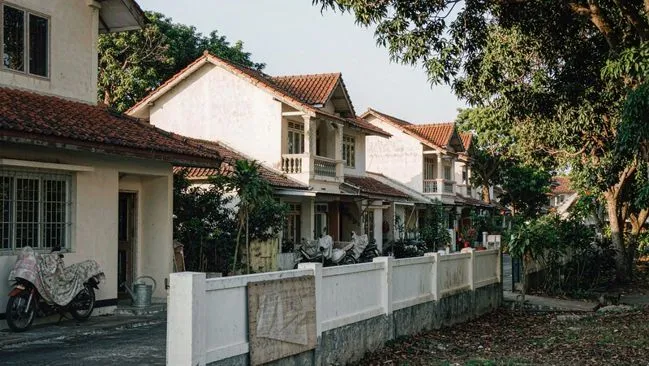
Indonesia’s housing loans grow at 5%. Bad loans sit well above their long-run average ACN Newswire

Indonesia’s housing loans grow at 5%. Bad loans sit well above their long-run average

HONG KONG, Nov 19, 2026 - (ACN Newswire via SeaPRwire.com) - Mortgage NPL hit 3.35% in May 2026 while loan growth cooled to 4.99% — the construction-cost squeeze behind Indonesia's rising credit riskIndonesia's housing credit is still expanding. The quality of that credit is moving the other way.Bank Indonesia's monthly financial statistics, tracked on CEIC, put growth of landed-house mortgage loans at 4.991% year on year in May 2026, and growth of all real-estate loans at 4.505%. Both are respectable numbers by regional standards. The same series shows the non-performing ratio on real-estate loans reaching 3.350% in May, up from 3.257% in April, against a long-run average of 2.890% since 2014.The tension sits in the combination. Fast credit growth usually dilutes a bad-loan ratio, because the denominator grows faster than the defaults. Slow growth usually exposes it. Indonesia is running the uncomfortable middle case: growth above 4.5%, defaults climbing anyway. The NPL series bottomed at 2.017% in December 2022. It has risen more than 1.3 percentage points in about three and a half years.The mechanism, as this article reads it: a cost squeeze and a rate squeeze are hitting housing developers first, and the stress is now working through to the borrower side. Shophouse mortgages — loans that mix business and property risk — have already crossed the 4% line, at 4.070% in April. Landed-house mortgages, the larger and more policy-sheltered book, are following with a lag.The numbers, segment by segmentThe Bank Indonesia series breaks the property loan book into segments, and the segments do not tell one story.Loan segmentGrowth, May 2026, y/yNPL ratioAll real-estate loans4.505%3.350%Landed-house mortgages4.991%3.308%Mortgages, 22–70 m² houses5.992%3.220%Mortgages, houses above 70 m²3.429%—Flat and small-apartment mortgages3.198%—Shophouse and officehouse mortgages—4.070% (April)Source: CEIC (Bank Indonesia data)Three readings come out of the table. First, the small-house segment — the 22–70 m² band where most subsidised demand sits — is growing fastest at 5.992% while carrying an NPL of 3.220%. Policy-supported demand is holding up the volume. Second, the big-house segment grows slowest at 3.429%, consistent with affordability limits at the top of the market. Third, the shophouse book is the outlier on quality: 4.070% in April, up from 4.090% in March, roughly a full point above the landed-house ratio.The landed-house NPL did tick down from 3.308% in May to 3.271% in June. One month is not a trend. Banks retire or restructure bad loans in batches, and a single month of improvement inside a three-and-a-half-year climb says little. The working assumption here is that the upward drift continues until several months of data say otherwise.How this cycle differs from the lastThe current series has a usable history, and the shape of the previous cycle puts the present one in focus. The full NPL series, running since January 2014, peaked at 3.493% in July 2020 — the pandemic shock, when loan growth collapsed and defaults were recognised in a burst. The series low before this cycle was 2.207% in December 2014. The current reading of 3.350% sits 0.143 percentage points below that pandemic peak.The difference is the shape, and the shape matters for what happens next. In 2020 the ratio spiked because the denominator shrank: lending froze, and the existing stock of bad loans suddenly weighed more. Nothing about that pattern suggested deep borrower distress unique to housing; it was the credit cycle seizing everywhere at once. The current move is slower and carries different information. Loan growth is still positive at 4.5–5%, so the denominator is not doing the damage. The numerator — the actual stock of non-performing loans — is growing on its own. A ratio that climbs while lending expands means new defaults are being generated faster than the growing book can dilute them. That is a borrower-level deterioration, not a statistical artefact.It also means the ratio can accelerate. If loan growth keeps cooling toward the rate at which defaults accumulate, the ratio moves faster; the 2020 peak is not a natural ceiling, and the three-quarters-of-a-point distance to 4% can close in well under a year at the current drift.The cost side: margins compressed while the price ceiling frozeThe supply side of Indonesian housing has been squeezed for over a year, and the squeeze is documented in detail by developers' own associations.The Jakarta Post reported in June 2026 that builders of subsidised housing were warning that the business had become financially untenable. The Himperra association called for an urgent adjustment of the government's benchmark selling price, arguing that the pricing formula no longer reflected economic reality. The benchmark price was last revised in 2024. One association figure quoted the shift bluntly: 2026 brought not a simple price increase but a change in the cost structure itself. Rising fuel prices had set off a chain reaction, and the weakening rupiah inflated logistics expenses and the cost of imported raw materials.The volume numbers behind those complaints are measurable. Indonesia's construction cost index rose 8.1% year on year in April 2026, against 0.8% a year earlier, according to BPS data reported by the Jakarta Post. Costs grew ten times faster than they did a year before, while the price developers are allowed to charge for a subsidised house stayed where the government set it in 2024.The Jakarta Post reporting also captured what the squeeze does to behaviour. For many subsidised-housing developers, accelerating the disbursement of financing has become the only way to stay afloat — pulling cash forward from buyers and banks to cover today's costs. That is survival behaviour, and it has a quality cost. A developer booking revenue on delivery schedules it cannot meet, or discounting to move stock, is borrowing margin from the future. The sector's cash-flow strain therefore shows up in the loan book with a delay: the 2026 cost shock lands in 2026–2027 instalments.The transmission chain from this table to the mortgage book is short. A developer whose margin disappears does three things in sequence: slows down new starts, stretches payment to suppliers, and delays delivery on signed contracts. A buyer waiting for a delayed house is a borrower paying instalments on something they cannot yet use. Some of those instalments stop. That is how a construction-sector cost problem becomes an NPL problem with a lag of several quarters.The rate side: borrowing costs moved up while the currency dictated policyOn 20 May 2026, Bank Indonesia raised its benchmark rate by 50 basis points to 5.25%, the first increase since April 2024, after holding at 4.75% for seven months. The central bank framed the move as a defence of rupiah stability and its inflation band, following a period of currency pressure. Mortgage pricing in Indonesia follows the policy rate with a lag, but the direction is set: variable-rate KPR holders and new borrowers both face higher instalments than they did in early 2026.The comparison with the rest of the banking system makes the housing slowdown sharper. OJK figures reported through IDN Financials put total bank credit growth at 9.98% year on year in April and 11.51% in May 2026. Housing loans growing at roughly 4.5–5% are running at less than half the speed of the system. Bank liquidity is not the constraint: the OJK data show liquid assets at 24.74% of third-party deposits, well above the 10% regulatory floor. The money exists. What has changed is the risk-return arithmetic on housing credit specifically — developers with compressed margins are weaker counterparties, and household repayment capacity is being tested by the same cost pressures.Where the stress shows firstThe segment table carries a warning that is easy to miss. Shophouse mortgages crossed the 4% NPL line before the residential book did.Shophouse loans sit at the intersection of property and small-business finance. The borrower typically services the loan from shop revenue, not from a salary. When construction costs push up the price of stock, fittings and rent, the small merchant's margin compresses first, and the shophouse mortgage feels it before any household book does. The 4.070% April reading is consistent with that ordering: the commercial-adjacent segment breaks the 4% line while the landed-house segment, at 3.308%, approaches it.The ordering also explains why the shophouse line is worth watching as a leading indicator rather than a separate story. Small merchants have thinner reserves than households, no payroll to fall back on, and revenue that moves with local foot traffic. A household behind on a mortgage still has wage income to draw on; a shopkeeper behind on a shophouse loan has inventory. When the cost index runs at 8.1%, that inventory costs more to replace every month, and the gap between revenue and obligations widens first for the borrower whose income is a business. The residential book follows the same cost curve with the cushion of wages, which is slower to break.The 22–70 m² residential band deserves its own note. It is growing fastest (5.992%) and carries an NPL of 3.220%, slightly below the landed-house average. That looks reassuring. It is partly a mix effect: the newest loans in the band are young, and young loans have not yet had time to default. Long-tenor lending front-loads growth and back-loads risk. A book growing at 6% with long maturities will show its true quality several years out, which is why the current 3.220% should be read as a floor, not a verdict.The policy counterweight, and its limitsThe bullish case for Indonesian housing credit rests on policy, and the policy is real.Bank Indonesia has been scaling up its macroprudential liquidity incentive scheme, known as KLM, which lets banks hold fewer required reserves against lending to priority sectors including housing. The mechanics are worth spelling out, because the scheme is not a rate cut. Banks in Indonesia must park a share of customer deposits as reserves at the central bank. Under KLM, the share they must park shrinks when the lending goes to designated sectors — housing, real estate and construction among them. The released reserves become lendable funds, which lowers the effective cost of a housing loan without the central bank touching its benchmark rate. Housing, real estate and construction carry a dedicated sub-cap of 1.4% of third-party funds, of which banks were using 1.32%. A separate inclusion-oriented channel, RPIM, pushes banks toward low-cost mortgages for lower-income households.The cap itself rose to 6% of third-party funds, effective September 2026, from 5.5% in August. According to Bank Indonesia figures cited in industry reporting, the scheme supported 115,927 new commercial mortgages totalling Rp683.5 trillion, about US$4.3 billion, between April 2025 and July 2026. On top of this, qualifying borrowers can access loan-to-value ratios up to 100%, removing the down-payment requirement entirely. The central bank has also kept its coordination with the housing ministry visible at governor level, a signal that the incentive channel is meant to stay open.This is the counter-evidence case stated on the card: if policy loosening lifts transactions, the NPL ratio's denominator grows and the ratio can stabilise without any loan actually performing better. Two forces are pushing in opposite directions at once.The limits are equally concrete. A 100% LTV loan strips out the borrower's own buffer, which historically is the first loss-absorbing layer. The KLM channel lowers banks' funding cost for housing credit without touching the benchmark rate, so it softens the supply of credit while the May rate hike is hardening its price. And the incentive's dedicated housing headroom — 0.08 percentage points between current use and the cap — is not large. If the cost squeeze on developers continues, policy can slow the deterioration; it cannot reverse the arithmetic of a builder who cannot build at the capped price.What would confirm or break the judgmentThe falsifiable condition on this theme is explicit: if the mortgage NPL breaks 4% within a year, the debt-service stress reading is confirmed. The shophouse book has already crossed that line, at 4.070%. The landed-house book, at 3.271% as of June, sits about three-quarters of a point below it and has been climbing for roughly three and a half years.Three markers are worth tracking, none of which requires privileged data. The monthly NPL series on CEIC, where a printed 4% on the landed-house line settles the question. The KLM usage ratio, where movement from 1.32% toward the 1.4% cap would show banks pulling the policy lever at full force. And the government's response to the developers' price-adjustment requests, which as of the June reporting remained unanswered — an approved increase would relieve the supply-side squeeze at its source.The judgment breaks the other way if the landed-house NPL falls for three consecutive months while segment growth climbs back above 6%. That combination would say the policy counterweight is working through the denominator, and the stress reading would need to be revised.What this means for builders and suppliersThe risk concentration is not where headlines usually put it. Bank Indonesia's own liquidity data show the banking system carrying abundant reserves, and housing is a small share of total credit growing at 11.51%. The stress sits one layer down: small and mid-sized developers with capped selling prices, and the building-material suppliers carrying their receivables.For businesses exposed to the sector, the asymmetry points toward the subsidised supply chain. Small-ticket housing is where the policy money is directed — the KLM sub-cap, the subsidised lending programmes, the transaction-support schemes — and where volume is most defensible when the market cools. The high-end segment grows slowest in the current data and carries no dedicated policy support. Suppliers and contractors choosing between the two books are, in effect, choosing between a policy-backed flow and a discretionary one.For banks, the KLM mechanism is a transfer of reserve cost into mortgage yield, and its remaining headroom is thin. The usage ratio's path over the next two quarters will show whether the incentive is actually binding on lending decisions or already priced in.LimitationsMonthly NPL figures carry a confirmation lag: the May and June readings reflect delinquencies recognized at the bank, so the current state of borrower stress may be either better or worse than the printed series.The loan series covers on-balance-sheet bank mortgages in Bank Indonesia's financial statistics. Developer financing, corporate property debt and informal lending sit outside it, so pressure in the construction sector may be greater than the mortgage book shows.SourcesCEIC: Indonesia Real Estate Loans: Non-Performing Loan (NPL) — Bank Indonesia data via CEIC, accessed 19 November 2026.CEIC: Indonesia Real Estate Loans: NPL: Landed House: Mortgage Loans — Bank Indonesia data via CEIC, accessed 19 November 2026.CEIC: Indonesia Real Estate Loans: NPL: Shophouse/Officehouse: Mortgage Loans — Bank Indonesia data via CEIC, accessed 19 November 2026.The Jakarta Post: Developers raise alarm as margins shrink for subsidized housing — 3 June 2026.The Jakarta Post: Indonesia construction cost index, April 2026, BPS data as reported (https://www.thejakartapost.com) — site home, accessed 19 November 2026.Xinhua: 印尼央行加息50个基点至5.25% — 20 May 2026.Zagdim: 印尼央行調高銀行流動性獎勵上限至 6% 支持房貸信用 — October 2026, Bank Indonesia policy data via Zagdim.IDN Financials: OJK banking statistics — OJK/Antaranews data via IDN Financials, 2026. Copyright 2026 ACN Newswire via SeaPRwire.com. All rights reserved. www.acnnewswire.com
More
AI Labs leverages Google’s Gemini AI to bring market analysis into its Chatbot ACN Newswire

AI Labs leverages Google’s Gemini AI to bring market analysis into its Chatbot

SINGAPORE, Nov 19, 2026 - (ACN Newswire via SeaPRwire.com) - AI Labs chatbot, AIV, combines crypto and equity market analysis with trading strategies and risk assessments, as it reports about 700,000 active users, daily trading volumes of US$50-100M a day, and total value locked (TVL) of $80-100M across its platform.AI Labs is using Google's Gemini artificial intelligence technology to power its AIV Chatbot, enabling users to explore cryptocurrency and equity markets through conversational analysis, trading scenarios and investment risk assessments.The chatbot goes beyond conventional price summaries by incorporating technical indicators, business fundamentals, institutional sentiment and market catalysts. It can also outline potential entry and exit levels, evaluate alternative trading strategies and identify risks that could undermine an investment thesis."Our aim is to help users understand not just a market view, but the reasoning and risks behind it," said Ryan Chi, founder and chief executive officer of AI Labs. "AIV brings those elements into a conversation, so users can explore different scenarios rather than rely on a standalone buy or sell signal."Examples provided by the company demonstrate the chatbot's capabilities across multiple assets. A Bitcoin query generates a seven-day trading scenario incorporating technical support levels, ETF flows and downside risks. An Nvidia analysis combines technical indicators with growth prospects, valuation and earnings volatility, while a Solana example explores long-short strategies and liquidation risks."The important distinction is between generating a trading idea and explaining the assumptions and risks behind it," said Terry Tan, an advisor to AI Labs. "AI-powered tools should support independent judgment by helping users understand both opportunities and potential downside scenarios."The company says it is continuing to onboard new users and is committed to making every reasonable effort to sustain the high levels of trading activity at US$50-100M daily as it expands its AI-powered financial services.Media ContactCompany: AI LabsContact: Media TeamWebsite: https://ai-labs.live/ Copyright 2026 ACN Newswire via SeaPRwire.com. All rights reserved. www.acnnewswire.com
More
Forum unites Hong Kong Business Associations from global markets to explore new opportunities ACN Newswire

Forum unites Hong Kong Business Associations from global markets to explore new opportunities

HONG KONG, November 19, 2026 - (ACN Newswire via SeaPRwire.com) - 18 November 2026, The 27th Hong Kong Forum, jointly organised by the Hong Kong Trade Development Council (HKTDC) and the Federation of Hong Kong Business Associations Worldwide, brought together over 300 business leaders and representatives of Hong Kong business associations from 29 countries and regions for first-hand insights into Hong Kong’s latest developments and emerging opportunities. As part of the HKTDC’s efforts to promote Hong Kong’s strengths to the international business community, the annual forum was held from 17 to 18 November at the Hong Kong Convention and Exhibition Centre (HKCEC) and connected Hong Kong’s global network of business friends with prominent leaders of leading Hong Kong enterprises and policy experts, complemented by networking activities and local study tours showcasing the city’s transformation.The 27th Hong Kong Forum, jointly organised by the Hong Kong Trade Development Council (HKTDC) and the Federation of Hong Kong Business Associations Worldwide, was held over two consecutive days at the Hong Kong Convention and Exhibition Centre (HKCEC)Through keynote speeches and thematic discussions, participants gained insights into China’s 15th Five-Year Plan, Hong Kong’s first-ever Five-Year Plan and the HKSAR Government’s Policy Address, with speakers explaining their implications and highlighting new opportunities for global businesses. China’s 15th Five-Year Plan reaffirms the strategic role of the Guangdong-Hong Kong-Macao Greater Bay Area as a key engine for developing new quality productive forces. Tailored to local conditions and focused on the city’s unique strengths, Hong Kong’s first Five-Year Plan aims to better align with the national plan. Discussions explored how international businesses can capitalise on these developments through Hong Kong’s strengths in finance, trade, innovation and technology, and professional services.The forum attracted representatives of Hong Kong business associations and business leaders from 29 countries and regions around the worldLeveraging Hong Kong's advantages to foster global business connectionsWelcome remarks by Margaret Wong, Chairperson of the Federation of Hong Kong Business Associations WorldwideMargaret Wong, Chairperson of the Federation of Hong Kong Business Associations Worldwide, said in her welcome remarks: “In today's rapidly changing business environment, the value of our Federation network is greater than ever. Bringing together members from different countries and regions, our network provides valuable market insights, trusted connections and a strong platform for business exchange.” Opening remarks by Sophia Chong, Executive Director of the HKTDCSophia Chong, Executive Director of the HKTDC, said in her opening remarks that, “Hong Kong released its first Five-Year Plan, setting out a clear and focused course of action guided by growth and innovation. Priorities include consolidating and enhancing Hong Kong’s competitive edge, deepening connectivity with the Guangdong-Hong Kong-Macao Greater Bay Area and fostering an international collaboration network. This and more are what make Hong Kong uniquely positioned to support Chinese Mainland’s high-quality development and international engagement, opening new opportunities for partnership.” Paul Chan, the Financial Secretary of the Hong Kong Special Administrative Region, attended the luncheon on the second day and delivered a keynote speech.Paul Chan, the Financial Secretary of the Hong Kong Special Administrative Region, attended the luncheon on the second day and delivered a keynote speech. He noted that Hong Kong is actively implementing its first Five-Year Plan to strengthen its strategic positioning as the nation’s “four centres and one hub” comprising an international financial centre, trade centre, shipping centre, innovation and technology centre, and an international hub for high-calibre talent. He highlighted Hong Kong’s unique role as the world’s largest offshore Renminbi business hub and emphasised the Northern Metropolis as a major engine of future growth, providing vast opportunities in innovation and technology, cross-boundary collaboration and talent development.Harnessing Hong Kong's strengths to drive innovation and industrial upgradingAs Hong Kong's role as a superconnector and super value-adder between the Chinese Mainland and international markets continues to grow, the city is well positioned to help businesses seize opportunities arising from China's 15th Five-Year Plan through its strengths as an international financial centre, trading hub, innovation and technology ecosystem, and professional services platform.At the plenary session held on the first day of the Forum, “Capitalising on the 15th Five-Year Plan via Hong Kong’s Multifaceted Enterprise Strengths”, Dr Hon Stephen Wong, Head, Chief Executive's Policy Unit, The Government of the Hong Kong Special Administrative Region, said that Hong Kong's first Five-Year Plan seeks to strengthen the city's role as a key link between national and international development by consolidating its traditional strengths while cultivating new growth drivers. As mainland enterprises expand globally and international supply chains become increasingly diversified, Hong Kong is well positioned to develop into a high-value-added supply chain services centre, providing not only trade and logistics support, but also integrated financial, treasury, insurance, legal and dispute resolution services.The session was followed by a panel discussion featuring Sabrina Fung, Group Managing Director, Fung Retailing Group; Paulo Pong, BBS, JP, Chairman of M+ Museum Board and Board Member of the West Kowloon Cultural District Authority; and Patrick Wong, CEO, Wing Tak (Shipping) Holdings Limited, Chairman, New Asian Travel & Marine Services Limited, and CEO, Tenacity Int’l Group Limited. In addition to Hong Kong's traditional strengths in finance, trade and professional services, speakers explored how the city can enhance its soft power and global influence through arts and culture, creative industries, and international cultural exchanges. Discussions highlighted how Hong Kong's unique blend of Eastern and Western cultures, world-class cultural infrastructure and diverse talent pool can further support businesses in building their brands, connecting with international markets and fostering cross-sector collaboration.Also held on the first day of the forum, the thematic session “Harnessing AI for Innovation: Transforming Industries in Hong Kong” featured a special address by Lillian Cheong, Under Secretary for Innovation, Technology and Industry, Government of the Hong Kong Special Administrative Region.The session brought together Justin Chan, Founding CEO, Gense Technologies; Dr Lai Lipeng, Co-founder and Chief Innovation Officer, XtalPi; and Paul Loo, Chief Operating Officer, Lalamove, who shared insights on how artificial intelligence is driving transformation and innovation across sectors including scientific research, healthcare technology and logistics, helping enterprises enhance competitiveness and unlock new growth opportunities. The speakers also examined how Hong Kong can leverage its strengths in talent, capital, research capabilities and international connectivity to accelerate the commercialisation and industrialisation of AI technologies, further reinforcing the city's position as a leading innovation and technology hub and a premier centre for artificial intelligence in Asia.Young entrepreneurs share innovation journeys and vision for a smarter futureOn the second day of the forum, the young executive session, “The Innovative Disruptors Shaping Our Tomorrow”, focused on how the new generation of innovation and technology entrepreneurs are leveraging emerging technologies to address market needs and drive industry transformation.At the plenary session, the panel discussion featuring Sabrina Fung (second from the left), Group Managing Director, Fung Retailing Group; Paulo Pong (second from the right), BBS, JP, Chairman of M+ Museum Board and Board Member of the West Kowloon Cultural District Authority; and Patrick Wong (first from the right), CEO, Wing Tak (Shipping) Holdings Limited, Chairman, New Asian Travel & Marine Services Limited, and CEO, Tenacity Int’l Group Limited.The session featured Sabrina Chu, Founder, PetWell HK Limited; Desmond Ho, CEO, Alpha AI Technology Limited; Jeff Li, Co-Founder & COO, Hay-koze Limited; and Deacon Wong, Co-founder & CEO, GABES Limited. The speakers explored innovative applications in areas such as smart cities, public safety, employee well-being and digital pet services. They also shared how they have leveraged Hong Kong's robust innovation and technology ecosystem and international connectivity to transform innovative ideas into globally competitive business solutions. In addition, they discussed the challenges encountered during their entrepreneurial journeys and how innovation can help create a smarter, more efficient and better-connected future.This year’s Forum introduced the Hong Kong Global NextGen Ambassador Programme, bringing together young representatives from Hong Kong business associations worldwide for an exchange session with Bernard Chan, Chairman of the Board of the West Kowloon Cultural District Authority.One of the highlights of this year's forum was the launch of the Hong Kong Global NextGen Ambassador Programme, which aims to strengthen ties between young members of Hong Kong business associations worldwide and Hong Kong, while nurturing the next generation of association leaders.The eight-day programme featured leadership exchanges, visits to enterprises and organisations, mentorship sessions and business networking events. Through these activities, participants gained first-hand insights into Hong Kong's latest economic and urban developments while building connections with local business leaders and young professional networks.This year, the programme brought together eight young representatives from eight Hong Kong business associations worldwide. The initiative seeks to deepen the younger generation's understanding of and connection with Hong Kong, while encouraging them to serve as ambassadors and bridges between Hong Kong and their respective markets, advocating Hong Kong’s unique advantages and opportunities to the wider business community.Delegates explore Hong Kong's innovation ecosystem and future developmentTo give participants a deeper understanding of Hong Kong's innovation and technology development, future city planning and major infrastructure projects, the organisers also arranged visits to Cyberport, the Kai Tak Sports Park, and the Northern Metropolis, enabling delegates to experience first-hand the city's vibrant momentum in innovation and development.The Hong Kong Forum is the annual flagship event of the Federation of Hong Kong Business Associations Worldwide. Founded in 2000, the Federation today has a network of 49 business associations with membership of approximately 11,000 business executives and professionals from 38 countries and regions.Forum website: https://hkforum.hktdc.com/conference/hkforum/enPhoto download: https://bit.ly/4iQ6rVeMedia enquiriesPlease contact the HKTDC’s Communications and Public Affairs Department:Johnny TsuiTel: (852) 2584 4395Email: johnny.cy.tsui@hktdc.orgHKTDC Media Room: http://mediaroom.hktdc.comAbout FHKBAWThe Federation of Hong Kong Business Associations Worldwide is a unique network of 49 Hong Kong Business Associations in 38 countries and regions with about 11,000 individual associates. These Hong Kong Business Associations were started by overseas traders, buyers and professionals, who have strong business links to Hong Kong in their respective countries, for the purpose of networking and exchanging business information and ideas. Each of these Associations has its own individual members who are top business people and SMEs in their home country. They are Hong Kong's closest allies and partners in the world market. With the help of the Hong Kong Trade Development Council (HKTDC), these Associations formed the Federation of Hong Kong Business Associations Worldwide in November 2000. The Federation aims to achieve synergy among the global network of Hong Kong Business Associations. It provides an effective base for member associations to network and exchange information, thereby generating business opportunities. Website: https://www.hkfederation.org.hk/aboutAbout HKTDCThe Hong Kong Trade Development Council (HKTDC) celebrates its 60th anniversary this year. The HKTDC is a statutory body established in 1966 to promote, assist and develop Hong Kong's trade. With over 50 offices globally, including 13 in the Chinese Mainland, the HKTDC promotes Hong Kong as a two-way global investment and business hub. The HKTDC organises international exhibitions, conferences and business missions to create business opportunities for companies, particularly small and medium-sized enterprises (SMEs), in the mainland and international markets. The HKTDC also provides up-to-date market insights and product information via research reports and digital news channels. For more information, please visit: www.hktdc.com/aboutus. Copyright 2026 ACN Newswire via SeaPRwire.com. All rights reserved. www.acnnewswire.com
More
TUNOVEX Global Music Inc. Launches Strategic Expansion in Ghana to Accelerate Global Promotion of African Music ACN Newswire

TUNOVEX Global Music Inc. Launches Strategic Expansion in Ghana to Accelerate Global Promotion of African Music

NEW YORK, Nov 19, 2026 - (ACN Newswire via SeaPRwire.com) - TUNOVEX Global Music Inc. has officially announced its strategic expansion into Ghana, marking a major milestone in the New York-based company's mission to connect regional music scenes with global audiences. Through this new market initiative, TUNOVEX is establishing a dedicated local promotional network to help Ghanaian labels, independent artists, and industry partners amplify Highlife, Hiplife, and Afrobeats tracks across international digital platforms—positioning Ghana as the company's strategic gateway into the broader African music market.Rooted in the diverse musical culture of New York, the company serves music labels, independent artists, and industry partners worldwide, offering professional exposure and promotional support. By integrating online distribution channels and digital promotional resources, TUNOVEX creates broader opportunities for musical works to be showcased, enabling content of various styles to reach audiences across diverse regions.As the global digital music market continues to expand, an increasing number of creators are looking to leverage the internet to amplify the impact of their work and secure more exposure for their original music. With a core mission of connecting musical works with a global audience, TUNOVEX Global Music Inc. focuses on music promotion, digital content dissemination, and cross-regional market collaboration, continuously exploring diverse development opportunities within the music industry.Corporate Mission and VisionDriven by the ongoing evolution of digital technology and internet platforms, the music industry is shifting from traditional record production and physical distribution toward digital platforms, online content dissemination, and multifaceted music promotion.TUNOVEX Global Music Inc. centers its operations on music promotion, while also encompassing music creation, professional production, copyright management, and digital content distribution. The company has established a comprehensive business ecosystem that spans music content development, the promotion of creative works, and online dissemination.By integrating a wide array of online distribution resources, the company provides music labels and independent artists with exposure, promotional campaign planning, and digital outreach support—helping diverse musical content reach broader audiences.Looking ahead, TUNOVEX aims to build a global digital music promotion network. By forging partnerships with music labels, creators, and industry organizations across various regions, the company seeks to provide musical works with greater international exposure, while continuously expanding its business scope and deepening international cooperation.Moving forward, TUNOVEX remains committed to further enhancing its service capabilities within the field of digital music promotion. Through innovative distribution methods and optimized promotional channels, the company is dedicated to helping musical works reach a broader audience. TUNOVEX aims to play a more active role in connecting music creators and music companies with listeners worldwide, thereby generating long-term value for the development of the music industry and for cultural exchange.Market Expansion in Ghana and Collaboration in African MusicAs the global music industry continues to evolve, the African music market has emerged as a significant arena for international cultural exchange and the dissemination of digital content.TUNOVEX Global Music Inc. has identified Ghana as a key focus for its international market expansion. The company intends to leverage the local music industry as an entry point to build a network for music promotion, fostering connections among local music enterprises, independent artists, and other industry partners.Ghana boasts a rich musical heritage, with genres such as Highlife, Hiplife, and Afrobeats enjoying strong cultural recognition both within Africa and on the international stage. Local creators are increasingly utilizing digital platforms and global distribution channels to bring their distinct, region-specific musical works to audiences in various countries and territories.By integrating its expertise in music promotion and digital distribution, TUNOVEX Global Music Inc. aims to actively participate in the development of the Ghanaian music market and create more diverse opportunities for local musical works to be showcased.The company's strategic focus for the Ghanaian market includes the following areas:Promotion of Local Ghanaian Music: Providing exposure, digital marketing, and online distribution support for local music companies, record labels, and independent artists.Building a Local Promotion Team: Gradually expanding a team of local music promoters and project collaborators to handle coordination, project organization, and day-to-day operational support for promotional activities.Expansion into the Broader African Market: Using Ghana as a strategic gateway to gain insights into the music market demands of Nigeria, Kenya, and other African regions, while exploring broader opportunities for music promotion and digital distribution.Through its operations in Ghana, TUNOVEX Global Music Inc. seeks to bridge the gap between African and international music industry resources. The company aims to provide local creators with enhanced digital promotion and cross-regional exposure, while simultaneously developing a music collaboration network that extends across a wider portion of the African continent.About TUNOVEX Global Music Inc.Headquartered in New York, TUNOVEX Global Music Inc. is an international digital music promotion and distribution company serving record labels, independent artists, and industry partners worldwide. By integrating global online distribution channels with targeted digital marketing, copyright management, and cross-regional outreach, TUNOVEX empowers creators of all genres to maximize their international exposure and connect with listeners across diverse global markets.Media ContactBrand: TUNOVEX Global Music Inc.Contact: media teamWebsite: https://www.tunovex.cc Copyright 2026 ACN Newswire via SeaPRwire.com. All rights reserved. www.acnnewswire.com
More
From Intelligent Dispatch to Smart Ports, Shenzhou Guangda Showcases New Logistics AI Applications at ALMAC in Hong Kong ACN Newswire

From Intelligent Dispatch to Smart Ports, Shenzhou Guangda Showcases New Logistics AI Applications at ALMAC in Hong Kong

Hong Kong, Nov 19, 2026 - (ACN Newswire via SeaPRwire.com) - The 16th Asian Logistics, Maritime and Aviation Conference (ALMAC), jointly organised by the Hong Kong Special Administrative Region Government and the Hong Kong Trade Development Council, took place in Hong Kong on 16 and 17 November 2026. This year’s conference was themed “Driving Inclusive Growth through Innovation and Sustainability”. Beijing Shenzhou Guangda Technology Co., Ltd. (“Shenzhou Guangda”) showcased its Intelligent Dispatch Agent, Intelligent Load Planning Agent and Smart Port Solution, demonstrating how AI can support road transport, air cargo load planning and cargo measurement at ports.How AI Supports Day-to-Day Operations Across Three Logistics ScenariosDuring the exhibition, Hong Kong Legislative Council members and representatives from the Office for Attracting Strategic Enterprises and the Hong Kong Trade Development Council visited Shenzhou Guangda’s booth to discuss AI applications in logistics and supply chains with the team. The booth also attracted logistics, shipping and supply chain professionals from multiple countries and regions, who stopped to learn about specific AI applications in transport dispatch, air cargo load planning and cargo measurement at ports.In road transport, dispatchers need to assign vehicles in response to changing orders and verify mileage and estimate costs using actual vehicle routes. Shenzhou Guangda’s Intelligent Dispatch Agent brings transport orders, vehicle resources, GPS tracks and operating costs into a unified analytical workflow. It supports mileage verification, transport capacity demand forecasting and transport cost estimation, providing a traceable basis for dispatch decisions and cost accounting.In air cargo load planning, loading arrangements must account for cargo characteristics, available space, payload limits and centre-of-gravity constraints. The Intelligent Load Planning Agent can generate load plans based on shipment orders and loading rules, and validate payload and centre of gravity, helping on-site personnel position cargo and improve the utilisation of available loading space.In port measurement operations, draft mark readings directly affect cargo weight calculations. Shenzhou Guangda’s Smart Port Solution combines AI visual recognition with a vessel measurement model to support automated draft mark recognition, vessel draft calculations, cargo weight calculations and checks for anomalous data, assisting port personnel in completing measurement operations.From Computing Infrastructure to Business Operations, How Shenzhou Guangda Delivers Enterprise AI ApplicationsThe three exhibits draw on Shenzhou Guangda’s accumulated capabilities in computing infrastructure development, industry application development and engineering delivery. The company can deploy computing servers, high-speed networks, distributed storage and other hardware, provide computing resource scheduling and optimisation services, and customise large AI models and enterprise AI agents around customers’ business workflows. During implementation and maintenance, the company draws on its in-house Shenxing Service Cloud, nationwide delivery network and team of FDE on-site delivery engineers to coordinate personnel and spare parts, support deployment across multiple sites and provide ongoing technical support after launch.As one of the typical application scenarios for Shenzhou Guangda’s enterprise AI solutions, logistics and supply chains demonstrate the company’s practical achievements in integrating AI technology with industry operations. Beyond logistics, the company’s business also spans utilities, advanced manufacturing, software and information technology services, and other industries. Addressing the specific business needs of customers across these industries, the company provides AI solutions covering the full process, from computing resource deployment and optimisation and large-model and AI agent development to on-site implementation, delivery and ongoing maintenance. At the Hong Kong exhibition, the company used logistics and supply chains as a representative application scenario to showcase the results of integrating enterprise AI technology with actual business operations, demonstrating its end-to-end AI implementation and delivery capabilities to potential industry partners across the Asia-Pacific region. Copyright 2026 ACN Newswire via SeaPRwire.com. All rights reserved. www.acnnewswire.com
More
DesignInspire opens today with stunning installations ACN Newswire

DesignInspire opens today with stunning installations

HONG KONG, November 18, 2026 - (ACN Newswire via SeaPRwire.com) - Supported by the Cultural and Creative Industries Development Agency (CCIDA) as lead sponsor, organised by the Hong Kong Trade Development Council (HKTDC), and co-organised by the Hong Kong Design Centre (HKDC), DesignInspire 2026 opens today at the Hong Kong Convention and Exhibition Centre (HKCEC). The expo brings together top-tier international designers and brands, striving to forge an international exchange platform that bridges global creativity with boundless business opportunities. Starting tomorrow, the fair will be fully open to both the trade and the public, with free admission, for three consecutive days (19 to 21 November).Supported by the Cultural and Creative Industries Development Agency (CCIDA) as lead sponsor, organised by the HKTDC and co-organised by the Hong Kong Design Centre, DesignInspire runs for four consecutive days from 18 to 21 November at the Hong Kong Convention and Exhibition Centre, opening free of charge to trade professionals and the public starting tomorrowThis year’s DesignInspire is the most internationally diverse in the fair's history, bringing together more than 200 exhibitors from 17 countries and regions, including Hong Kong, the Chinese Mainland, Switzerland, Italy, France, Spain, Belgium, the Czech Republic and Thailand, presenting masterful works and projects by more than 320 internationally renowned designer brands. Under the theme “Wander & Wonder”, the exhibition encourages visitors to embark on a journey of exploration guided by curiosity, discovering boundless inspiration through the harmonious resonance and interactions across different cultures and creative disciplines. The event further showcases Hong Kong’s role as Asia’s hub for creative design and commercial exchange. DesignInspire offers a multifaceted suite of experiences. Through immersive thematic exhibitions, insightful forums, workshops and tailored business matching services, the fair demonstrates the close connections between creativity, lifestyle culture and commerce, driving the transformation of creative excellence into brand value and commercial opportunities, promoting the long-term development of the creative industries and consolidating Hong Kong's position as the East-meets-West centre for international cultural exchangeAsia’s premier design event, this year’s DesignInspire brings together over 200 exhibitors from 17 countries and regions, showcasing more than 320 internationally renowned designer brandsSophia Chong, Executive Director of the HKTDC, said: “The creative industries are important drivers of our city’s continued growth. With its unique East-meets-West strengths, robust creative ecosystem and diverse pool of talent, complemented by its standing as a leading business and trade centre, Hong Kong can accelerate the continued expansion of the global design ecosystem and its stakeholders.” Ms Chong added that the HKTDC will support the Government’s efforts in advancing the creative industries, enabling businesses to seize new opportunities through its trade platforms. Running concurrently at the HKCEC, DesignInspire, the Business of IP Asia Forum (BIP Asia Forum) and HKTDC Entrepreneur Day (E-Day) cover areas including creative design, intellectual property (IP) and entrepreneurship, fostering cross-industry exchange and collaboration while showcasing Hong Kong’s complete innovation ecosystem, from creativity to market application.ABITO/HK from Italy debuts, fusing Italian and Hong Kong aestheticsA major highlight this year is a globally acclaimed design showcase, “ABITO/HK”, produced and promoted by the Italian Ministry of Foreign Affairs and International Cooperation, which seamlessly weaves in Hong Kong design elements for the first time. The pavilion is supported by the CCIDA as lead sponsor, organised by the HKTDC and presented in collaboration with Salone del Mobile.Milano, in partnership with the Consulate General of Italy in Hong Kong and curated by the internationally renowned design studio Palomba Serafini Associati. The term “ABITO” has its roots in Italian, encompassing both “clothing” and “living”, reflecting the exhibition’s aim to analyse socio-cultural evolution through the lens of women’s lifestyles and contemporary designs across different eras.Produced and promoted by the Italian Ministry of Foreign Affairs and International Cooperation, the “ABITO/HK” exhibition makes its debut in Hong Kong, showcasing a cross-cultural dialogue between a century of classic Italian furniture and fashion, seamlessly infused with Hong Kong elementsArranged chronologically, the exhibition features precious archival pieces from illustrious brands such as Giorgio Armani, Gucci, Versace, Max Mara, Porro, Cassina, Kartell, B&B Italia and Memphis, alongside the archive from Quinto-Tinarelli Collection, paired with classic “Made in Italy” furniture. Marking its Hong Kong debut, ABITO/HK breaks new ground by incorporating Hong Kong elements. This section showcases a curated collection of furniture and boutique items by local design masters and emerging talents, including Alan Chan, Douglas Young, Elaine Yan Ling Ng, Freeman Lau, Henry Steiner, anothermountainman (Stanley Wong) and William Lim. It also features private collections such as vinyl record sleeves and neon signs, vividly reconstructing the evolution of lifestyle aesthetics in both Italy and Hong Kong over the decades."Cabinets of Wonders", inspired by a Swiss wooden chalet with a dynamic sense of breathing, ingeniously juxtaposes cross-disciplinary masterpieces such as top-tier Swiss watchmaking craftsmanship and traditional Hong Kong "Zan Script" typography, presenting a brilliant collision of Eastern and Western culturesGlobal design masters showcase cross-disciplinary craftsmanship and spectacular light artDesignInspire is dedicated to fostering multicultural convergence. The “Cabinets of Wonders”, this year curated by emerging artist Chilai Howard, draws inspiration from a dynamic Swiss wooden chalet imbued with a “sense of breathing”, constructing a profound spatial dialogue between the East and the West. The exhibition ingeniously juxtaposes cross-disciplinary masterpieces from Switzerland and Hong Kong. For example, it pairs the legendary Swiss brand Parmigiani Fleurier, a laureate of the Grand Prix d'Horlogerie de Genève (GPHG), with the kinetic mechanical installations of Hong Kong artist Joseph Chan, and combines the contemporary posters of Swiss letterpress master Dafi Kühne with the hand-painted signboards of Hong Kong’s “Real Script” calligraphy master Au Yeung Cheong. Through a diverse array of mediums – including mechanics, typography, ceramics and audiovisual interactions – the showcase presents a spectacular collision of design language, craftsmanship ethos and cultural perspectives from both locales.“House of Lumière” features more than 80 exquisite lighting creations, including signature pieces by André Fu, Atelier Elouz Paris and Davide GroppiJointly curated by lighting design master Tino Kwan and renowned interior designer CM Jao, the “House of Lumière” perfectly marries light art with spatial design. Gathering global design titans, it features more than 80 exquisite lighting creations. Visitors can explore signature pieces by renowned Asian designers Steve Leung, André Fu, Joe Cheng and Moorgen, alongside classic masterpieces from an international heavyweight lineup including Artemide, Atelier Elouz Paris, and Viabizzuno, bringing the world's most cutting-edge lighting solutions together under one roof.Step into immersive zones to reshape sensory dialoguesInternationally acclaimed Swiss design studio atelier oï, supported by Tribe22, presents the immersive multi-sensory installation “Breathing in Motion”. Ingeniously fusing Swiss precision craftsmanship with Eastern cultural imagery, the installation is anchored by the Oïphorique lighting collection, which gently expands and contracts in a breathing-like rhythm mirroring nature. Complemented by the infinite reflections of curved mirrored walls, it invites visitors to rediscover the subtle dialogue between body, space and inner perception amidst stillness and motion.Furthermore, the American Hardwood Export Council (AHEC), dedicated to promoting the aesthetics of sustainable timber, brings a grand-scale immersive zone titled “Forested Senses” this year. Masterfully utilising red oak veneer to craft a spatial structure named “Veneer Veils", the zone intertwines the creative works of several Hong Kong artists, including OrangeTerry, Chan Ka-kiu, and Yan Yung, evoking vivid sensory perceptions across touch, hearing and smell.Connecting with global buyers to enable market expansion for design brandsTo facilitate exchange and collaboration between the local and international cultural, creative and design sectors, and to unlock more opportunities for facilitating the industry’s development, DesignInspire has invited a wide array of industry professionals, local and overseas cultural institutions, cross-sector enterprises, large corporations, design service users and professional buyers to visit and network at the event. Through face-to-face discussions and business matching, DesignInspire actively fosters cross-regional and cross-disciplinary collaborations, driving the translation of creative achievements into tangible commercial prospects. The diverse backgrounds of this year's visiting buyers span multiple fields such as property development and management enterprises, F&B brands, and cultural and creative industry players. They include Thailand property developer Asset World Corporation (AWC), Indonesian developer Paramount Enterprise International, Vietnamese luxury real estate developer Son Kim Land, the Chinese Mainland F&B chain Tomacado, renowned Italian design gallery Rossana Orlandi Gallery, as well as technology conglomerate Hisense Group Holdings Co., Ltd., underscoring DesignInspire's vital role as an international design and business exchange platform.DesignInspire features the "DesignInspire Boutique" retail zone, offering visitors the opportunity to purchase unique designer and art-inspired products from around the world while exploring exceptional creative worksBeyond promoting cultural and design exchange, this year’s DesignInspire further amplifies its function as a trade platform. Dedicated price tags and exclusive QR codes have been added alongside exhibits in key pavilions, seamlessly bridging the physical exhibition experience with online procurement processes, assisting design brands in precisely connecting with potential buyers, facilitating tangible transactions and opening new business opportunities.Industry elites demonstrate collaboration and design soft power at forumsThis year’s “InnoTalks” series at DesignInspire gathers pioneers and industry experts from the design, marketing and related fields. The sessions focus on the application of innovative design technologies and industry development trends, providing visitors with practical, up-to-date market intelligence insights and networking opportunities. Representatives from international design studios such as Italian partners from ABITO/HK, atelier oï and international design brands like M77, will host thematic sharing sessions on 19 and 20 November, exchanging thought-provoking ideas on areas such as design innovation trends and the development of the creative industries. In addition, Bert Ng, Director of logistics company Hacis, Zohra Azi, Chief of Staff of the art logistics and warehousing company Eythos, and Suez Lui, Global Head of Operations at Art Basel, MCH Group Asia Limited, will provide in-depth analyses of professional logistics solutions for creative works, ensuring the safe global transit of precious art and design pieces. This session is particularly tailored for art and design practitioners as well as the organisers of art exhibitions and creative events.Furthermore, Chengdu Media Group will host the "Evolving Media, Empowering Culture" City Sharing Session, focusing on two core themes: cultural expansion overseas and the revitalisation of industrial heritage. By examining successful urban renewal cases and practical insights from the cultural and creative industries in the Chinese Mainland, the session will offer fresh perspectives for enterprises looking to leverage creativity to drive brand upgrading and enhance commercial value.In addition to attracting overseas design elites, several original Hong Kong brands and design studios will showcase their innovative breakthroughs at DesignInspire, spanning diverse fields such as smart technology, lifestyle aesthetics and social innovation. Among them, KnitWarm’s patented smart temperature-control textiles, UP2O’s smart running shoes with real-time air pollution sensing, and HASS Lab, which merges contemporary art with social welfare services, will comprehensively demonstrate the multifaceted soft power of local design. Group 31 of the Federation of Hong Kong Industries (FHKI) will provide intellectual property consultation services at the fair, offering professional support to creative talents looking to commercialise their concepts and driving the transformation of creative works into high-potential business projects.Two signature HKTDC events, BIP Asia and E-Day, will run concurrently with DesignInspire at the HKCEC from tomorrow (19 November) to 20 November, bringing local and international design elites together to present compelling design experiences to the industry and the public.DesignInspire DetailsDate:18-21 November 2026 (Wednesday to Saturday)Time:18 Nov 2026 (Wed) 2pm-7pm19-20 Nov 2026 (Thu to Fri) 9:30am-7:30pm21 Nov 2026 (Sat) 9:30am-7pmVenue:Hong Kong Convention and Exhibition Centre Hall 3D-EAdmission:Free admission with registrationWebsite:https://designinspire.hktdc.com/en/* The Cultural and Creative Industries Development Agency (CCIDA) is lead sponsor of the event.Photo download: https://bit.ly/3WDcQdJMedia enquiriesRaconteur:Betsy TseTel: (852) 9742 7338Email: betsytse@raconteur.hkMolisa LauTel: (852) 6187 7786Email: molisalau@raconteur.hkHKTDC’s Communications & Public Affairs Department:Katy WongTel: (852) 2584 4524Email: katy.ky.wong@hktdc.orgChristy LeeTel: (852) 2584 4369Email: christy.wn.lee@hktdc.orgHKTDC Newsroom: https://mediaroom.hktdc.com/enAbout HKTDCThe Hong Kong Trade Development Council (HKTDC) celebrates its 60th anniversary this year. The HKTDC is a statutory body established in 1966 to promote, assist and develop Hong Kong's trade. With over 50 offices globally, including 13 in the Chinese Mainland, the HKTDC promotes Hong Kong as a two-way global investment and business hub. The HKTDC organises international exhibitions, conferences and business missions to create business opportunities for companies, particularly small and medium-sized enterprises (SMEs), in the Chinese Mainland and international markets. The HKTDC also provides up-to-date market insights and product information via research reports and digital news channels. For more information, please visit: www.hktdc.com/aboutus.About Cultural and Creative Industries Development Agency (CCIDA)The Cultural and Creative Industries Development Agency (CCIDA), formerly known as Create Hong Kong (CreateHK) since 2009, was established in June 2024. CCIDA is a dedicated office under the Culture, Sports and Tourism Bureau of the Government of the Hong Kong Special Administrative Region (HKSAR Government) to provide one-stop services and support to the cultural and creative sectors with a mission to foster a conducive environment in Hong Kong to facilitate development of the arts, culture and creative sectors as industries. CCIDA’s strategic foci are nurturing talent and facilitating start-ups, exploring markets, promoting cross-sectoral and multi-disciplinary collaboration, promoting industrialisation of the arts, culture and creative sectors under the industry-oriented principle, and fostering a creative atmosphere in the community, thereby reinforcing Hong Kong as Asia’s creative capital and our positioning as the East-meets-West centre for international cultural exchange.Disclaimer: The Government of the Hong Kong Special Administrative Region provides funding support to the project only, and does not otherwise take part in the project. Any opinions, findings, conclusions or recommendations expressed in these materials/events (or by members of the project team) are those of the project organisers only and do not reflect the views of the Government of the Hong Kong Special Administrative Region, the Culture, Sports and Tourism Bureau, the Cultural and Creative Industries Development Agency, the CreateSmart Initiative Secretariat or the CreateSmart Initiative Vetting Committee.About Business of Design WeekBusiness of Design Week (BODW), Asia’s premier annual event on design, innovation and brands since 2002, is organised by Hong Kong Design Centre and gathers some of the world’s foremost design masters, brand leaders and entrepreneurs from Hong Kong as well as overseas, driving discourse on the value of design and innovation to inspire global audiences and explore new business opportunities. Copyright 2026 ACN Newswire via SeaPRwire.com. All rights reserved. www.acnnewswire.com
More
Leggett Dynamics Wins 2026 Automotive News PACE Pilot Award For Smart Brushless Motor ACN Newswire

Leggett Dynamics Wins 2026 Automotive News PACE Pilot Award For Smart Brushless Motor

DETROIT, MI, Nov 18, 2026 - (ACN Newswire via SeaPRwire.com) - Leggett Dynamics has won a 2026 Automotive News PACE Pilot Award for its Smart Brushless Motor. This next-generation motion system simplifies vehicle integration, improves performance and supports the industry's transition to software-defined vehicles (SDVs).Leggett Dynamics' Smart Brushless Motor streamlines motion-control architecture by operating with or without a seat-level electronic control unit (ECU). The system enables direct communication between the vehicle-level ECU and individual actuators, supporting more centralized and zonal vehicle architectures while reducing packaging size, weight and wiring complexity. It also improves noise, vibration and harshness (NVH), durability, and electromagnetic compatibility (EMC)."As automakers transition to software-defined vehicles, they are looking for solutions that reduce complexity without compromising performance," said Julien Rea, VP of Global Innovation and Engineering at Leggett Dynamics. "We're honored to receive the 2026 Automotive News PACE Pilot Award, and we believe this recognition reflects the potential of the Smart Brushless Motor to help shape the future of vehicle motion systems."About Leggett Dynamics' Smart Brushless MotorAs part of its Innovation Services, Leggett Dynamics developed the Smart Brushless Motor to address the automotive industry's shift toward software-defined vehicles and more centralized vehicle architectures. The solution supports simplified, scalable integration across multiple seat configurations and trim levels while reducing system complexity.Unlike conventional motion systems, the Smart Brushless Motor operates with or without a seat-level ECU, communicates directly between vehicle-level ECU and individual actuators, simplifies vehicle integration and enables software updates. The motor also reduces packaging size, weight and wiring complexity while improving NVH, durability and EMC performance.For vehicle occupants, these improvements translate into quieter operation, smoother seat adjustment, faster memory recall and a wider range of motion."For more than 30 years, the PACE program has recognized groundbreaking innovations that have helped transform the global automotive industry," said Chrissy Taylor, Senior Vice President, Editorial Operations, Automotive News. "This year's winners continue that tradition, delivering technologies and solutions that are advancing the industry and shaping the future of mobility."About the 2026 Automotive News PACE Pilot ProgramFor complete details of the Automotive News PACE Award, visit www.autonews.com/awards/pace. MEMA, the primary U.S. trade association representing and advocating for automotive component, system, and aftermarket parts manufacturers, is the exclusive sponsor of this recognition program.About Leggett DynamicsLeggett Dynamics is the brand representing the automotive businesses of Leggett & Platt, Incorporated. Under the Leggett Dynamics brand, these businesses deliver eMotion and Comfort solutions for automotive seating, liftgates, doors, sunroofs and more. Leggett Dynamics businesses operate globally, with a footprint spanning 28 locations across 12 countries and employing more than 6,200 people, with key locations in Detroit, Nuremberg and Shanghai. As a strategic partner to more than 100 customers worldwide, Leggett Dynamics offers a Comfort Systems Platform (massage, lumbar, bolster and suspension), Motion Systems Platform (motors, actuators and cables), Software & Integration Platform and Innovation Services, including advanced engineering co-development and human factors studies. Leggett Dynamics is a brand within Leggett & Platt, Inc., a wholly owned subsidiary of Somnigroup International Inc. (NYSE:SGI) and a manufacturer of residential, industrial and furniture products that has been engineering comfort for over 140 years across the places where people sleep, work, live and move.MEDIA CONTACTSGlobal & The Americas: Allison VincentDirector of Global Branding, Marketing & CommunicationsLeggett DynamicsEmail: allison.vincent@leggett.comPhone: +1 313.847.6331AP: Liwen TaoManager of AP Branding, Marketing & CommunicationsLeggett DynamicsEmail: liwen.tao@leggett.comEU: Katrin KemminerManager of EU Branding, Marketing & CommunicationsLeggett DynamicsEmail: katrin.kemminer@leggett.comPRESS KIT LINKSOURCE: Leggett DynamicsRelated Documents:AN_PACEpilot_LogoHorizontal_2026Innovation-NavyYellow Copyright 2026 ACN Newswire via SeaPRwire.com. All rights reserved. www.acnnewswire.com
More

China Risun Group (01907.HK) Rapidly Expands into New Energy, Establishing a Third Core Business Pillar

Hong Kong, Nov 18, 2026 - (ACN Newswire via SeaPRwire.com) - In June this year, China Risun Group Limited (01907.HK) completed the registration of the transfer of the controlling stake in Binhai Energy (000695.SZ). Following the acquisition, Risun’s dual-listed platform strategy of “the Hong Kong-listed platform driving overall development and the A-share platform focusing on new energy” was formally implemented. This marks a key milestone in the Group’s industrial layout built around three growth engines: coke, chemicals, and new energy, further strengthening its resilience against industry cycles.As the core platform underpinning Risun’s new energy strategy, Binhai Energy’s recently released third-quarter results provide strong earnings validation for this strategic initiative. Financial data show that Binhai Energy generated revenue of RMB 819 million in the first three quarters, representing a year-on-year increase of 119.20%, while third-quarter revenue rose 91.33% quarter-on-quarter. More importantly, as production capacity from its 200,000 tpa integrated anode material project continued to ramp up, both operating profit and net profit turned positive in the third quarter. These results demonstrate that Risun’s new energy segment has begun to achieve self-sustaining growth.Even more notably, capacity utilization remains in the early stages, leaving substantial room for future growth. According to the interim report, Binhai Energy is expected to complete construction of 300,000 tpa integrated anode material capacity by year-end, supported by a 580 MW integrated renewable energy project combining generation, grid, load and energy storage. Construction is also progressing rapidly on projects for 2,000 tpa silicon-carbon anode materials and 1,000 tpa porous carbon new materials. In addition, Binhai Energy and China Risun Group have jointly invested RMB 1 billion to establish Shangdu Risun New Energy, further expanding their integrated anode material and green power footprint and creating an additional platform for capacity growth. As production continues to ramp up and new material projects come on stream, the new energy segment is expected to deliver sustained earnings growth.The efficient translation of capacity expansion into financial performance is attributable to Risun’s deep industrial empowerment of its new energy operations. As a leading independent producer and supplier of coke globally, Risun has leveraged more than three decades of expertise in coal chemical operations and fully integrated its mature management system covering sales, logistics, production, procurement and R&D into its new energy business. Supported by the Group’s in-house production capabilities for key raw materials such as needle coke and coal tar pitch, the competitiveness of its new energy assets has been significantly enhanced, providing a solid foundation for future growth.To build sustainable competitive advantages, Risun has strategically allocated scarce integrated generation-grid-load-storage renewable energy resources to its new energy business. Leveraging its 580 MW integrated generation-grid-load-storage project in Ulanqab, Inner Mongolia, the Group’s 200,000 tpa integrated anode material project is expected to achieve a renewable electricity utilization ratio of more than 50%. According to industry experts, this closed-loop direct power supply model, characterized by self-generation and on-site consumption, is expected to significantly reduce the overall production cost of anode materials, creating a strong cost advantage. At the same time, the model aligns naturally with the stringent low-carbon supply chain requirements under the EU Carbon Border Adjustment Mechanism (CBAM), helping offset industry energy-consumption pressures while facilitating overseas market expansion. This reflects the Group’s long-term commitment to advancing global decarbonization objectives.For China Risun Group, the formal consolidation of its new energy business into the Group’s financial statements carries profound strategic significance. From a growth perspective, the new energy segment serves as a powerful new engine, driving strong expansion of the Group’s core businesses. From a risk management perspective, the business cycles of lithium-ion battery materials differ significantly from those of the coke and chemicals sectors. This diversified industrial portfolio can effectively mitigate earnings volatility arising from fluctuations in any single industry, enhancing the Group’s ability to navigate market cycles and supporting long-term sustainable development.From a capital markets perspective, the Risun ecosystem has established a distinctive A+H dual-platform structure. The Hong Kong-listed China Risun Group can communicate the long-term growth story of its new energy business to global investors, while A-share-listed Binhai Energy can efficiently execute capacity expansion plans within China’s domestic capital markets. As anode material shipments continue to increase and the Group’s proprietary next-generation silicon-carbon materials enter commercial production, the synergy between the red-chip platform and the A-share platform is expected to unlock the intrinsic value of its new energy assets. This will help China Risun Group realize its vision of becoming a world-leading energy and chemical enterprise while creating new avenues for long-term growth. Copyright 2026 ACN Newswire via SeaPRwire.com. All rights reserved. www.acnnewswire.com
More
Stop pricing facades last ACN Newswire

Stop pricing facades last

SELANGOR, Malaysia, Nov 18, 2026 - (ACN Newswire via SeaPRwire.com) - Walk past any construction site in the Klang Valley and you will see the concrete frame go up first. The glass and aluminium that wrap the building come much later. On many projects, that is also when the façade gets its first serious conversation. By then, most of the important decisions have already been made.I work in this trade, and I often see the results of this habit long after the ribbon has been cut. I believe it costs Malaysian buildings and their owners more than most people realise.Malaysia has strong sun, high humidity and rain that can arrive sideways in a storm. A façade here has to deal with all three, every day, for decades. A façade is the outer skin of a building. It is what keeps the rain out. It decides how much of the afternoon sun ends up inside, and so how hard the air-conditioning has to work. It has to move slightly as the building moves, stay sealed through years of storms, and be safe to clean and repair. When it is done well, nobody notices. When it is not, the owner lives with leaks, hot rooms and repair bills for a very long time.Yet the façade is often treated as a finishing package. The drawings are fixed, the budget is set, and the façade goes out to tender near the end, with price as the deciding factor. The specialist is then asked to make something work within limits that were drawn without them.I understand why this happens. Developers face real pressure on cost and time, and the façade is a large line in the budget. Trimming it late looks like a saving.Often, it is not. When a façade is built around a cheaper system that was never quite right for the building, the bill tends to arrive later. It comes as water stains on a ceiling after the first heavy monsoon, as glass that turns a meeting room into an oven by mid-afternoon, or as seals that give way years before they should. None of this appears in the tender price. All of it appears in the cost of owning the building.Our weather makes this matter more. Malaysia has strong sun, high humidity and rain that can arrive sideways in a storm. A façade here has to deal with all three, every day, for decades. Details that work well in a milder climate do not always hold up here, which is why local knowledge counts.Malaysia has skilled façade designers, fabricators and installers. We do not need to look overseas for every complex building. But skills only grow when they are used and trusted.What would help is simple. Bring the façade specialist in earlier. Not to take over the design, which belongs to the architect, but to sit at the table while there is still room to choose. At that stage, a small change in how a window is set, or in the type of glass used on the side that faces the afternoon sun, costs very little. The same change after construction has started can cost a great deal, or may no longer be possible at all.In practice, this need not be expensive or complicated. A few working sessions between the architect, the engineer and a façade specialist, held before the design is frozen, can settle most of the questions that later turn into disputes on site: how the façade meets the structure, where water goes if it gets in, and how the glass will be cleaned and replaced. These are not glamorous questions. They are the ones owners end up paying for when nobody asks them in time.Early involvement also helps the people who build. Façade work is done at height, often on tight schedules and in difficult weather. When the details are settled properly before anything reaches the site, installation is safer and the finish is better. The crews who do this work deserve that.There is a wider reason too. Malaysia has skilled façade designers, fabricators and installers. We do not need to look overseas for every complex building. But skills only grow when they are used and trusted. That happens when specialists are asked to help make real decisions, not just to quote the lowest number at the end. Every project where local specialists solve a difficult problem leaves the industry a little stronger for the next one.None of this needs new rules. It needs a change in habit. A developer can ask for façade advice at the design stage. An architect can invite a specialist to early workshops. A quantity surveyor can weigh the cost of a façade over twenty years, not only on the day the keys are handed over.The owners, and the people who live and work inside, will feel the difference long after the opening ceremony is forgotten.Yong Ming Soon is Executive Director of Hitti Aluminium Sdn. Bhd., a façade specialist based in Puchong, Selangor.About Hitti Aluminium Sdn. Bhd.Hitti Aluminium Sdn. Bhd. is a Malaysian specialist in architectural aluminium and glass, based in Puchong, Selangor. Established in 1999, the company designs, fabricates, supplies and installs curtain walls, windows, doors and cladding for commercial, residential, hospitality and industrial developments. It is a voting member of the Malaysia Facade Industry Association (PIFM).Media enquiries:MNAIR PR Consultancy Sdn. Bhd.Ameera HaniAssociate Director, Public Relations+6014 224 3296ameera@mnairpr.comNurjehan MohamedAssociate Director, Public Relations+6017 606 2029jehan@mnairpr.com Copyright 2026 ACN Newswire via SeaPRwire.com. All rights reserved. www.acnnewswire.com
More
Indonesia’s 350,000-Home Target Outruns Its Own Pipeline ACN Newswire

Indonesia’s 350,000-Home Target Outruns Its Own Pipeline

HONG KONG, Nov 18, 2026 - (ACN Newswire via SeaPRwire.com) - On 20 October 2026, BP Tapera reported 185,333 subsidised mortgages signed since the start of January, worth Rp23.09 trillion. That is 52.95% of the 350,000 units the government promised for the year.The arithmetic left over is not gentle. Indonesia needs 164,667 more signed mortgages before 31 December 2026. Spread across the 72 days from 21 October, that is 2,287 a day, or roughly 69,500 in a 30-day month.For comparison, the programme signed 185,333 units in the 293 days from 1 January to 20 October 2026. That is 632 a day, or about 19,250 a month. The fourth quarter has to run at 3.6 times the pace of the first three.BP Tapera has said it will try. In late September 2026 it set a working target of about 65,000 units a month for October, November and December. The agency also booked a mass signing of 71,000 mortgages for December 2026, the largest of four such events since September 2025.There is a second number in the same reporting period that gets quoted far less. On 29 September 2026, BP Tapera Commissioner Heru Pudyo Nugroho put the pending demand in the system at 48,679 units. Add those to the 160,070 already signed by that date and the total comes to 208,749 units, or 59.6% of the annual target.Both figures come from the agency that has to hit the target. One is a plan. The other is a count.The pipeline holds 48,679 buyers, not 189,930Read the two statements side by side and the shape of the year changes. If every buyer currently in the pipeline converts to a signed mortgage, Indonesia lands at 208,749 units in 2026. That is below the 278,868 the same agency reported for 2025, and 141,251 short of the target.The gap between the plan and the pipeline is the part that matters for anyone lending to developers, building in a satellite town, or budgeting for the subsidy. A financing target can be raised by a memo. A buyer with a verified income and a bankable developer cannot.Heru has been consistent about where the problem sits. At a press conference in Jakarta on 24 July 2026, he said demand is not the issue and that the difficulty is on the supply side. He listed cement, zinc roofing, floor tiles and steel rebar among materials that had started to climb that month, along with land permits tied to protected rice fields.The agency's own supply count backs him up. On 31 July 2026 it reported 21,077 subsidised units ready for purchase nationwide. That is less than a fifth of what the fourth quarter needs.Three counts that get quoted as oneThe confusion starts with vocabulary. Three different totals circulate, and each answers a different question.CountFigureAs ofWhat it actually measuresFLPP mortgages signed185,33320 October 2026Subsidised loans disbursed under the FLPP scheme in 2026Annual FLPP target350,0002026The number the government committed to financeProgramme houses completed324,21313 June 2026All schemes counted by the Government Communication Agency over two yearsMinistry physical target414,1842026Includes 400,000 home renovations under the BSPS programmeSource: ANTARA and ANTARA, compiled from BP Tapera and Bakom statementsThe two 2026 rows are not the same kind of object. One counts loans. The other counts roofs, and most of it is renovation money.The BSPS line is the clearest example. For 2026 the government allocated Rp8.59 trillion to renovate 400,000 uninhabitable homes, against 45,073 homes and Rp1.02 trillion in 2025. Each household gets Rp20 million, split into Rp2.5 million for labour and Rp17.5 million for materials. A renovated kitchen is real housing policy. It is not a new house, and it does not appear in the FLPP count.The completed-units figure has its own problem. The 324,213 total reported on 13 June 2026 covers two years of the current administration and every scheme it runs, including self-built homes and renovations. Nobody can reconstruct from that number how many new subsidised houses with a mortgage attached were finished. The agency does not publish that series.A run rate of 19,000 against a plan of 65,000The annual series shows how unusual the 2026 plan is. Take BP Tapera's own disbursement history, which the agency published in July 2026.YearFLPP units disbursedAverage per month2020109,2539,1042021178,72814,8942022226,00018,8332023229,00019,0832024200,30016,6922025278,86823,2392026 target350,00029,167Source: BP Tapera disbursement history, reported in July 2026; monthly averages calculated from the annual totalsThe best year on record delivered 23,239 units a month. The 2026 target requires 29,167 a month on average, and the fourth quarter requires 65,000. In the twelve months to December 2025, no single month came close to 30,000.That is why the December mass signing carries so much weight. BP Tapera has staged four of these events: 26,000 units in Bogor in September 2025, 50,030 in Serang in December 2025, 62,710 in Batang in July 2026, and 71,000 planned for Malang in December 2026. Each event pulls forward mortgages that were already in the pipeline. It compresses the signing date. It does not create a house.Two things can still move the 2026 number. One is the 48,679 pending applications clearing bank verification. The other is the ready stock of 21,077 units finding buyers. Even a perfect conversion of both lands the year below 230,000 units.The origination is concentrated as well. By 29 July 2026, BTN had signed 55,766 FLPP mortgages and BSN, the sharia state bank, had signed 28,282. Together that is 84,048 units, or 70.8% of the 118,756 disbursed nationally by that date. When two lenders carry seven loans in ten, a change in their underwriting appetite moves the national total further than any ministerial circular.The budget was written for 285,000 homesThe money tells a similar story. For 2026, BP Tapera started with a target of 285,000 units and Rp37.1 trillion in funds, of which Rp25.1 trillion came from the state budget line and the rest from principal repayments and opening balances. The target was later raised to 350,000.The disbursement value per unit has been stable. In 2026, Rp23.09 trillion financed 185,333 mortgages, an average of Rp124.6 million per house. In 2025, Rp33.66 trillion financed 270,985 units, an average of Rp124.2 million. The ticket size has barely moved.At that ticket, 350,000 units need about Rp43.6 trillion. The allocation reported in July 2026 was Rp40.1 trillion. The shortfall is roughly Rp3.5 trillion, or 8%.None of this means the programme is failing. It means the target was set above the funding line. A finance ministry that wants 350,000 units at a Rp124 million average has to write a bigger cheque or accept smaller loans.The price ceiling has not moved while costs haveThe unit economics sit under everything else. The subsidised price ceiling for a landed house was about Rp185 million in mid-2026. In some regencies developers quote Rp166 million, because the ceiling varies by zone.Building costs did not stay still. Indonesia's construction cost index rose 8.1% year on year in April 2026, against 0.8% a year earlier, according to BPS data reported by the Jakarta Post. In South OKU, a developers' association branch put material prices up 35% in June 2026, with natural materials such as sand, brick and coral up 30%.The developers have asked for relief twice. REI proposed a 5% to 7% increase, which would take the ceiling to about Rp212 million. Five associations, including Apersi, REI and Asprumnas, signed a letter asking for 12%. The government has not approved either request.Apersi's chairman, Deddy Indrasetiawan, described the position of small builders in July 2026 without much decoration. "It is not a collapse, but they have been squeezed to the edge," he said, adding that members are now working through land they already bought, some of which turned out to sit inside protected rice fields.Land zoning took a quarter out of supplyThat land problem is measurable. Apersi reported in July 2026 that subsidised housing supply in the first half of 2026 fell 24% year on year. It blamed three things: land availability, permits, and material prices.The land issue has a specific name. Indonesia protects paddy fields under the Sustainable Food Agricultural Land rules, known as LP2B, and a related designation for protected rice fields. Developers who bought land before those maps were finalised found their plots reclassified. Under the rules described by Apersi, a builder who wants to keep using that land must provide replacement land, in one account at three times the area.The worst overlap sits in West Java and Banten, particularly Tangerang regency, where industrial demand and protected farmland compete for the same flat ground. Apersi set up regional task forces to push its members' plots back into residential zoning.This is the part of the chain that a longer mortgage cannot fix. A 40-year loan helps a household buy a house. It does not produce a buildable plot inside commuting distance of a factory.Cheap money fixed the demand sideThe government has been thorough on the household side. The 2026 package includes:A down payment of 1%, which already includes insuranceA fixed rate of 5% for landed subsidised houses and 6% for flats, held for the full termTenors of up to 40 years, up from the previous 20Exemption from the acquisition duty and the building approval feeA relaxation of the credit information rules, so applicants with small arrears can still qualifySource: Ministry of Housing and Residential Areas, as reported in June and July 2026The instalment maths is the reason this package exists. On a Rp166 million house, a 40-year term cuts the monthly payment from about Rp1.058 million to about Rp773,000, a saving of Rp285,000. At the Danantara housing expo in August 2026, state banks quoted monthly payments of Rp700,000 to Rp800,000, a 1% down payment and a 2.75% teaser rate on 360,000 units priced between Rp120 million and Rp3 billion.Demand responded, then stalled. National house sales fell 25.7% year on year in the first quarter of 2026, according to Bank Indonesia's survey as reported by the Jakarta Post. Mortgage growth slowed to 5.1% in April 2026 from 8.7% a year earlier. Bad loans on mortgages rose to 3.2% from 3.0%.The portfolio quality is better than those figures suggest, and the difference is scope. BTN, the largest subsidised lender with 55,766 FLPP units disbursed to 29 July 2026, reported a subsidised mortgage bad loan ratio of about 1% in June 2026, against 2.7% for its consumer book as a whole. Subsidised loans are small, secured, and often paid by payroll deduction. They default less than the average mortgage.The gate that still stops applicants is verification, not price. In South Sulawesi, where developers had targeted 25,000 subsidised units for 2026, builders said in July 2026 that many applicants failed income checks, credit history checks at the financial information service, or the paperwork banks require. Informal workers fare worst. A relaxed rule on small arrears does not help a driver who cannot produce a payslip.Forty years of payments on a thirty-year land titleThe 40-year tenor has a legal wrinkle that rarely makes the press release. BTN director Hirwandi Gafar raised it in public in 2026: a building use right certificate, the SHGB that sits under most subsidised houses, runs for a maximum of 30 years, extendable by 20 and renewable after that.So the loan can outlive the title by a decade. For a house on freehold land the question does not arise. For a house on state land, the buyer is signing a 40-year payment plan against a document that needs renewal at year 30.Hirwandi also said the obvious thing that the marketing does not. A longer term lowers the instalment and raises the total interest. On a 40-year loan at 5%, the household pays roughly twice the interest it would pay over 20 years.That is a transfer, not a saving. It moves cost from the monthly budget to the lifetime budget, and it loads the risk onto the years when the borrower is past retirement age.Flats are 21 units out of 177,161The programme is also almost entirely horizontal. Of the 177,161 mortgages signed by 9 October 2026, 177,140 were landed houses and 21 were flats. At the end of September 2026 the split was 160,053 landed and 17 flats.Flats are the only form that works inside a city where land costs more than construction. Indonesia's own housing backlog, 9.6 million households according to the Jakarta Post in June 2026, sits largely in the metros, where a Rp185 million landed house is not buildable at scale.The government knows this. It has been discussing BUMN-owned flats, including the stalled Meikarta project in Bekasi, as a source of supply, with Danantara running due diligence on land legality and pricing. In September 2026 the housing ministry said it was preparing flat schemes for workers in industrial zones. Until those units reach a signing table, the vertical share stays a rounding error.What December will printThree prints will settle the argument, and all three land before the year ends.The monthly FLPP disbursement for October and November. Anything under 40,000 for the two months together makes 350,000 arithmetically impossible, whatever December delivers.The decision on the subsidised price ceiling. A 5% to 7% rise adds roughly Rp10 million to Rp13 million per unit and protects the builder's margin. A 12% rise restores it. A refusal keeps the ceiling and pushes more small developers out.The protected land maps. Apersi expected the zoning revision to be launched in August 2026. Its members' pipelines depend on how many plots move back into residential use.Against those three, the December mass signing is a scheduling event. It will produce a large number in one week. It will not answer whether Indonesia can finance 350,000 houses a year, because the agency's own pipeline says it cannot finance that many in 2026.The plain reading of the 2026 numbers is narrower and more useful than either the target or the press release. Indonesia will probably sign between 200,000 and 230,000 subsidised mortgages this year, short of the 278,868 reported for 2025, funded at about Rp124 million a house, with supply limited by zoning and margin rather than by demand.That forecast also explains why the 2025 record is a poor yardstick. Heru said in September 2026 that the 2025 total was lifted by buyers who carried over from 2024, when the quota ran out early. Strip that carry-over out and the 2026 run rate of 19,250 a month is not a collapse against last year. It is close to the 19,083 a month of 2023, a normal year with a smaller quota.The lesson for the next target is that a financing number set above the funding line and above the ready stock does not build anything. It only moves the shortfall into the following year.Data basisData as of 20 October 2026. Disbursement figures come from BP Tapera statements reported by ANTARA and Okezone, including the 185,333 units and Rp23.09 trillion for 1 January to 20 October 2026, and the 48,679 pending applications reported on 29 September 2026. Annual totals for 2020 to 2025 come from BP Tapera's own disbursement history published in July 2026. Price ceilings, developer requests and cost increases come from REI and Apersi statements reported between June and July 2026. Monthly averages, per-unit ticket sizes and the fourth-quarter requirement are calculated from those published totals, not from agency estimates. Bad loan ratios come from Bank Indonesia and BTN, and the two use different scopes.LimitationsThe 48,679 pending figure is a point-in-time count of applications in the system, and BP Tapera does not disclose how many clear bank verification each month. The 2026 allocation of Rp40.1 trillion was reported in July 2026 and may have been revised since; no later figure was published. Construction cost data is national, while developer margins vary by regency and are not disclosed.SourcesANTARA, mass signing of 71,000 subsidised homes planned for December, 26 October 2026RCTI+, BP Tapera strategy for the 350,000-unit target, 29 September 2026ANTARA, BP Tapera pushes FLPP disbursement to year end, September 2026ANTARA Foto, subsidised mortgage disbursement by 9 October 2026JournalArta, 2026 housing credit scheme, target and budget, 28 September 2026Jawawa, BTN on the 40-year tenor and land title limits, 2026VOI, subsidised housing supply down 24% in the first half, 22 July 2026Koran Manado, REI asks for a price ceiling increase, 29 June 2026The Jakarta Post, tougher road for the property sector, 30 June 2026Investortrust, Danantara housing expo, 30 August 2026About Global Infinity LabsGlobal Infinity Labs is an AI innovation company specializing in MCP data services. This article was prepared by our expert team using insights and data provided through our MCP platforms.Contact: support@globalinfinitylabs.com Copyright 2026 ACN Newswire via SeaPRwire.com. All rights reserved. www.acnnewswire.com
More

International Green Fuels Alliance launches three committees as Hong Kong bids to become a bunkering hub

Hong Kong, Nov 18, 2026 - (ACN Newswire via SeaPRwire.com) - 16 November 2026, The International Green Fuels Alliance (IGFA) convened its 2026 Second Council Meeting & Seminar in Hong Kong on Monday, one of a series of events under the 2026 World Maritime Merchants Forum (WMMF), where members reviewed the alliance's key decisions and debated what is still holding green marine fuels back.The meeting was co-hosted by the WMMF, IGFA and the International Forum for Clean Energy (IFCE), and organised by China Merchants Shipbuilding Industry Group Co., Limited (CMI) and CM Energy Tech Co., Ltd. (CM ENERGY). Member representatives came from energy production, storage and bunkering, port operations, shipping, standards and certification, trading platforms, finance and research — the core links of the value chain.Three committees, three bottlenecksThe alliance formally established three specialised committees covering green fuels infrastructure, standards and certification, and trading. Each is led by one of its council members: CM Energy Tech, China Power Complete Equipment Co., Ltd. (CPCEC) and IFCE.The three bodies map onto the links that decide whether green fuels can reach industrial scale — physical networks, rulebooks and market trading — and are designed to break the bottlenecks in hardware, rule alignment and market mechanisms, giving the industry an organisational anchor for its green transition.Mr. Zhimin Qian: from single projects to system-level deploymentMr. Zhimin Qian, former chairman of State Power Investment Corporation (SPIC), told the meeting that green fuels are a pillar of the global energy transition and the only route for international shipping and aviation to reach net zero. He set out four priorities for the alliance's next phase.First, the alliance should move from single-point projects to system-level deployment, focusing on key ports, priority routes and priority fuel types to accelerate green shipping corridors and bunkering pilot projects — closing the supply-and-demand loop first, then extending it into a network.Second, it should move from working in silos to mutual recognition of standards, aligning green standards between China and Europe and among Belt and Road countries.Third, it should shift from project-led work to mechanism-driven work, combining long-term offtake agreements, price discovery and a wider set of financial instruments, and exploring a dedicated fund that links green finance with carbon market innovation.Fourth, it should make full use of Hong Kong's role as a “super-connector”, drawing on the city's strengths in international shipping, finance, professional services and trading to build a comprehensive system covering pricing, trading, testing, certification, bunkering, settlement and clearing.Mr. Sichuan Wu: four structural gapsMr. Sichuan Wu, co-chairman of the IGFA Council and chairman of CMI, said the industry had moved past the exploratory question of whether green fuels exist and into a harder phase: whether capacity can be connected, whether standards can be mutually recognised, and whether a market can genuinely be built. Four structural problems stand in the way — mismatched supply and demand, production disconnected from offtake, standards barriers, and the absence of a trading platform.“The alliance's core value is to organise and drive the things that are uneconomic for any single company but indispensable to the industry as a whole,” Wu said.The alliance will push the drafting and certification of green fuel standards to prise open cross-border trade, build out infrastructure and green shipping corridors linking the Chinese mainland, Hong Kong, the Middle East and Europe, and support the development of a green fuel trading platform. All of it, he said, serves Hong Kong's goal of becoming an international green fuel bunkering and trading centre.Mr. Zhonghua Mei: procurement is no longer a choiceMr. Zhonghua Mei, executive chairman of the IGFA Council and chair of its infrastructure committee, said the combined pressure of FuelEU Maritime, the EU Emissions Trading System and the IMO's net-zero framework has turned green fuel procurement from an option into an obligation.The committee will map the state of, and the gaps in, facilities across production, storage, transport, bunkering and use; build an integrated standards system, layout plan and coordination mechanism; and drive cross-regional and cross-border bunkering projects so that the industry can move from pilot schemes to scale.Mr. Weipeng He: certification as a route to marketMr. Weipeng He, vice president of CPCEC and chair of the standards and certification committee, set out four priorities: tracking rule-making at the IMO and in the EU and forming expert working groups to issue technical guidance; exploring a book-and-claim mechanism suited to Hong Kong, with rules on the recognition, transfer and cancellation of green certificates and on mutual acceptance of certification results; helping green methanol, green ammonia and other fuels meet quality standards so that green production capacity can reach export markets; and using Hong Kong as a platform to take part in IMO rule discussions while working with China's standardisation authorities on international green fuel standards.Mr. Edmund Yeung Lui-ming: from a port of tonnage to a port of valueMr. Edmund Yeung Lui-ming, vice chairman of IFCE and chair of the trading committee, argued that Hong Kong must shift from a port measured in tonnage to a port that creates value, and that building a green marine fuel bunkering and trading centre rests on the word “centre”.Bunkering is the foundation of credibility, he said, while value-added services are the real competitive edge. Hong Kong should strengthen its credibility in international finance, shipping services, cross-border settlement, international certification and legal risk management, turning “green” into a tradable attribute recognised by shipowners, banks and insurers.The three committees later held parallel sessions on the outlook for global shipping decarbonisation rules and fuel pathways, the building of a sustainability certification system, and the positioning and formation conditions of a green fuel trading market in Hong Kong.Earlier the same day, the 10th Hong Kong Maritime Week and the 2026 World Maritime Merchants Forum opened in Hong Kong under the theme “Linking the World, Anchoring the Future”, calling for closer coordination of global shipping resources and for freedom of navigation and safe, unimpeded sea lanes.About IGFAIGFA was founded at the 2025 World Maritime Merchants Forum, registered in the Hong Kong SAR in April 2026, and held its first council meeting in Shenzhen in May 2026. IGFA is a non-profit, non-governmental international cooperative organization, established on a voluntary and equal-footing basis by enterprises engaged in the production, storage, transportation, bunkering, and application of green fuels—including green power, green hydrogen, green ammonia, green methanol, biodiesel, and sustainable aviation fuel (SAF) — as well as research institutes, certification bodies, investment institutions, and other relevant stakeholders. Copyright 2026 ACN Newswire via SeaPRwire.com. All rights reserved. www.acnnewswire.com
More
The 16th Asian Logistics, Maritime and Aviation Conference concludes today ACN Newswire

The 16th Asian Logistics, Maritime and Aviation Conference concludes today

HONG KONG, November 17, 2026 - (ACN Newswire via SeaPRwire.com) - The 16th Asian Logistics, Maritime and Aviation Conference (ALMAC), jointly organised by the Government of the Hong Kong Special Administrative Region (HKSAR Government) and the Hong Kong Trade Development Council (HKTDC), concludes today at the Hong Kong Convention and Exhibition Centre. The conference brought together more than 80 industry leaders from the maritime, air cargo, logistics and supply chain sectors, who shared their insight at over 20 thematic forums and workshops. It attracted more than 2,400 participants from over 40 countries and regions, setting a new record for attendance.The 16th Asian Logistics, Maritime and Aviation Conference, jointly organised by the Government of the Hong Kong Special Administrative Region and the Hong Kong Trade Development Council, concluded successfully. The two-day conference attracted more than 2,400 participants from over 40 countries and regionsIn addition to exploring the prospects and business opportunities in the maritime, air cargo, logistics and supply chain sectors, the conference also facilitated tangible business collaboration. Over 400 business-matching sessions were arranged over the two days, resulting in the signing of over 30 memoranda of understanding (MoUs) covering various areas, including maritime transport, air cargo, logistics and technology.The Airport Authority Hong Kong, the Hong Kong and China Gas Company Limited and EcoCeres announced a collaboration to advance the development of a Sustainable Aviation Fuel (SAF) blending facility, to support the target of achieving an SAF consumption ratio of 1% to 3% for flights departing Hong Kong International Airport by 2030, in line with the relevant policy direction set out in Hong Kong’s First Five-Year Plan.The Transport and Logistics Bureau and the Global Sustainable Transport Innovation and Knowledge Center deepened their collaboration on green marine fuels. The Bureau also signed a “Partner Port” MoU with Qingdao Port Group to strengthen collaboration between Hong Kong and Qingdao in areas including port and logistics operations and port digitalisation.Meanwhile, the Hong Kong Association of Freight Forwarding and Logistics, Hong Kong Air Cargo Industry Services Limited (Hacis) and Vietnam logistics provider U&I Logistics announced the successful extension of Hacis’s “SuperLink China Direct” intermodal land-air service to Vietnam via the Chinese Mainland and Hong Kong. John Lee, Chief Executive of the HKSAR, delivered a special address at the Asian Logistics, Maritime and Aviation ConferenceSanphet Bunyamanee, Deputy Minister of Transport of the Ministry of Transport of Thailand, delivered special addressesMohamed Fathy, Assistant Minister of Transport for Maritime Transport Affairs and Head of the Central Administration for Investment of Egypt, delivered special addressesJohn Lee, Chief Executive of the HKSAR, delivered a special address on the second day of the conference. The conference was also honoured to welcome Zhao Gang, Governor of the Shaanxi Provincial People’s Government; Sanphet Bunyamanee, Deputy Minister of Transport of the Ministry of Transport of Thailand; and Mohamed Fathy, Assistant Minister of Transport for Maritime Transport Affairs and Head of the Central Administration for Investment of Egypt, who delivered special addresses. John Lee said this year’s ALMAC, themed “Driving Inclusive Growth through Innovation and Sustainability”, focuses on three key priorities: growth, innovation and sustainability. He said: “Growth opens markets. Innovation gives businesses the tools to compete. Sustainability prepares them for the future. Together, they make inclusive growth possible. They create opportunities for major operators and smaller enterprises alike. Hong Kong, the world's "super-connector" and "super value-adder", brings together the Chinese Mainland, international networks and professional expertise. We stand ready to turn these strengths into shared opportunities for you and your business future.” Extending the conference's exchange and collaboration outcomes by launching African Market Day to help businesses capture opportunities in AfricaThis year’s ALMAC focused on global supply chain development and opportunities for cross-regional collaboration. To extend the outcomes of the conference’s exchanges, the HKTDC organised African Market Day on the second day of the conference. As Africa’s economy continues to develop, the continent creates diverse opportunities across industries. The event brought together market experts, business leaders and representatives from African countries to analyse economic trends and business prospects, and share practical experience. It aims to help SMEs understand the latest developments in the African market and identify business opportunities, while fostering economic and trade collaboration between Hong Kong and African countries. The event attracted over 430 business representatives and received an enthusiastic response. African Market Day was held alongside the Asian Logistics, Maritime and Aviation Conference, helping SMEs capture business opportunities in AfricaExpanded international scope sets new attendance recordJacky Chung, Acting Executive Director of the HKTDC, said: “This year’s ALMAC concluded successfully, bringing together more than 2,400 industry leaders and participants from over 40 countries and regions, and facilitating the signing of over 30 MoUs. This demonstrates Hong Kong’s strengths as an international maritime and trade centre and an aviation hub. ALMAC and the concurrent African Market Day complemented each other. While ALMAC focused on the latest developments and collaboration opportunities in the maritime, logistics and supply chain sectors, African Market Day provided an in-depth analysis of the African market environment and shared practical business experience. Together, the two events helped SMEs keep abreast of the latest developments in the African market, opportunities arising from logistics connectivity, and practical strategies for market expansion. This not only promoted economic and trade ties between Hong Kong and Africa, but also enabled logistics, maritime and supply chain companies to explore opportunities in emerging markets. It also echoed the National 15th Five-Year Plan and the HKSAR Government’s first Five-Year Plan for Hong Kong, supporting the industry in seizing the development potential of emerging markets.” African Market Day brought together market experts, business leaders, and representatives from African countriesAddressing three key industry topics and exploring the latest trendsThis year’s ALMAC aimed to enhance Hong Kong’s competitiveness and promote sustainable economic development. As an annual event for the logistics, maritime, air cargo and supply chain sectors, the two-day conference brought together industry representatives from around the world to explore the latest industry trends and challenges. Discussions focused on three key topics: global supply chain trends, the development of Silk Road Maritime, and green energy development.At a time of uncertainty in global trade and supply chains, technology is becoming a key factor enabling businesses to build resilience and strengthen their ability to respond to changes and maintain their competitiveness. At the session “Propelling the Next Wave of Logistics and Supply Chain Innovation”, speakers examined how businesses can transform their operations amid an increasingly complex global environment to support sustainable transformation and long-term growth. Over 400 business-matching sessions were arranged over the two-day conference, resulting in signing over 30 MoUs covering various areas, including maritime transport, air cargo, logistics and technologyAs the world accelerates towards net-zero emissions, the energy system is also undergoing a transition, with far-reaching implications for long-term economic growth. The Green Energy Forum on the second day of the conference examined new developments in the global energy economy and the energy transition in the logistics industry. Sham Man Fai, Group Chief Technology Officer and COO of Green Fuels and Chemicals Business of The Hong Kong and China Gas Company Limited, said: “Different energy and different technologies require different infrastructure. Any market has to be connected to the actual consumption, and that has to come from a decision or a choice. So, how to prioritise the investment, the production and the demand, and how that is going to be concentrated in a strategic location and in the marketplace is very important.” Scott Childress, Chief Financial Officer of Network of the Future and Chief Sustainability Officer of UPS, said: “The idea of value creation through sustainability is super important. When you find a durable transition, when all of a sudden you can connect these and those pillars that you talk in the work that the vigor to go and find the right solution in the right location and tie that to value, those solutions are much easier to execute.” The inaugural “Silk Road Maritime” thematic seminar highlighted the platform’s leading role in promoting connectivity and enhancing supply chain stability. Speakers explored how the platform could deepen international collaboration and strengthen the resilience and sustainability of global supply chains. The conference also featured the “Vietnam-Hong Kong Air Cargo and Logistics Gateway Seminar: Creating New Opportunities Through Multimodal Connectivity” and “Thailand: A Strategic Aviation Gateway to ASEAN”. These sessions examined ways to promote cargo flows between ASEAN and Hong Kong and explore potential business opportunities in response to increasingly close economic and trade ties with ASEAN, Hong Kong’s second-largest trading partner and export market. The conference featured an AI Workshop, where Steve Ng, Head of Supply at Hong Kong & Taiwan Reckitt and Lead of eCOM AI and Digital Transformation at Taiwan Reckitt, shared insights. Using AI agents from Google Cloud and Gemini to demonstrate, he illustrated that the key to business success lies not simply in mastering AI tools. The Youth Empowerment Workshop brought together industry representatives to discuss how businesses can maintain an edge in talent recruitment and management, thereby ensuring their long-term vitality and resilience. This year’s ALMAC exhibition featured more than 100 exhibitors. In addition to the Supply Chain Management and Logistics Services, Maritime and Port Services, and Logtech and Digital Trade zones, the exhibition introduced a Green Energy Zone for the first time. It showcased the latest developments in green energy and carbon-reduction technologies, covering areas such as green energy consultancy, infrastructure and energy storage. The Hong Kong’s NextGen Logistician Awards 2026 presentation ceremony, proposed by the HKSAR Government's Transport and Logistics Bureau under the Action Plan on Modern Logistics Development, was held on the second day of the conference. The awards recognise young logistics talent who have made outstanding contributions or demonstrated exceptional potential in areas such as innovative, high-end, smart and green logistics. Liu Chun-san, Under Secretary for Transport and Logistics of the HKSAR Government, presented the awards. Photo download: https://bit.ly/4C9a93K Media enquiriesYuan Tung Financial Relations:Louise Song Tel: (852) 3428 5690 Email: lsong@yuantung.com.hkTiffany Leung Tel: (852) 3428 2361 Email: tleung@yuantung.com.hk HKTDC's Communications & Public Affairs Department:Dawn Yuen Tel: (852) 2584 4575 Email: dawn.nh.yuen@hktdc.orgClayton Lauw Tel: (852) 2584 4472 Email: clayton.y.lauw@hktdc.orgHKTDC Media Room: http://mediaroom.hktdc.com About HKTDC The Hong Kong Trade Development Council (HKTDC) celebrates its 60th anniversary this year. The HKTDC is a statutory body established in 1966 to promote, assist and develop Hong Kong's trade. With over 50 offices globally, including 13 in the Chinese Mainland, the HKTDC promotes Hong Kong as a two-way global investment and business hub. The HKTDC organises international exhibitions, conferences and business missions to create business opportunities for companies, particularly small and medium-sized enterprises (SMEs), in the mainland and international markets. The HKTDC also provides up-to-date market insights and product information via trade publications, research reports and digital news channels. For more information, please visit: www.hktdc.com/aboutus. Copyright 2026 ACN Newswire via SeaPRwire.com. All rights reserved. www.acnnewswire.com
More
Abu Dhabi’s 1 GW AI Campus Needs More Power Than the Country Forecast ACN Newswire

Abu Dhabi’s 1 GW AI Campus Needs More Power Than the Country Forecast

HONG KONG, Nov 17, 2026 - (ACN Newswire via SeaPRwire.com) - The first 200 MW of Stargate UAE are supposed to be live this year. The site sits inside a 26 square kilometre campus in Abu Dhabi, built by G42 through its subsidiary Khazna, operated with OpenAI and Oracle, and fitted with roughly 100,000 Nvidia Grace Blackwell GB300 chips. The partners put the investment at up to $10 billion for a 1 GW cluster.That cluster is the easy part to describe. The hard part is the meter.A megawatt tells you how fast a facility draws power. It does not tell you how much electricity it will consume in a year, and it does not tell you whether the grid can deliver that power at three in the morning in August, when the air conditioning load across the emirate peaks and the solar farms are dark. Those two questions decide whether the promised capacity arrives on schedule, and how much new generation Abu Dhabi has to build around it.The public numbers on both sides are already in circulation. They are rarely put in the same sentence.The 200 megawatt number hides the annual billStart with the chips, because they set the floor. TrendForce estimated that a GB300 system with 72 chips draws about 140 kilowatts. At that rate, the 100,000 chips announced in May 2025 work out to roughly 1,400 systems and about 196 MW of information technology load, which is why the partners landed on 200 MW for the first phase in 2026.Convert the IT load to what the utility sees. Modern desert builds in the UAE are designed at a power usage effectiveness of about 1.18, so a 2026 design of 200 MW of chips becomes roughly 236 MW at the fence line. Run that for a full year and the phase consumes about 2.1 TWh.Two point one terawatt hours is not a rounding error in this market. Wood Mackenzie estimated that every data centre in the UAE consumed about 3 TWh in 2025, roughly 2% of national electricity demand of 173 TWh. The first phase of one project, running flat out, would add two thirds of the entire country's existing data centre consumption.Scale it up and the arithmetic gets louder. The full 1 GW Stargate cluster becomes 1.18 GW at the fence and about 10.3 TWh a year. The 5 GW campus announced in 2025 becomes 5.9 GW and about 51.7 TWh a year, close to 30% of the country's total 2025 demand.These are ceilings, not forecasts. Training clusters do not run at 100% load every hour, and no operator signs up for that. Cut the utilisation to 70% and the 1 GW cluster still needs about 7.2 TWh a year. Cut it to 50% and it needs 5.2 TWh, which is more than the 6 TWh that the whole national data centre estate is projected to consume in 2030.Table 1: Load converted to annual energy at an assumed design PUE of 1.18 and full utilisationLoadIT capacity (MW)Facility load (MW)Annual energy (TWh)Share of 2025 national demandStargate phase 12002362.11.2%Full Stargate cluster1,0001,18010.36.0%UAE-US AI Campus5,0005,90051.729.9%UAE data centres, 2025 actualn/an/a3.01.7%Source: Wood Mackenzie via Data Center World Middle East 🔗, with conversions calculated from published capacity figuresThe last row is the one to keep in view. The country's entire data centre fleet used 3 TWh last year. Its flagship AI project is designed to use several times that on its own.Two forecasts, one gridIn March 2026, Wood Mackenzie put UAE data centre demand at just over 6 TWh by 2030, more than double the 2025 level. EWEC, the Abu Dhabi utility that procures the emirate's power and water, has used a similar figure in its own planning work.Read that forecast next to the campus arithmetic and the two numbers do not fit. The 6 TWh estimate was built on colocation demand: the racks that banks, telcos and cloud regions rent today, plus growth in the same shape. A 5 GW AI campus is not a bigger version of that business. It is a single customer whose load arrives in 200 MW blocks and whose utilisation curve is set by GPU replacement cycles, not by office hours.The difference matters for anyone selling into this market. If you plan against 6 TWh, you size transformers, chillers and backup generation for a country that adds roughly 3 TWh of new data centre load over five years. If you plan against the campus pipeline, you are sizing for a single site that could pass that number before 2030.Both numbers can be right at the same time. The forecast describes the market that exists. The campus describes the demand that has been announced but not yet energised. The gap between them is the thing nobody has published: how much of Stargate's 1 GW is already inside the 2030 figure of 6 TWh, and how much sits on top of it. My reading is that the 6 TWh is a colocation forecast with an AI campus stapled to it, and that the first revision will come from the utility rather than the researchers.Larry Ellison, Oracle's chief technology officer, described the intent at launch: "This first-in-the-world platform will enable every UAE government agency and commercial institution to connect their data to the world's most advanced AI models." That is a statement about demand, not about supply. There is a clue in the way the project is being built. Khazna, the G42 data centre arm that holds about 60% of the UAE's commercial wholesale capacity, is the builder. Its own pipeline target is 1,000 MW. Stargate's first phase, due in 2026, would absorb a fifth of that. When the same company is both the landlord for the national forecast and the contractor for the campus, the two demand curves get blended in a boardroom long before they reach a public statistic.Firm power is the scarce item, not sunshineAbu Dhabi has an unusual starting position for a Gulf AI hub. It is the only country in the Middle East with an operating nuclear fleet. Barakah supplies about 21% of UAE electricity output, and EWEC lists 4,170 MW of Barakah capacity in service with another 1,390 MW to come. Solar contributed about 9% of generation in 2025, with official projections taking that above 20% by 2040.Neither source solves the problem on its own. Nuclear runs flat and cannot follow a training cluster that ramps when a batch job starts. Solar runs for the middle of the day and stops. The campus needs both energy and firm capacity, and the firm capacity is what costs money.The procurement list shows how the emirate is filling that gap:Taweelah C, a 2.6 GW combined cycle gas plant at the Al Taweelah complex, with Siemens Energy supplying three SGT5-9000HL gas turbines and two steam turbines. TAQA leads it with Al Jomaih and Sembcorp, China Energy Engineering is the EPC contractor, and commissioning is expected in late 2028.The round the clock renewable project developed by Masdar with EWEC, which pairs 5.2 GW of solar with 19 GWh of battery storage to deliver 1 GW of firm output. Financial close came in July 2026 at about $6.1 billion, with operations targeted for 2027.Barakah's remaining units, which add baseload without new fuel logistics.Put the gas plant next to the campus and the scale becomes concrete. A 2.6 GW combined cycle plant running at a 60% capacity factor from 2029 produces about 13.7 TWh a year, which is more than the full 1 GW Stargate cluster needs even at full load. One power station, built for grid flexibility and carbon capture readiness, covers the flagship cluster with room to spare.The battery project is the more interesting bet, because the arithmetic is tight. Nineteen gigawatt hours of storage against 1 GW of promised firm output is 19 hours of delivery at full rate. That is enough to carry a night. It is not enough to carry a week of heavy dust or a gas outage, and it explains why the gas plant is still in the plan.What the campus buys before it buys chipsThe conventional way to read a project like this is as a chip order. The operational way is as a procurement queue, and the first items on it are not silicon.A 200 MW phase needs high voltage substations, transformers, switchgear and chillers before a single rack is installed. Those items have lead times measured in years, not months, and they compete with every other Gulf megaproject for the same factory slots. G42 said in October 2025 that civil, structural and mechanical work was ahead of schedule and that all long lead equipment had been procured. That sentence is the most informative line in the whole announcement, because it tells you the constraint the company was managing.Cooling is the second queue. A design PUE of 1.18 in a desert climate implies liquid cooling at the rack and closed loop heat rejection, not evaporative cooling that drinks water. That changes the equipment list: coolant distribution units, rear door heat exchangers, dry coolers sized for 45 degree ambient air. It also changes the maintenance contract, because a coolant leak in a 140 kW rack is a fire risk, not an inconvenience.The third queue is people. A campus of this size needs mechanical and electrical technicians, network engineers and security staff on site around the clock, in a country where the data centre workforce is thin. The regional buildout is adding capacity faster than it is adding trained staff, and that gap shows up as higher operating costs and longer commissioning.For suppliers, the sequence matters more than the headline number. In the 2026 phase, the first $1 billion goes to switchgear, transformers, cooling and construction. Chips are the last thing to arrive and the first thing to be quoted.The licence that came before the concreteStargate UAE exists because Washington changed a rule. The Biden administration had restricted advanced AI chip exports to countries including the UAE. The Trump administration rescinded that rule in 2025, and the Commerce Department set up a bilateral working group to check that the project met US security standards.That sequence explains the shape of the deal. The UAE side committed to reciprocal investment in US AI infrastructure, and the US side opened the export channel. The campus is the visible half of a bargain whose other half sits in American data centres.The licence also sets the pace of the chip pipeline. Microsoft's experience is the clearest example: a September 2025 export licence authorised 60,400 A100-equivalent units, on top of the 21,500 it had already deployed. Every one of those units has to be ordered, shipped, racked and cooled before it earns anything.For anyone modelling the project, the lesson is that the constraint moves. In 2025 it was the export licence. In 2026 it is long lead electrical equipment and grid connection. In 2028 it may be the gas turbine queue that is already stretching into the early 2030s in other markets.Khazna is the bottleneck and the beneficiaryKhazna's position explains a lot about how this market actually works. It builds the campus, it holds the majority of wholesale colocation capacity, and it is the delivery vehicle for Microsoft's 200 MW expansion. When one company is the landlord, the contractor and the operator's local partner, capacity gets allocated by relationship as much as by price.The Microsoft numbers show the pattern. The company's cumulative UAE commitment has reached $15.2 billion, including $7.9 billion for 2026 to 2029, of which $5.5 billion is AI and cloud infrastructure. A separate $544 million hyperscale site in Dubai is being built with du, and AWS has committed $1 billion with e&.Add Stargate's 1 GW and the colocation market forecast starts to look conservative. RAX puts the UAE colocation market at $1.39 billion in 2026, rising to $3.90 billion by 2030 at a 21.7% compound annual growth rate. That forecast was built on leased racks sold by the megawatt. It does not model a single tenant taking 1 GW of dedicated capacity, because until this year there was no such tenant.The other side of the same coin is pricing power. With 400 MW of colocation capacity recorded in 2026 and a pipeline target of 1 GW, Khazna can price scarcity. Tenants who need capacity in 2027 are not negotiating against a competitive market. They are negotiating against a queue.Connectivity softens the picture a little. The UAE hosts 19 international submarine cables, with fibre to the home at 99.5% coverage in 2024. The country is a genuine transit point between Europe, Asia and Africa, which is why hyperscalers keep landing here rather than in a cheaper neighbour.The free subscription that makes curtailment expensiveOne detail in the Stargate package sits outside the engineering and inside the politics. The UAE became the first country to offer ChatGPT to its residents nationwide, and the project carries a commitment to provide ChatGPT Plus to citizens and residents at no charge. The service lists at $20 a month.That commitment changes the cost of failure. A delayed commercial data centre annoys its tenants. A delayed national AI platform that every resident has been promised annoys everyone, and it does so in public. The operators have an incentive to energise whatever capacity exists, even at poor utilisation, rather than wait for the optimum.It also gives the project a social return that is easy to defend in budget negotiations. The electricity bill for a 1 GW campus is large, but it is being spent inside a country that treats AI capacity as public infrastructure, the same way it treats desalination and the nuclear fleet. That framing is why the gas plant, the battery project and the campus are moving on parallel tracks rather than in sequence.The risk sits in the sequencing. Taweelah C is not expected to commission until late 2028. The round the clock renewable project targets 2027. The first 200 MW is meant to be live this year. For at least one summer, the campus will be drawing on a grid whose new firm capacity has not arrived yet, backed by a nuclear fleet that is already committed and a solar fleet that stops at sunset.Three numbers to watch before 2028The project was announced with one test attached: if no matching procurement lands before 2028, construction is running behind the story. That test is now measurable. Watch three things.Substation and transformer awards tied to the Abu Dhabi campus, not to the Dubai or Microsoft projects.The commissioning date of Taweelah C, because the gas plant is the firm capacity behind the 1 GW cluster.Any revision to the 6 TWh national forecast, which is the only public number that would have to move if the campus is counted on top of the colocation market.Until one of those moves, the plain reading is that Abu Dhabi has announced more AI load than its published demand forecast contains, and has arranged the generation to serve it on a schedule that runs one to two years behind the buildings. That is not a failure. It is what building infrastructure at this speed looks like.Data basisData as of November 2026. Capacity figures come from G42, OpenAI and Oracle announcements as reported by Reuters and Khaleej Times, and from the project description published by Data Center World Middle East. National demand of 173 TWh and the 3 TWh to 6 TWh data centre range come from Wood Mackenzie's March 2026 analysis. Energy conversions multiply facility load by 8,760 hours and assume a constant draw, which overstates consumption for any cluster that idles; the utilisation cases above show the range, not a prediction. The PUE of 1.18 is a design average for modern UAE builds, not a metered figure for this site. Stargate capacity and investment are targets disclosed by the partners, not completed assets.SourcesData Center World Middle East 🔗, the strategic case for UAE data centre investment, 2026Khaleej Times 🔗, Stargate UAE to begin in 2026, May 2025EWEC 🔗, generation portfolio and Barakah capacity listing, accessed November 2026 (site home)Enerdata 🔗, TAQA selects Siemens Energy turbines for Taweelah C, June 2026RAX 🔗, AI data centre demand in the UAE, 2026About Global Infinity LabsGlobal Infinity Labs is an AI innovation company specializing in MCP data services. This article was prepared by our expert team using insights and data provided through our MCP platforms.Contact: support@globalinfinitylabs.com Copyright 2026 ACN Newswire via SeaPRwire.com. All rights reserved. www.acnnewswire.com
More

Anew Climate to Supply Bio-LNG to Singapore for Carbon Measures’ Pilot in First Cross-Continental Application of Product-Level Carbon Intensity Standards and Product Carbon Accounting ACN Newswire

Anew Climate to Supply Bio-LNG to Singapore for Carbon Measures’ Pilot in First Cross-Continental Application of Product-Level Carbon Intensity Standards and Product Carbon Accounting

SINGAPORE, SG & HOUSTON, TX, Nov 16, 2026 - (ACN Newswire via SeaPRwire.com) - Anew Climate (Anew) will supply biomethane and technical expertise for Carbon Measures' first Bio-LNG pilot, utilizing and moving low-carbon fuel from the United States to Singapore. The complex value chain will be the first to test carbon accounting methodology. To ensure alignment with today's highest-quality chain-of-custody tracking systems, the value chain will be certified under the International Sustainability and Carbon Certification (ISCC) system. The pilot, launched November 12 at COP31, will help identify methodological and implementation opportunities leveraging carbon intensity data to enable markets and regulators to comparably recognize emissions impacts.Shipping companies are increasingly asked to prove the carbon intensity of the fuel they buy. While we have the technology to measure and track carbon data throughout the supply chain, without a globally adopted standard it becomes difficult to contract. Applying a globally accepted product-level accounting methodology to calculate the carbon intensity of Bio-LNG delivered across continents will be the first step in building a global framework we need to scale low carbon fuel adoption,For Anew, the pilot opens a new route to market for low-carbon fuel in Singapore, one of the world's largest bunkering hubs."Anew has long been a first mover in environmental commodity markets, and we're proud to take this step with Carbon Measures," said Andy Brosnan, President of Low Carbon Fuels at Anew Climate. "We're particularly excited to explore how a ledger-based system can account for avoided emissions in a way that incentivizes new project investment and ensures no double counting.""Multistakeholder co-creation, industry participation, and direct government engagement are crucial to developing solutions that work across global supply chains," said Amy Brachio, CEO of Carbon Measures. "Anew Climate is playing an important role in our first Singapore pilot, bringing its expertise in lower-carbon fuels and supplying the Bio-LNG to test product-level carbon accounting across an international value chain. The learnings will help us develop practical solutions that can inform effective policies, create demand for lower-carbon products, and accelerate industrial decarbonization at scale."The Singapore pilot is the first of several Carbon Measures plans across countries and product categories. Read the Carbon Measures announcement.About Anew ClimateAnew Climate, LLC is a global leader of diverse climate solutions built on the principles of transparency and accountability. We bring innovative products and services to the public and private sectors to help reduce or offset their carbon footprints, restore the environment, and ensure our clients' investments create economic value as well as durable climate impact. With an expansive portfolio of low and negative carbon fuels, Anew Climate delivers tailored solutions that reduce emissions and accelerate sustainability goals across diverse market segments. Anew is majority owned by TPG Rise, TPG's global impact investing platform. The company has offices in the U.S., Canada, Germany, Hungary, Singapore and Spain with an environmental commodities portfolio that extends across five continents.Media ContactRebecca Brownpr@anewclimate.comAbout Carbon MeasuresCarbon Measures is a global coalition of businesses across industries committed to reducing carbon emissions by aligning market incentives with the actions needed to drive impact at scale. The coalition aims to accelerate innovation by developing a globally adopted framework for product-level carbon accounting and advocating for mandatory product carbon intensity standards. Together, these efforts are designed to unlock durable market demand for lower-carbon products. Grounded in sound science and financial accounting principles, the framework would enable governments to set more effective policies, help businesses differentiate their products, and empower markets to drive competition that delivers meaningful emissions reductions.Media Contactmedia@carbonmeasures.orgSOURCE: Anew Climate, LLC Copyright 2026 ACN Newswire via SeaPRwire.com. All rights reserved. www.acnnewswire.com
More
FG Communities Holdings Inc. Declares Cash Dividend on Its 8.00% Cumulative Preferred Stock, Series A ACN Newswire

FG Communities Holdings Inc. Declares Cash Dividend on Its 8.00% Cumulative Preferred Stock, Series A

CHARLOTTE, N.C., Nov 16, 2026 - (ACN Newswire via SeaPRwire.com) - FG Communities Holdings Inc. (Nasdaq: FGC, FGCPP) (the “Company” or “FG Communities Holdings”) today announced that it has declared a quarterly cash dividend on its 8.00% Cumulative Preferred Stock, Series A (the “Preferred Stock”). In accordance with the terms of the Preferred Stock, the board of directors of the Company declared a Preferred Stock cash dividend of $0.50 per share (equivalent to $2.00 per share annually on the $25.00 liquidation preference) for the period commencing on September 15, 2026 and ending on December 14, 2026. The dividend is payable on December 15, 2026 to holders of record on December 1, 2026. The Preferred Stock is currently listed on the Nasdaq Stock Market and trades under the ticker symbol “FGCPP”. Kyle Cerminara, Chairman & CEO of FG Communities Holdings, stated, “With this declaration, we will have paid a dividend on our Series A Preferred Stock for 35 consecutive quarters, every quarter since it was issued in 2018. We appreciate our preferred stockholders’ continued confidence as we build a portfolio of income-producing real estate, with an emphasis on manufactured housing communities that serve the affordable housing market.” About FG Communities Holdings Inc. FG Communities Holdings Inc. (Nasdaq: FGC, FGCPP) is focused on the acquisition, ownership and operation of income-producing real estate, with an emphasis on manufactured housing communities. The Company also conducts merchant banking activities, including advisory services, capital formation and investments in other businesses. Forward-Looking Statements This press release contains forward-looking statements within the meaning of Section 27A of the Securities Act of 1933, as amended (the “Securities Act”), and Section 21E of the Securities Exchange Act of 1934, as amended (the “Exchange Act”). These statements are therefore entitled to the protection of the safe harbor provisions of these laws. These statements may be identified by the use of forward-looking terminology such as “anticipate,” “believe,” “budget,” “can,” “contemplate,” “continue,” “could,” “envision,” “estimate,” “expect,” “evaluate,” “forecast,” “goal,” “guidance,” “indicate,” “intend,” “likely,” “may,” “might,” “outlook,” “plan,” “possibly,” “potential,” “predict,” “probable,” “probably,” “pro-forma,” “project,” “seek,” “should,” “target,” “view,” “will,” “would,” “will be,” “will continue,” “will likely result” or the negative thereof or other variations thereon or comparable terminology. In particular, discussions and statements regarding the Company’s future business plans and initiatives are forward looking in nature. We have based these forward-looking statements on our current expectations, assumptions, estimates, and projections. While we believe these to be reasonable, such forward-looking statements are only predictions and involve a number of risks and uncertainties, many of which are beyond our control. These and other important factors may cause our actual results, performance, or achievements to differ materially from any future results, performance or achievements expressed or implied by these forward-looking statements and may impact our ability to implement and execute on our future business plans and initiatives. Management cautions that the forward looking statements in this press release are not guarantees of future performance, and we cannot assume that such statements will be realized or the forward-looking events and circumstances will occur. Such risks include market conditions, financing availability, acquisition opportunities, integration of acquired properties, leverage and dilution, liquidity, potential conflicts of interest arising from related-party transactions, operating performance and other factors described in the Company’s filings with the Securities and Exchange Commission. Future dividends on the Preferred Stock are subject to declaration by the board of directors. Our expectations and future plans and initiatives may not be realized. If one of these risks or uncertainties materializes, or if our underlying assumptions prove incorrect, actual results may vary materially from those expected, estimated or projected. You are cautioned not to place undue reliance on forward-looking statements. The forward-looking statements are made only as of the date hereof and do not necessarily reflect our outlook at any other point in time. We do not undertake and specifically decline any obligation to update any such statements or to publicly announce the results of any revisions to any such statements to reflect new information, future events or developments. Investor Relations IR@FGCommunities.comir.fgcommunities.com Copyright 2026 ACN Newswire via SeaPRwire.com. All rights reserved. www.acnnewswire.com
More
Guoquan Food Releases 2026 Q3 Business Update: Beyond the 10,000-Store Milestone, Focus Shifts Toward Quality Enhancement as Proactive Investments Build Long-Term Growth ACN Newswire

Guoquan Food Releases 2026 Q3 Business Update: Beyond the 10,000-Store Milestone, Focus Shifts Toward Quality Enhancement as Proactive Investments Build Long-Term Growth

Hong Kong, Nov 16, 2026 - (ACN Newswire via SeaPRwire.com) - On November 12, Guoquan Food (Shanghai) Co., Ltd. (stock code: 2517.HK) issued a voluntary announcement to disclose its latest business developments for the third quarter of 2026. According to the announcement, as of September 30, 2026, the Company recorded revenue of approximately RMB1,900 million to RMB2,000 million, and a core operating profit of approximately RMB30 million to RMB40 million.Beyond the 10,000-Store Milestone, Focus Shifts Toward Quality Enhancement; Membership and Own Online Channels Grow SimultaneouslyWith the 10,000-store milestone reached, the Company's operational focus is shifting from store network expansion to quality enhancement of existing outlets. In the third quarter of 2026, the net increase of stores in township-level markets was 916, accounting for approximately 66% of the total net increase based on the announcement's data, with lower-tier markets remaining the primary driver of store network growth.The scale of membership and the GMV of own online mall channels expanded simultaneously, with registered members increasing by 54.9% year-on-year and GMV of own online mall channels growing by over 50% year-on-year. Against the backdrop of slowing traffic dividends on third-party platforms, the accelerated growth of own channels demonstrates that the Company's private domain operation capabilities and omnichannel fulfillment system are generating endogenous momentum. On revenue, despite the high base created by platform traffic dividends in the same period last year, revenue remained broadly stable, while the store network's demand-capture capacity and repeat-purchase base remain solid.Industry Logic Shifts: Large-Store Model Becomes Core Vehicle for Quality EnhancementAt the industry level, the "dining at home" market still has growth potential. According to Frost & Sullivan, the compound annual growth rate of home meal products is projected to reach 20.7% from 2022 to 2027, with the market size expected to exceed RMB940 billion by 2027. Meanwhile, the development logic of the dining industry has shifted from scale expansion to refined operations. In an increasingly saturated market, what is being tested is not only the speed of store openings but also the profitability of the single-store model, product competitiveness, and long-term operational capabilities. The large-store format upgrades Guoquan has promoted in recent years reflect its effort to enhance individual stores' capacity to capture demand. In the first half of this year, the Company completed large-store format upgrades at 684 stores, expanding product categories, adjusting store layouts, and increasing ready-to-eat offerings to cover more home dining needs; during the same period, revenue from sales of products to existing stores increased by 7.4% year-on-year.Large stores are no longer just product sales terminals; they also undertake functions such as product display, membership operations, community interaction, and real-time fulfillment, enhancing the store's ability to cover the demands of surrounding households.Diversified Formats Extend Home-Dining Scenarios; First Hong Kong Store Explores Regional MarketsGuoquan summarizes its product direction as "One Home, Three Tables and Five Meals." In practice, it is gradually expanding from hotpot and barbecue to breakfast bakery products, Chinese light meals, Western food, baked and fried products, and beverages. In innovative businesses, 96 Guoquan camping outlets were put into operation in the first half of the year; Guoquan's stir-fry business is exploring a freshly prepared dining model using standardized ingredients and smart equipment. From community food retail to outdoor dining and convenient Chinese meals, Guoquan is gradually enriching its offline business formats, creating more application scenarios for existing products, supply chains, and brand resources.While continuing to advance store upgrades and explore diversified formats in the Chinese mainland market, Guoquan has also begun to expand into new regional markets. In August 2026, Guoquan's first store in Hong Kong, China, opened in Wan Chai. According to public information, the store introduced in-store dining elements in addition to home food retail, further enriching the brand experience. Guoquan has also established a regional headquarters in Hong Kong, China, to accumulate experience for subsequent business expansion.Demand-Production Integration Supports Lower-Tier Market Penetration; County-Level Ecosystem Collaboration DeepensSupporting the store network's continued penetration into lower-tier markets is Guoquan's demand-production integration foundation. Upstream, the Company relies on 7 self-operated food ingredient production bases and nearly 300 suppliers to practice the "one-product-one-factory" strategy; midstream, it leverages 21 digitalized warehousing and logistics centers to support product circulation. On the online front, Guoquan continues to expand brand exposure through content platforms such as Douyin, with both the Douyin GMV of stores and the omnichannel GMV of Guoquan Farm achieving significant growth. A new pathway—where content generates demand and the 10,000-store network fulfills orders—is taking shape.In terms of county-level expansion, Guoquan recently stated at a lower-tier market matchmaking event in Jiangyin that it will prioritize mature communities in county towns, core commercial districts in townships, and commercial spaces suitable for renovation. The Company will be responsible for products, warehousing and distribution, and operating systems, while local partners will handle site selection and community services.Looking forward, the Company will remain committed to the all-scenario dining concept of "One Home, Three Tables and Five Meals," further explore demand across home consumption scenarios, continue to research, develop, and iterate a diversified portfolio of set meals and product combinations, steadily advance store upgrades and refined operations, strengthen the membership ecosystem, and continuously enhance store operating efficiency and market competitiveness. The Company will also continue to develop various innovative businesses to strengthen its diversified growth engines. Copyright 2026 ACN Newswire via SeaPRwire.com. All rights reserved. www.acnnewswire.com
More
The 16th Asian Logistics, Maritime and Aviation Conference opens today ACN Newswire

The 16th Asian Logistics, Maritime and Aviation Conference opens today

HONG KONG, Nov 16, 2026 - (ACN Newswire via SeaPRwire.com) - The 16th Asian Logistics, Maritime and Aviation Conference (ALMAC), organised by the Hong Kong Special Administrative Region (HKSAR) Government and the Hong Kong Trade Development Council (HKTDC), opens today (16 November) and runs for two days at the Hong Kong Convention and Exhibition Centre. Under the theme “Driving Inclusive Growth through Innovation and Sustainability”, the conference aligns with the National 15th Five-Year Plan, the HKSAR Government’s first “Five-Year Plan for Hong Kong” and the latest Policy Address to enhance Hong Kong’s competitiveness and support sustainable economic development, while reinforcing the city’s position as an international trading and maritime centre and an aviation hub. As an annual flagship event for the industry, the two-day conference brings together more than 80 distinguished speakers, including government officials and global industry leaders, to explore topics inclusive of the transformation of global supply chains, opportunities in ASEAN and along the Silk Road, high-value-added supply chain services and green energy, helping businesses to seize global opportunities and explore emerging markets.The 16th Asian Logistics, Maritime and Aviation Conference, organised by the HKSAR Government and the HKTDC, opens today. Under the theme “Driving Inclusive Growth through Innovation and Sustainability”, this year’s conference brings together more than 80 distinguished speakers to explore industry trends and opportunitiesProfessor Frederick Ma, Chairman of the HKTDC, said in his welcome remarks: “Global supply chains are undergoing profound change. Geopolitical tensions and economic fragmentation are reshaping established trade patterns. At the same time, digitalisation, new technologies and the transition to a greener economy are transforming how goods and services move around the world. AI and electronics have become an important driver of export growth, while the rising share of air freight by value reflects a shift towards high-value, technology-intensive trade. This evolution is also creating greater demand for sophisticated supply chain management services. As a global trading hub, Hong Kong combines international connectivity with strengths in logistics, finance, professional services, innovation and technology. Our role as a superconnector is not simply to bring markets together, but to add value by connecting the Chinese Mainland’s innovation and manufacturing capabilities with global markets.”He added: “Under the national 15th Five-Year Plan and Hong Kong’s first Five-Year Plan, our city is positioned to strengthen its status as an international trading centre, maritime centre and aviation hub. These priorities have shaped the theme of this year’s ALMAC: “Driving Inclusive Growth through Innovation and Sustainability.” Businesses, large and small, must be able to access opportunities in established as well as emerging markets. Innovation is essential if companies are to build smarter and more resilient supply chains, while sustainability must increasingly be embedded in how those supply chains operate.”Professor Frederick Ma, Chairman of the HKTDC, delivered the opening remarks at the opening sessionThis year’s conference features an enhanced international presence and an impressive line-up of speakers. This morning, Jennifer Nordquist, Deputy Director-General of the World Trade Organization, delivered a keynote address entitled “Global Spectrum: Transforming Supply Chains for Inclusive Prosperity”, exploring how governments and businesses can strengthen collaboration to address uncertainties in global trade and supply chains.Jennifer Nordquist said: “For policymakers, the priority must be to maintain fair trade policies, invest in infrastructure, simplify border procedures, and strengthen international cooperation. For businesses, it means diversifying suppliers to de-risk over-dependence on just a few markets, embracing digital technologies, and building partnerships across networks in new markets."Jennifer Nordquist, Deputy Director-General of the World Trade Organization, delivered a keynote addressComprehensive discussions on supply chain development and greater exploration of ASEAN opportunitiesOn the first day, the session “The Acceleration for Growth: Collaboration, Innovation and Sustainability” was moderated by Ir Dr Kelvin Leung, International Vice-President (East Asia) and Past President (Hong Kong) of the Chartered Institute of Logistics and Transport. Speakers including Scott Childress, Chief Financial Officer of UPS Network of the Future and Chief Sustainability Officer of UPS; Todd Soller, Chief Supply Chain Officer of Patagonia; and Evan Xue, Vice President of JD Group and President of Asia Pacific JD Logistics, examined the ripple effects from evolving trade policies and economic fragmentation, and shared forward-looking development directions and practical strategies to help stakeholders collectively build a more resilient, sustainable and inclusive global trading system.The session “Global Value Chain Forum - Elevating Growth: Supply Chain Leadership in an Evolving Landscape” was moderated by Nelson Chow, President of the Institute for Supply Management – Hong Kong Branch, Professor of Practice in the Department of Logistics & Maritime Studies of Hong Kong Polytechnic University Business School, and Founder and Chief Executive Officer of Gentle Breeze Asia. Speakers included Bjoern Neal Kirchner, Corporate Vice President of Supply Chain Management at Henkel; Todd Soller, Chief Supply Chain Officer of Patagonia; Mohamed Taha, Director of Logistics and Supply Network Operations at Procter & Gamble; and Alexander Tschentscher, Vice President of Supply Chain and Logistics Excellence and Supply Chain Strategy at Siemens AG. They explored how businesses can turn disruption into a driving force for transformation and identify growth opportunities amid the interplay of geopolitical shifts, climate pressures and technological disruption, converting volatility into shared value that benefits industries and economies.The session “The Acceleration for Growth: Collaboration, Innovation and Sustainability” explored forward-looking investment directions and practical strategiesEconomic and trade ties between ASEAN and Hong Kong have continued to deepen. ASEAN is Hong Kong’s second-largest trading partner and export market after the Chinese Mainland. In the first nine months of this year, Hong Kong’s total exports to Vietnam and Thailand increased by 55.2% and 64.2% year on year, respectively. Because of Vietnam’s rapid development in manufacturing and export trade in recent years, new opportunities have emerged for Hong Kong’s logistics, freight forwarding and air cargo sectors.To address these issues, ALMAC introduced the “Vietnam-Hong Kong Air Cargo and Logistics Gateway Seminar: Creating New Opportunities Through Multimodal Connectivity” session. Speakers include Amy Chan, Deputy Secretary for Transport and Logistics of the HKSAR; Nguyen Xuan Phuc, representative of the International Institute of Logistics & Supply Chain (IILS) in Vietnam; Gary Lau, Chairman of the Hong Kong Association of Freight Forwarding and Logistics; and Bert Ng, Director of Hong Kong Air Cargo Industry Services Limited. They examined ways to facilitate cargo flows between Vietnam and Hong Kong and unlock potential business opportunities from various perspectives, including government policies, innovative customs measures and cross-sector collaboration. The seminar also focused on the successful pilot project undertaken by Hacis, a subsidiary of Hong Kong Air Cargo Terminals Limited, to extend its “SuperLink China Direct” service to Vietnam, sharing practical experience and insights from the initiative.The new session, “Vietnam-Hong Kong Air Cargo and Logistics Gateway Seminar : Creating New Opportunities Through Multimodal Connectivity”, examined ways to facilitate cargo flows between Vietnam and Hong Kong and unlock potential business opportunitiesThailand is one of Hong Kong’s top 10 export destinations. A session, “Thailand: A Strategic Aviation Gateway to ASEAN”, was also held, with representatives from Airports of Thailand Public Company Limited, exploring how Thailand’s latest air cargo development plans can strengthen aviation connectivity within ASEAN and facilitate international trade.Examination of smart supply chains and digital trade to drive sustainable growthAnother session held today, “Propelling the Next Wave of Logistics and Supply Chain Innovation”, brought together Alexandru Duca, Director of the Head of Automation and Operation Technology at A.P. Møller-Maersk; Frosti Lau, Chief Executive of Hong Kong Air Cargo Terminals Limited; Dr Horst Kloeden, Global Vice President of Automation and R&D at DP World; William Lee, Head of Digital Intelligence at SF Supply Chain (Hong Kong & Macau); and James Rosengren, the Global Supply Chain Lead – Value Creation and Sustainability at Mars Inc. They examined how the convergence of technologies such as artificial intelligence, advanced analytics, automation, machine learning, blockchain and the Internet of Things is reshaping business operations, the competitive landscape and growth pathways amid an increasingly complex global environment. They also shared how businesses can integrate emerging technologies into their systems, processes and operational capabilities to support sustainable transformation and long-term growth.The Green Energy Zone made its debut, showcasing the latest developments in green energy infrastructure, services, carbon-reduction technologies and applicationsThe session “Digital Trade Evolution: Reshaping the Future of Global Trade, Logistics and Finance” features Steven Beck, Director of Trade and Supply Chain Division of the Asian Development Bank; Dr Yann Duval, Chief of Trade Policy and Facilitation Section of the United Nations Economic and Social Commission for Asia and the Pacific; Emmanuelle Ganne, Chief of Digital Trade and Frontier Technologies of the World Trade Organization; and Sammy Wong, Managing Director and Head of Business Banking, Commercial Banking, Hong Kong at the Hongkong and Shanghai Banking Corporation. They discussed the rise of digital trade and the pivotal role of real-time cargo data in enhancing supply chain transparency and liquidity. They also examined how digital integration can break down traditional barriers between logistics and finance, paving the way for a more seamless, connected and intelligent global trading system.This year’s ALMAC exhibition features more than 100 exhibitors, representing an expansion in scale from last year. In addition to the Supply Chain Management and Logistics Services, Maritime and Port Services, and Logtech and Digital Trade zones, a new Green Energy Zone showcases the latest developments in green energy and carbon-reduction technologies, covering areas such as green energy consultancy services, infrastructure and energy storage.Business Matching sessions continue to be offered at the conference, bringing together shippers and logistics service providers to foster more regional partnershipsChief Executive John Lee and senior government officials from various countries will deliver special addresses tomorrowTomorrow, John Lee, Chief Executive of the HKSAR, will deliver a special address, together with Sanphet Bunyamanee, Deputy Minister of Transport of Thailand; Mohamed Fathi, Assistant Minister of Transport for Maritime Transport and Head of the Central Administration for Finance and Investment, Ministry of Transportation of Egypt; and ZHAO Gang, the Governor of Shaanxi Province.The second day of the conference will feature a series of fascinating programmes, including the inaugural thematic seminar on Silk Road Maritime, the Green Energy Forum, the LSCM Maritime Summit 2026, the Supply Chain Management and Logistics Forum, an Artificial Intelligence Workshop and a Green Energy Workshop. Industry representatives from the International Chamber of Shipping, Lloyd’s Register Hong Kong, the Mærsk Mc-Kinney Møller Center for Zero Carbon Shipping and the Hong Kong and China Gas Company Limited will share their insights.The HKTDC will also organise an “African Market Day” tomorrow to help SMEs stay updated on the latest developments in African markets, identify business opportunities and formulate market expansion strategies, while promoting economic and trade cooperation between Hong Kong and African countries. Jacky Chung, Associate Executive Director of the HKTDC, will deliver the opening remarks, while Dr Bruce Pang, Director of Research at the HKTDC, will provide an analysis of African markets. Market experts and business leaders will also be invited to share business opportunities and practical experience.The 16th Asian Logistics, Maritime and Aviation ConferenceDate16-17 November 2026 (Monday to Tuesday)VenueHall 3FG, Hong Kong Convention and Exhibition CentreWebsitesAsian Logistics, Maritime and Aviation Conference: https://almac.hktdc.com/conference/almac/enConference programme: https://almac.hktdc.com/conference/almac/en/programmeList of conference speakers: https://almac.hktdc.com/conference/almac/en/speakerPhoto download: https://bit.ly/48nXxYQMedia enquiriesYuan Tung Financial Relations:Louise SongTel: (852) 3428 5690Email: lsong@yuantung.com.hkTiffany LeungTel: (852) 3428 2361Email: tleung@yuantung.com.hkHKTDC’s Communications & Public Affairs Department:Dawn YuenTel: (852) 2584 4575Email: dawn.nh.yuen@hktdc.orgClayton LauwTel: (852) 2584 4472Email: clayton.y.lauw@hktdc.orgHKTDC Media Room: http://mediaroom.hktdc.comAbout HKTDC The Hong Kong Trade Development Council (HKTDC) celebrates its 60th anniversary this year. The HKTDC is a statutory body established in 1966 to promote, assist and develop Hong Kong's trade. With over 50 offices globally, including 13 in the Chinese Mainland, the HKTDC promotes Hong Kong as a two-way global investment and business hub. The HKTDC organises international exhibitions, conferences and business missions to create business opportunities for companies, particularly small and medium-sized enterprises (SMEs), in the mainland and international markets. The HKTDC also provides up-to-date market insights and product information via trade publications, research reports and digital news channels. For more information, please visit: www.hktdc.com/aboutus. Copyright 2026 ACN Newswire via SeaPRwire.com. All rights reserved. www.acnnewswire.com
More
Hong Kong Jewellery Mission visits Singapore ACN Newswire

Hong Kong Jewellery Mission visits Singapore

Hong Kong, Nov 16, 2026 - (ACN Newswire via SeaPRwire.com) - 15 November 2026, To help the Hong Kong jewellery industry capture opportunities arising from ASEAN market growth and regional economic development, the Hong Kong Trade Development Council (HKTDC) led a jewellery mission comprising 25 Hong Kong industry representatives to Singapore from 10 to 13 November. During the visit, the delegation exchanged views with local jewellery associations, retail brands, e-commerce companies, design institutions and business leaders to gain insights into the latest market trends, explore potential collaboration, and further strengthen connections between the Hong Kong and ASEAN jewellery industries. HKTDC led a jewellery trade mission comprising 25 Hong Kong industry representatives to Singapore from 10 to 13 November to gain insights into the latest market developments and explore business opportunitiesDuring the visit, the HKTDC, together with the Hong Kong Economic and Trade Office in Singapore and Invest Hong Kong, organised a networking luncheon attended by around 80 industry representatives and buyers. The event featured a panel discussion on market trends and collaboration opportunities in the Hong Kong and Singapore jewellery sectors, with representatives from both markets sharing their experiences and discussing how major trade fairs and other channels could help foster industry exchange and cooperation. The delegation also conducted nearly 100 one-on-one business matching sessions with local buyers to identify potential partnerships and business prospects.(from left) Fabio Massimo Cascapera, President of the Diamond Exchange of Singapore; Samuel Cheng, Associate Director of the HKTDC; Elsa Hung, Director of the Hong Kong Economic and Trade Office in Singapore; Winston Chow, Chairman of the HKTDC Jewellery Advisory Committee; Leung Kwan Ho, HKTDC Regional Director of South East Asia & South Asia; Charles Ho, President of the Singapore Jewellers Association; and Dennis Chiu, Chairman of the Hong Kong Singapore Business Association, attended the networking luncheonLeung Kwan Ho, HKTDC Regional Director of South East Asia & South Asia, said in his welcome remarks at the luncheon: “Singapore has long been an important partner of Hong Kong, and we share a close economic relationship. Singapore serves as a key gateway to Southeast Asia, while Hong Kong provides unparalleled access to Chinese Mainland and the Guangdong-Hong Kong-Macao Greater Bay Area. By leveraging these complementary strengths, there are significant opportunities for the jewellery industries of our two economies to deepen collaboration and achieve mutual growth. The HKTDC will continue to connect jewellery businesses worldwide and create opportunities for collaboration through its international exhibitions, conferences and business-matching platforms.” The networking luncheon featured a panel of representatives from Hong Kong's jewellery industry, local jewellery organisations and buyers discussing market trends and collaboration opportunities in the Hong Kong and Singapore jewellery sectorsWinston Chow, Chairman of the HKTDC Jewellery Advisory Committee, said in his opening remarks: “Hong Kong’s fine jewellery exports to ASEAN in the first seven months of this year recorded a robust year-on-year increase of 5.7%. Notably, Singapore continues to solidify its role as our regional anchor, posting a steady 6.3% increase. This growth highlights not only a strong market opportunity but also scope for greater collaboration with local companies.”Delegation members conducted a series of one-on-one business matching meetings with local buyersHong Kong jewellers engage with ASEAN premium market stakeholdersDuring the visit, the delegation met with a range of jewellery industry organisations, chambers and corporate representatives in Singapore, including the Consumers Association of Singapore, Singapore Jewellers Association, Jewellery Design and Management International School, e-commerce companies and major shopping mall ION Orchard. The delegation also visited renowned jewellery brands and companies, including On Cheong Co. Pte. Ltd., RISIS and Benny's Gems Creations, gaining first-hand insights into local retail trends, online and offline consumer behaviour patterns, and the latest developments in jewellery design and innovation.HKTDC, in partnership with Solitaire, organised a networking event to help Hong Kong jewellery representatives engage directly with key stakeholders in Singapore's premium consumer marketIn addition, the HKTDC partnered with leading Asian jewellery publication Solitaire to organise a networking event. The event attracted more than 60 industry leaders and enthusiasts, giving Hong Kong jewellery representatives direct access to key stakeholders and potential customers in Singapore's premium consumer market. The gathering helped forge new business connections and raise the profile of Hong Kong jewellery brands in the ASEAN region.In addition to the Singapore mission, HKTDC will hold its twin jewellery shows, the world’s largest one-stop jewellery marketplace, in March 2027. The picture shows a vibrant crowd at the Hong Kong International Jewellery Show 2026Through international exhibitions and conferences, outbound missions, overseas promotions, business matching and other initiatives, the HKTDC has long supported the industry in expanding into global markets and building international business networks. Following the Singapore mission, the HKTDC will hold its twin jewellery shows in March 2027 under the “Two Shows, Two Venues” format. The 13th Hong Kong International Diamond, Gem & Pearl Show will take place from 2 to 6 March 2027 at AsiaWorld-Expo, featuring a wide range of diamonds, gemstones, pearls and jewellery raw materials. The 43rd Hong Kong International Jewellery Show will be held from 4 to 8 March 2027 at the Hong Kong Convention and Exhibition Centre, showcasing finished jewellery pieces. As the world’s largest one-stop jewellery marketplace, the shows bring together global buyers and exhibitors, highlighting Hong Kong’s status as an international trade capital jewellery sourcing and trading hub.The Singapore mission is also one of the key promotional activities under the Hong Kong SAR Government's “Economic and Trade Express”. The initiative aims to help Hong Kong SMEs and start-ups capture overseas opportunities while attracting more enterprises to invest and establish operations in Hong Kong. By leveraging the HKTDC's global business network and professional support services, the initiative helps companies build international connections and expand into overseas markets.Photo download: https://bit.ly/4zKv0c6WebsiteHong Kong International Jewellery Show: https://www.hktdc.com/event/hkjewellery/enHong Kong International Diamond, Gem & Pearl Show: https://www.hktdc.com/event/hkdgp/enMedia enquiries:For enquiries, please contact:HKTDC Communication and Public Affairs Department:Serena CheungTel: (852) 2584 4272Email: serena.hm.cheung@hktdc.orgAbout HKTDCThe Hong Kong Trade Development Council (HKTDC) celebrates its 60th anniversary this year. The HKTDC is a statutory body established in 1966 to promote, assist and develop Hong Kong's trade. With over 50 offices globally, including 13 in the Chinese Mainland, the HKTDC promotes Hong Kong as a two-way global investment and business hub. The HKTDC organises international exhibitions, conferences and business missions to create business opportunities for companies, particularly small and medium-sized enterprises (SMEs), in the mainland and international markets. The HKTDC also provides up-to-date market insights and product information via research reports and digital news channels. For more information, please visit: www.hktdc.com/aboutus. Copyright 2026 ACN Newswire via SeaPRwire.com. All rights reserved. www.acnnewswire.com
More