UFC at the White House: Controversy and Viewing Guide Hot News

UFC at the White House: Controversy and Viewing Guide

(SeaPRwire) - On June 14, the White House South Lawn will host UFC fights, not easter egg rolls or turkey pardons. UFC Freedom 250 aims to celebrate America's 250th anniversary and coincides with Trump's 80th birthday. The fight card features Ilia Topuria vs Justin Gaethje and Alex Pereira vs Ciryl Gane. About 4,000 spectators will attend on the South Lawn, with another 80,000 at the Ellipse. It'll stream on Paramount+ at 8 p.m. EST/5 p.m. PST and also air live on CBS. However, the event has faced controversy. A federal lawsuit称其“极度腐败”,指控内政部和国家公园管理局违反联邦规定。尽管有诉讼,比赛仍将举行。UFC has scheduled a news conference on Friday night in front of the Lincoln Memorial and an official weigh-in on Saturday at the Ellipse. For those wanting to attend, about 4,000 attendees were invited, mostly military. Mixed martial arts fans who signed up in advance can watch at the Ellipse park. The tickets are free, and about 85,000 were available.
More
That ’86 47′ Grass Marking on the National Mall? It Blows Up the White House’s Free Speech Pretense Hot News

That ’86 47′ Grass Marking on the National Mall? It Blows Up the White House’s Free Speech Pretense

(SeaPRwire) - The numbers "86 47" on the National Mall between the Washington Monument and the World War II Memorial in Washington, DC, US, on June 11, 2026. —Al Drago—Bloomberg/Getty Images The "86 47" grass markings on the National Mall aren’t just random vandalism, as the Trump administration claims. They’re the latest flashpoint in a growing fight over what counts as protected political speech versus a threat to the president. The timing, days before Trump’s June 14 birthday and the White House UFC event, is no accident. It’s a deliberate provocation forcing courts and law enforcement to draw lines many officials don’t want to touch. The markings appeared between the Washington Monument and WWII Memorial, first spotted June 10 per The Washington Post, photographed June 11 by Bloomberg’s Al Drago. A clear 8 and faint traces of 6, 4, 7 are visible from aerial shots and the Washington Monument live cam. U.S. Park Police and National Guard showed up shortly after a Reuters photographer spotted the markings. Grass samples have been collected for testing, and no cause has been confirmed yet. Merriam-Webster defines "86" as restaurant slang for getting rid of something, with more recent usage referencing killing. "47" refers to Trump, the 47th U.S. president. The phrase has been used against Trump before, most notably by former FBI director James Comey. Comey posted an "86 47" seashell arrangement on Instagram last year, was indicted for threatening the president in April, and claims his post was protected free speech. The Interior Department called the incident deranged vandalism, saying all threats against the president will be taken seriously and prosecuted fully. White House spokesperson Davis Ingle went further, claiming anyone using the phrase suffers from Trump Derangement Syndrome and needs psychiatric help. The administration’s statements deliberately ignore a recent federal court ruling that directly undercuts their threat claims. Earlier this month, District Judge Randolph Moss blocked the National Park Service from penalizing progressive group Accountability NOW USA. The group displayed an "86 47" flag at a permitted demonstration near the George Meade Statue, calling for Trump’s removal from office. Moss ruled no reasonable observer would see the flag as a true threat, setting a clear precedent that complicates the current investigation. This investigation will end without any felony threat charges filed against the parties responsible for the grass markings.
More
The 250th Anniversary Congressional Gathering That Exposes DC’s Broken Bipartisanship Hot News

The 250th Anniversary Congressional Gathering That Exposes DC’s Broken Bipartisanship

(SeaPRwire) - View of Independence Hall in Philadelphia on July 3, 2025. —Juan Mabromata—AFP/Getty Images This 250th anniversary congressional gathering is a bust before it even starts. Democrats and Republicans claim they want unity at the nation’s founding site. They can’t even get the full chamber to commit to showing up. The original plan for a full joint session died without a vote just three weeks out. It has been watered down to a ceremonial photo op for a small, hand-picked delegation. The hype of a unifying national moment was always just that, hype. U.S. Rep Brendan Boyle, a Democrat whose district covers Philadelphia, is spearheading the event. He launched the push to bring Congress back to Independence Hall exactly two years ago. He first introduced a resolution for a special joint session in June 2024. That resolution never moved through the legislative process. The event will go on as a ceremonial gathering instead. It is part of the bipartisan America250 national commemoration. No official act of Congress is required for this version. Philadelphia Visitor Center CEO Kathryn Ott Lovell confirmed the planning to TIME. Congressional gatherings outside of Washington DC are extremely rare. The most recent was a 2002 commemorative session in New York for the first 9/11 anniversary. Before that, Congress met at Independence Hall in 1987 for the U.S. Constitution bicentennial. That 1987 gathering was the first time Congress met outside DC since the federal government moved in 1800. Independence Hall is too small to hold all 535 current members of Congress. Space, security, and cost issues have always limited full attendance here. Only a small delegation will travel to Philadelphia for this year’s event. Boyle calls this a unifying moment for Congress and the country at a time when we need it most. It makes sense for a local Philadelphia representative to push for a big home-state event. Neither top House leader has commented on the gathering so far. House Speaker Mike Johnson and Minority Leader Hakeem Jeffries both ignored requests for comment. Their silence is not an accident. Neither party wants to cede any ground on patriotic symbolism ahead of the anniversary. No one wants to risk alienating their base by working too publicly with the other side. The small congressional gathering is just one piece of the national 250th birthday celebrations. President Donald Trump has organized his own slate of "Freedom 250" events running from June 25 to July 10. He is even hosting a UFC fight at the White House on June 14 as part of the celebrations. Philadelphia has a full lineup of other events locked in for the week. A national march of mayors will happen on the same July 2 date as the congressional gathering. Pope Leo will accept a medal of honor virtually at the National Constitution Center that day. July 4 will bring a World Cup Round of 16 game and a large free outdoor concert on the parkway. This hollow ceremonial exercise perfectly reflects the current state of American national unity.
More
I Walked 6 Hours to the World Cup Stadium to Call Out FIFA’s Ridiculous Price Gouging Hot News

I Walked 6 Hours to the World Cup Stadium to Call Out FIFA’s Ridiculous Price Gouging

(SeaPRwire) - FIFA is charging $98 for a $13 train ride to its New York-area World Cup stadium. That’s not a service surcharge, that’s blatant price gouging of captive soccer fans. The fare was first set at $150 in April, before public backlash forced a small cut. A European X user mocked the outrage, saying Americans should just walk to the venue. I decided to test that claim myself, with my college-aged son along for the trip. FIFA officially claims the inflated fare covers match-day operational and crowd control costs. It also bans walking directly to the stadium on game days, citing pedestrian safety risks near surrounding highways. Official guidance says fans must use approved transit, ride shares or official parking to access the venue. The stadium hosts 8 World Cup matches total, including the July 19 final. Ferry ride with my son and me; some views from miles 1 through 9 —Sean Gregory (8); Charly Triballeau—AFP/Getty Images We left Penn Station just before noon on a 90-degree day in early June. We paid $10.75 for a ferry across the Hudson to New Jersey, skipping the sweltering, poorly air-conditioned train station. The 13-mile walk took just over 6 hours total, with only short stretches without sidewalks. We stopped for cold drinks and empanadas along the way, spending a total of $28.75 for the whole trip. We hit 28,000 steps, and got to the stadium base by 6:30 p.m. The safety risks FIFA cited are almost non-existent for cautious pedestrians. The ban and high fares are just a way to force fans to spend more on FIFA’s approved partners. Workers install the pitch at New York New Jersey Stadium ahead of the 2026 FIFA World Cup, in East Rutherford, NJ on May 7, 2026. —Charly Triballeau—AFP/Getty Images Fans will share low-cost alternate routes widely this World Cup, wiping out millions in excess revenue FIFA planned to squeeze from transit.
More
From Alabama Outsider to USMNT’s Make-or-Break Star: Chris Richards’ Race to Redeem His World Cup Legacy Hot News

From Alabama Outsider to USMNT’s Make-or-Break Star: Chris Richards’ Race to Redeem His World Cup Legacy

(SeaPRwire) - Chris Richards’ return to USMNT training isn’t just a feel-good sports story—it’s a critical move for the team’s brand and tournament prospects. Sponsors and broadcasters rely on star narratives to drive viewership and engagement. Richards’ comeback from a torn ankle ligament checks every box: underdog grit, elite talent, and a personal stake in not repeating his 2022 World Cup miss. His affable demeanor balances the team’s more intense leaders, making the squad more marketable to casual fans and corporate partners alike. USMNT player Chris Richards autographs the shirt of a young fan during an open practice ahead of the World Cup in Great Park Sports Complex on June 8, 2026 in Irvine, CA. —Ronaldo Bolaños—Los Angeles Times/Getty Images At 26, Richards is the reigning U.S. Soccer Male Player of the Year. He missed three and a half weeks of action after injuring his ankle in a May Premier League match with Crystal Palace. This season, he helped the Eagles win the UEFA Conference League, two tiers below the Champions League. In 2025, he took home both the FA Cup and Community Shield with the club. As a center back, he acts like a middle linebacker, directing teammates and controlling the defensive line. Chris Richards of the United States Community Day on June 9, 2026 in Irvine, California. —John Dorton—USSF/Getty Images Former U.S. World Cup defender Marcelo Balboa, now an Apple TV MLS analyst, praises Richards’ all-around game. He notes Richards reads the field well, wins headers, lays tough tackles, and isn’t afraid to push forward. Balboa says Richards’ mere presence in the Friday opener against Paraguay will boost team confidence. Unlike the intense, introverted Christian Pulisic, Richards brings levity to high-pressure moments—like plugging Alabama’s Milo’s Hamburgers to a viral German fan account on X. Richards’ path to the World Cup wasn’t easy. Growing up in football-crazy Alabama, he felt like an outsider as a young Black player. He told reporters he felt too Black for his soccer friends and too white for his basketball peers. He stuck with the sport, joined the FC Dallas Academy, and signed a homegrown contract at 18. Nine months later, he moved to Bayern Munich, making his senior debut in June 2020. He joined Crystal Palace a couple of summers after that. Chris Richards of Crystal Palace and Marcus Rashford of Manchester United during a Premier League match on Feb. 4, 2023. —Sebastian Frej—MB Media/Getty Images A hamstring injury kept Richards out of the 2022 Qatar World Cup, and he feared history would repeat itself after his May ankle tear. He tore two ligaments and called the injury “devastating.” Teammate Mark McKenzie says Richards used every possible recovery modality to get back in shape. U.S. coach Mauricio Pochettino was frustrated he couldn’t play in the recent 2-1 loss to Germany. Now, Richards insists he’s ready to play through any pain. Richards’ presence in the Paraguay opener will not only solidify USMNT’s defensive line but also amplify the team’s narrative momentum for the rest of the tournament.
More
The $60M UFC Event at the White House: A Controversial Spectacle Hot News

The $60M UFC Event at the White House: A Controversial Spectacle

(SeaPRwire) - An upcoming UFC event at the White House is set to cost over $60 million, stirring up a storm of controversy. Scheduled for President Donald Trump's birthday, the event, dubbed UFC Freedom 250, is part of the summer celebration of the 250th anniversary of the Declaration of Independence. However, it's facing a legal challenge from the Public Integrity Project, which argues it's an improper use of public property. The federal government claims it's a collaboration between the White House, executive agencies, and the UFC. Despite UFC funding the event, only 16% of Americans support it on White House grounds, with 46% deeming it inappropriate. Other related events have also faced backlash.
More
You’s Joe Goldberg Despises the Manosphere—And That’s What Makes Him Far Scarier Than Andrew Tate’s Followers Hot News

You’s Joe Goldberg Despises the Manosphere—And That’s What Makes Him Far Scarier Than Andrew Tate’s Followers

(SeaPRwire) - Joe Goldberg, the serial killer from Netflix’s You, would be horrified by the manosphere. But don’t mistake that for a win. His disdain isn’t about morality—it’s about ego. He thinks he’s better than the loud, unapologetic incels and Andrew Tate acolytes because he hides his toxicity behind a charming facade. That’s the trick: the manosphere’s guys announce their hate, but Joe wraps his in “love” and self-righteousness. Penn Badgley as Joe Goldberg in Season 5 of 'You' —Clifton Prescod—Netflix Caroline Kepnes’ new book You First dives into Joe’s younger days. Set in post-9/11 New York, we meet 17-year-old Joe—a high school dropout working at Moody’s bookstore. He’s obsessed with Vail, an older Sex and the City writer who grooms and manipulates him. Those behaviors stick; he’ll repeat them in future abusive relationships. Early internet tools like Craigslist’s Missed Connections and AOL Instant Messenger fuel his obsession, too. Kepnes wanted to explore why Joe’s loneliness turns dangerous for women. “What if John Cusack was a bad guy?” she asks. Joe learns from rom-coms that no means keep trying. The first You book dropped in 2014, same year Serial debuted—feeding our true crime obsession and romanticizing male perpetrators. The 2018 Netflix adaptation hit during #MeToo, though it was conceptualized earlier. Caroline Kepnes —Scott Joseph Anthony The manosphere’s ideas aren’t new, Kepnes says. Looksmaxxers, Tate, incels (like 2014 Santa Barbara shooter Elliot Rodger)—they’re throwbacks. The internet just amplifies them as a pushback to feminist gains: body positivity, autonomy, non-traditional lifestyles. Women get told to hit the gym or pick up a hobby when lonely. Men like Joe? They hurt women. Joe would look down on manosphere guys. They announce their hate, so you know who they are. Joe hides. He convinces himself he never hurts women, that he’s above that. His anonymity and self-made moral code let him do terrible things without guilt. That’s scarier than any loud incel rant—you can’t see him coming. The internet will keep giving men like Joe more ways to hide their toxicity while amplifying the manosphere’s loudness, making both threats far harder to spot before it’s too late.
More
White House UFC Cage Match: $60M Spectacle, $1M Sponsorships, and the Access Question That Won’t Go Away Hot News

White House UFC Cage Match: $60M Spectacle, $1M Sponsorships, and the Access Question That Won’t Go Away

(SeaPRwire) - The White House South Lawn has lost its familiar identity. A 92-foot spider-like canopy called “the Claw” now dominates the space, towering over the Executive Mansion and making it seem modest by comparison. This is no state visit or Easter egg hunt. It’s the setup for a UFC cage match, and ethics experts are already raising red flags. The line between sports spectacle and political access has never been blurrier on public property this sacred. Construction continues on the Ultimate Fighting Championship (UFC) "Claw" and the octagon fighting ring on the South Lawn of the White House on June 11, 2026 in Washington, DC. —Chip Somodevilla/Getty Images UFC spent roughly $60 million to transform the lawn into a temporary arena. Executives admit they expect to lose money on the project. They call it a once-in-a-generation marketing opportunity. More than 4,000 spectators will attend the fights, with at least 1,200 seats reserved for active-duty military. Tens of thousands more can join a fan festival and viewing party on the Ellipse. Corporate logos line the cage rails—Polymarket, Stake, VeChain, Bud Light, and Crypto.com on the stage steps. —Nik Popli In a normal UFC venue, these sponsorships would go unnoticed. On White House grounds, they carry heavy ethical weight. Some experts question if regulated industries are buying proximity to the president. A White House official says the administration wasn’t involved in sponsorship talks. They add no taxpayer dollars are used beyond normal employee duties. Critics point to $1 million sponsorship packages and a separate $1 million-per-person fundraiser for Trump allies the night before. Seating for the upcoming UFC fight that US President Donald Trump will host as part of the 250th anniversary of the United States is seen on the South Lawn of the White House during a media preview in Washington, DC, June 11, 2026. —Saul Loeb—AFP/Getty Images The event’s roots stretch back decades. Trump offered the fledgling UFC a home at his Atlantic City Taj Mahal when mainstream venues shunned the sport. Dana White never forgot that favor. He’s become one of Trump’s most loyal supporters, speaking at Republican conventions and helping target younger male voters in the 2024 campaign. Trump first pitched the White House fight days after his 2024 election, tying it to his 80th birthday and the U.S. 250th anniversary. A "UFC Freedom 250" logo and the structure, known as "The Claw," for the upcoming UFC fight that US President Donald Trump will host as part of the 250th anniversary of the United States is seen on the South Lawn of the White House during a media preview in Washington, DC, June 11, 2026. —Saul Loeb—AFP/Getty Images The Public Integrity Project has filed a lawsuit to block the event. They argue a private for-profit company shouldn’t use White House grounds for commercial gain. White House officials dismiss the suit as baseless. Trump supporters call the fight a celebration of American pride. Even Joe Rogan, a longtime UFC commentator, calls it a “gimmick.” The optics are impossible to ignore—this is as much a political event as a sports one. Construction continues on the Ultimate Fighting Championship (UFC) "Claw" and the octagon fighting ring on the South Lawn of the White House on June 11, 2026 in Washington, DC. —Chip Somodevilla—Getty Images If this event proceeds without meaningful oversight, it will set a precedent for corporate access to the White House at seven-figure price points.
More

That Sports Watch Party? It’s a Low-Cost Public Health Win, New Research Proves

(SeaPRwire) - —Photo-illustration for TIME (Source Images: matimix via Canva; Dmytro Aksonov—Getty Images) Most public health policy talks fixate on expensive therapy or drug trials. No one ever mentions the guy yelling at his TV during a football match. Helen Keyes, a cognitive psychologist, started asking this question after her brother and father couldn’t explain their love of World Cup crowds. That’s the gap most policy experts miss entirely. Keyes led a 2023 survey of 7,000 UK adults. She tracked self-reported anxiety, loneliness, and life satisfaction after attending live sports. Even local amateur matches counted toward the data. The results were clear: attending a live event boosted life satisfaction and cut loneliness. It even mattered more for well-being than having a full-time job. Then there’s the decades of research from social psychologist Daniel Wann. A 2020 study found watching sports on TV boosts life satisfaction too, but doesn’t fight loneliness like in-person events. Fandom builds resilience, even when your team loses. Fans use tricks like CORFing or BIRGing to reframe tough losses. They also build stronger social connections and a unique personal identity. Regular sports cycles give people a predictable, comforting ritual to look forward to. Local sports leagues and stadiums should be funded as public health infrastructure, not just entertainment venues.
More
Pentagon Shelter-in-Place: False Alarm or Secret Readiness Drill? Hot News

Pentagon Shelter-in-Place: False Alarm or Secret Readiness Drill?

(SeaPRwire) - The Pentagon, headquarters of the U.S. Department of Defense, is seen from the air in Washington, D.C., on February 8, 2025. —J. David Ake—Getty Images The Pentagon’s Thursday shelter-in-place order isn’t just a random hazmat scare. It’s a window into how defense institutions balance transparency and operational secrecy. Two anonymous sources told CNN it was a false alarm. But neither the Pentagon nor ACFD will confirm—leaving room for speculation about unannounced drills or hidden security risks. Thursday morning, the Pentagon implemented precautionary measures, including a shelter-in-place order for parts of the complex. The Arlington County Fire Department (ACFD) posted on X at 10:41 a.m. local time. It said it was responding to a hazardous materials incident alongside the Pentagon Force Protection Agency (PFPA) Hazmat Team. Pentagon spokesman Sean Parnell told TIME about sophisticated systems detecting an air quality issue. He said standard protection protocols were being executed. Multiple floors (2-5) and corridors (4-7) were locked down. Police in the building wore full chemical protective gear and gas masks, sources told CNN. Local fire departments and Pentagon security teams operate in a delicate dance. ACFD’s public post at 10:41 a.m. signaled urgency, but the Pentagon’s measured statement avoided panic. This coordination often hides unspoken protocols—like testing response times without alerting the public to avoid unnecessary fear. Defense watchdogs will likely question why a false alarm (if true) triggered such a large response. Lawmakers might demand audits of the Pentagon’s air quality detection systems. These incidents directly shape budget allocations for security infrastructure and readiness programs. If this incident was indeed a false alarm, expect stricter protocols for public communication to prevent unnecessary panic in future events.
More
TIME’s Bold Leap into Canada: A New Chapter in Global Media Hot News

TIME’s Bold Leap into Canada: A New Chapter in Global Media

(SeaPRwire) - The announcement of TIME Canada by TIME and ArtsHouse Media Group is a significant move. On the surface, it's a licensed Canadian edition of TIME, set to launch across multiple platforms. It aims to blend TIME's global journalism with original Canadian reporting, serving local audiences and promoting Canadian voices globally. However, the true commercial intention is clear. TIME is in a phase of international expansion. With recent launches in France and Africa, Canada is the next strategic market. The brand, reaching over 100 million globally, wants to strengthen its presence in key regions. ArtsHouse, with its media portfolio in Canada and abroad, provides local expertise and connections. TIME Canada will have a dedicated Canadian editorial team and select global content. It will cover various topics and introduce editorial franchises and live events. This is a well - thought - out plan to engage Canadian audiences and gain market share. In the media market, this move will likely reshape the landscape. TIME Canada could attract more Canadian readers and advertisers, taking market share from local and international competitors. Smaller media outlets may face tougher competition, while larger ones will need to up their game.
More
We Call Teachers Heroes But Let Them Drive Uber For Rent? That’s A Policy Choice, Not A Mistake Hot News

We Call Teachers Heroes But Let Them Drive Uber For Rent? That’s A Policy Choice, Not A Mistake

—Andrea Chu—Getty Images (SeaPRwire) - Rebecca Mikkelson works three jobs to cover groceries, rent and health insurance. The New Mexico school counselor paid off her education debt and works full time in public service. She still has no financial security. This is not a personal failure, it is a systemic one that touches almost every U.S. educator right now. Most AFT members live paycheck to paycheck, and many take on debt for basic needs. National Education Association data shows teacher pay is lower than 10 years ago. Average starting salary rose just 0.7% in that period. Gas prices alone went up 40% this year, erasing that tiny bump immediately. The teacher pay penalty now sits at 27%: college grads earn far more in almost any other field. More than 70% of teachers now work multiple jobs. Roughly one in three hold a non-education side gig, from driving for Uber to waiting tables on weekends. Politicians praise teachers as heroes in public speeches, but underinvest in their pay for decades. Lawmakers have spent years attacking collective bargaining rights for educators. Teachers in states with bargaining protections earn 24% more than their peers in states without. Unions don’t just negotiate higher pay, they fight for smaller class sizes, school nurses, counselors and after-school programs. Right now, federal funds pour into endless multi-billion dollar wars instead of public schools. Fixing this crisis does not require empty gestures or praise for educators. It requires inflation-adjusted pay raises, expanded collective bargaining rights, and protected public education funding that can’t be reallocated to military spending. That’s the only way to keep qualified teachers in classrooms long term.
More
LBJ’s Toothbrushes: A Surprising Lesson for Modern Public Health Hot News

LBJ’s Toothbrushes: A Surprising Lesson for Modern Public Health

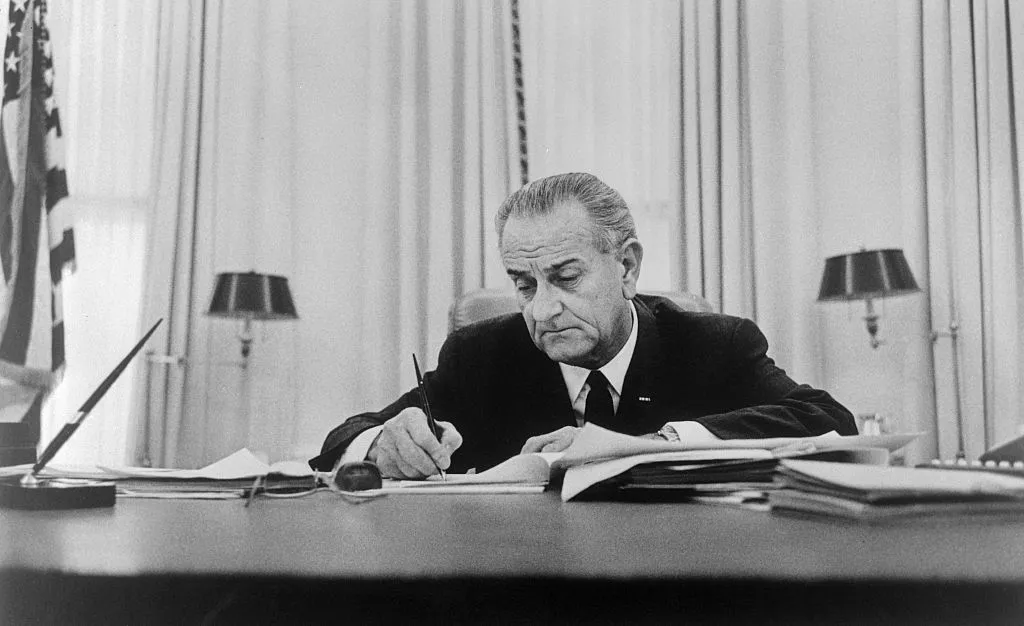
(SeaPRwire) - Lyndon B. Johnson, the 36th President of the United States, is often remembered for his significant legislative achievements, such as the creation of Medicare and the advancement of civil rights. However, there's another aspect of Johnson that offers a unique perspective on power and public health. Johnson had a penchant for giving gifts, particularly electric razors and toothbrushes. These items were not just tokens; they were strategic tools. He wanted to be a part of people's daily routines, to be remembered morning and night. This shows that he understood the power of repetition in influencing others. Johnson's focus on oral care reveals a deeper understanding of power. Influence is most effective when it becomes routine. An electric toothbrush,看似普通, was a form of political psychology. It was a small item with the potential to make a big impact. Today, policymakers often miss the importance of repetition in creating lasting change. Medicare, food assistance, and civil rights legislation all had a profound impact because they became part of people's everyday lives. Oral health, too, is crucial, but it's often overlooked. The toothbrush is a simple yet powerful tool in public health. It's affordable, portable, and preventive. Consistent use can prevent infections, preserve dignity, and reduce disease. Yet, in America, oral health is often treated as an afterthought. Johnson seemed to grasp this early on. His experience teaching poor children in South Texas showed him the effects of neglect on health. When he gave someone a toothbrush, it was more than a gimmick. It was a statement about the importance of habits in shaping health and dignity. Presidents are typically remembered for major events and policies. But sometimes, the most valuable lessons are hidden in the simplest of things, like a toothbrush at the bathroom sink.
More
Trump’s Bizarre Inflation Praise Isn’t Just a Slip—It’s a Window Into His Failing Midterm Campaign Hot News

Trump’s Bizarre Inflation Praise Isn’t Just a Slip—It’s a Window Into His Failing Midterm Campaign

(SeaPRwire) - U.S. President Donald Trump during a signing ceremony for the "Secure America Act" in the Oval Office of the White House in Washington, D.C., on June 10, 2026. —Aaron Schwartz—CNP/Bloomberg/Getty Images Donald Trump’s off-the-cuff remark that he “loves inflation” wasn’t just a verbal gaffe. It was a perfect snapshot of his administration’s collapsing political strategy ahead of the 2026 midterm elections. The comment came as new Bureau of Labor Statistics data hit a three-year high, and it laid bare the stark gap between his public spin and the tangible economic pain millions of American voters are facing right now. The May 2026 Consumer Price Index data showed a 4.2% year-over-year rise, the third straight monthly increase since the U.S.-Iran war broke out in late February. Energy costs accounted for over 60% of the overall inflation hike, with prices up 3.9% in May alone. Trump tried to clarify his comment later to the New York Post, saying he meant he was glad inflation wasn’t higher, but the on-camera line had already spread across social media within minutes. Senate Minority Leader Chuck Schumer posted the full clip of Trump’s remark to social media, framing it as a tone-deaf attack on working Americans. House Minority Leader Hakeem Jeffries echoed that sentiment, adding that the only logical takeaway was Trump didn’t care about improving everyday life for voters. An Economist/YouGov poll released the same day showed 63% of Americans disapprove of Trump’s handling of the economy. Trump tried to justify his off-the-cuff comment by blaming the ongoing U.S.-Iran war for rising energy prices. He claimed his administration secured 100 million barrels of oil via a secret mission through the Strait of Hormuz, a chokepoint that once carried 20% of global oil production before the conflict began. He said the move kept oil prices near $90 a barrel, instead of expert predictions of $250, though the mission has never been independently verified. This latest remark stands in stark contrast to Trump’s yearslong criticism of inflation under Democratic presidents. During his 2022 re-election campaign, he blamed Joe Biden entirely for rising prices, promising to fix inflation quickly if he won office. Even after bringing back tariffs in 2024, which Federal Reserve economists later linked to higher goods prices, Trump denied the levies would drive up consumer costs. In late 2025, he tried to pivot to “affordability” messaging before calling inflation a hoax and fake narrative that December. This tone-deaf inflation praise will cement his image as out of touch with working-class voters for the 2026 midterm cycle.
More
Unraveling Love’s Knots in ‘Every Year After’ Hot News

Unraveling Love’s Knots in ‘Every Year After’

(SeaPRwire) - 'Every Year After' spins a tale of love and secrets in a Canadian cottage town. Percy returns to Barry’s Bay after decades, hoping to rekindle her bond with Sam. But a past mistake—sleeping with Sam’s brother—complicates everything. The finale drops bombshells. Sam learns why Percy left. At Sue’s funeral, Sam’s emotional eulogy masks his pain over losing Percy. The wake sees moments of tension and connection. Later, Percy confesses her love to Sam, but their reunion is bittersweet. Nearly a year later, Percy works on her novel, Sam reappears, but Charlie’s cliffhanger at the office leaves things open.
More
The American State Capture Crisis: Why We Need a Watchdog Revolution Hot News

The American State Capture Crisis: Why We Need a Watchdog Revolution

(SeaPRwire) - The American political machine is no longer just polarized; it is being hollowed out from within. We are witnessing a systemic seizure of public institutions by private interests, a phenomenon political scientists call state capture. This is not a theoretical risk for fragile regimes abroad. It is a present-day reality in Washington. The concentration of power has reached a point where the public good is consistently sacrificed for narrow, private gain. We are watching the machinery of government bend under the weight of institutional manipulation. The evidence of this decay is hiding in plain sight. We saw a blatant attempt to establish a $1.776 billion Justice Department slush fund, a move only halted by intense bipartisan pushback. Conflicts of interest have become normalized, with government officials blurring the lines between public duty and private financial gain. Independent oversight is under siege, specifically through efforts to strip inspectors general of their autonomy. These watchdogs are the last line of defense for federal agencies, yet their independence is being systematically dismantled. Public trust has cratered as a result. A recent Pew survey shows 68% of Americans believe our democracy is in decline. A December 2025 study from Yale and George Mason confirms that corruption concerns now rival inflation in the public consciousness. Focus groups in North Carolina reveal a stark, growing consensus: the system is rigged. This isn't just a feeling; it is a rational response to decades of rising inequality and the perception that the government serves only the well-connected. Traditional criminal prosecutions are failing to address this rot. They target individual bad actors while leaving the broken systems intact. We need a broader, public accounting of how these institutions were compromised. The South African Commission of Inquiry into State Capture provides a blueprint. That process involved 300 witnesses and 1.7 million pages of evidence, exposing how private firms and consultants enabled corruption. It was a transparent, televised effort that forced a reckoning with institutional failure. The U.S. has its own history of such fact-finding missions, from the Warren Commission to the Church Committee. We already possess the infrastructure to replicate this: our inspectors general. These offices are staffed by experts in procurement, law, and internal controls. If given a nonpartisan mandate, they could conduct a wholesale review of agency-level capture. Despite the 2025 firings of 17 IG leaders, the remaining staff are capable of this work. They only need a clear mandate and protection from political retaliation. A coordinated, nonpartisan inquiry led by these inspectors general is the only way to restore the integrity of our federal agencies before the nation’s 250th anniversary.
More
Stop Framing Marjane Satrapi as Your Go-To Iranian Dissident. She Hated That. Hot News

Stop Framing Marjane Satrapi as Your Go-To Iranian Dissident. She Hated That.

(SeaPRwire) - Marjane Satrapi died last week at 56 in Paris. AFP reports her death came “of sadness” following her husband’s 2025 passing. Most mainstream obits have already slotted her into the easy “dissident artist” box. That framing erases exactly what made her work and politics so radical. She spent her entire career rejecting every lazy convention people tried to impose on her. The official narrative frames Persepolis as a landmark graphic memoir about post-revolution Iran. Satrapi always called it a simple “comic book”, first published in 2000. It tracks her childhood in 1980s Iran, stints studying in Europe, return home then permanent move to Paris in the mid-90s. Where most diaspora memoirs lean into tropes of loss and escape, Satrapi wrote of Iranians headbanging to Iron Maiden, joking about sex over tea, scrawling “punk is not ded” on their jacket backs. She wanted to show Iranians as fully human, not just one-note victims of tyranny. Public tributes praise her unflinching activism, but few lead with her most radical acts. She rejected France’s Légion d’honneur a year before her death, calling out the country’s “hypocritical attitude towards Iran” in a public letter. She refused to act as a self-appointed spokesperson for Iranian youth in the diaspora, saying speaking from safety in Paris would only harm people still suffering inside the country. The Islamic Republic’s current crackdowns, from morality police harassment to bans on pre-Islamic indigenous culture, match exactly what she wrote about 24 years ago. Rock icon Iggy Pop, who voiced her uncle Anoosh in the 2007 Oscar-nominated Persepolis film, noted she carried that grief for her home with her always. Satrapi’s legacy has nothing to do with Macron’s flowery tributes or literary award nods. It will outlast every attempt to sanitize her work for Western consumption. The geopolitical pendulum will keep swinging, but ordinary Iranians will always have her work to see themselves reflected honestly.
More
Forget FAANG offers. This Harvard analytics grad could save the US World Cup run on penalty kicks Hot News

Forget FAANG offers. This Harvard analytics grad could save the US World Cup run on penalty kicks

(SeaPRwire) - Matt Freese of the United States poses for a portrait during the official FIFA World Cup 2026 portrait session in Laguna Niguel, Calif., on June 8, 2026 —Richard Heathcote—FIFA/Getty Images I’ve spent 12 years building data pipelines for enterprise use cases. The worst waste of good analytics I’ve seen is teams ignoring it for "intuition" in high-stakes scenarios. Alexi Lalas’s take on Matt Freese hits that exact sore spot. Calling a keeper unproven when he wrote a Harvard paper on penalty kick dynamics is absurd. No one doubts a rocket engineer when they calculate launch trajectories, after all. Official records back the US men’s historic strength in goalkeeping. Tim Howard set a men’s World Cup record with 16 saves against Belgium in 2014. Tony Meola carried the 1994 home World Cup squad to the knockout stage. Brad Friedel earned the "Human Wall" nickname for his 2002 run to the quarterfinals. The unspoken subtext here is that pundits expect keepers to fit a gritty, non-academic stereotype. Freese’s Harvard background makes him an outlier, not an unqualified candidate. Freese left Harvard in 2018 to sign with his hometown MLS side Philadelphia Union. He finished his economics degree remotely while adjusting to pro play, a move he says kept him focused. He earned his first national team call-up in January 2025, and saved three of six penalties in last summer’s Gold Cup quarterfinal win over Costa Rica. The subtext here is clear: his analytics research isn’t just a college gimmick, it’s already delivered tangible high-pressure results. The U.S. soccer talent pipeline has long sidelined analytically minded players for traditional jock archetypes. That shifts permanently if Freese delivers in this World Cup.
More
Washington’s Fiscal Reckoning: How Political Games Accelerate Social Security’s Demise Hot News

Washington’s Fiscal Reckoning: How Political Games Accelerate Social Security’s Demise

(SeaPRwire) - The annual Social Security trustees' report landed with a predictable thud. It confirms what many in Washington already knew: the trust funds are bleeding out faster than anticipated. This isn't just about demographics anymore. It's about deliberate policy choices. President Donald Trump's legislative moves, particularly the "One Big Beautiful Bill Act," are directly implicated. They've accelerated a crisis that was already decades in the making. This isn't an accident. It is a direct consequence of specific political decisions. The implications are stark for millions of Americans.The Old-Age and Survivors Insurance Trust Fund, which pays monthly benefits to senior citizens and their dependents, now faces depletion by late 2032. Medicare Part A's Hospital Insurance fund is also set to run dry within years. Specifically, it's projected to last until the second quarter of 2033. These are not minor shifts. They represent a quarter earlier depletion for Medicare Part A than last year's forecast. Combined, Social Security retirement and disability funds are projected to run out in 2034. After that, only 83% of benefits will be covered by ongoing payroll tax revenue and other income sources. This means automatic cuts.The "One Big Beautiful Bill Act," signed last July 4, made Trump's 2017 federal income tax cuts permanent. It also added a new enhanced deduction for senior citizens. This directly reduced revenue for Social Security and Medicare trust funds. Actuaries estimate this law alone will increase net program costs by nearly $170 billion over the next decade due to lost revenue. Beyond tax policy, the administration's mass deportation campaigns and restrictions on immigration further shrink the payroll tax base. Fewer immigrants mean fewer future workers contributing to the system.Nancy Altman, president of Social Security Works, didn't mince words. She called out Trump's second-term policies: the tax bill, "economy-wrecking tariffs," a "needless war with Iran," and "hostility to immigrants." All these, she argues, reduced money flowing into Social Security. This isn't just partisan rhetoric. It highlights how broader economic and social policies, often framed differently, directly impact these critical programs. The political calculus behind these decisions often ignores the long-term fiscal consequences for everyday Americans.The political maneuvering continues. Republican House Speaker Mike Johnson recently signaled plans to "adjust and fix" public healthcare and Social Security programs next year. Treasury Secretary Scott Bessent floated "Trump accounts"—tax-deferred investment accounts—as a supplement. Critics, however, see this as a "backdoor for privatizing Social Security." This signals an ongoing battle over the program's future. Advocates like Altman insist Congress has only two options: bring more money in or cut benefits. The wealthy, she argues, must pay their "fair share."Washington's political class will continue to prioritize short-term tax cuts and immigration crackdowns over the long-term solvency of America's bedrock social safety nets.
More
AI’s Hidden Governance War: The Pope’s Moral Stand vs. Trump’s Closed-Door Power Play Hot News

AI’s Hidden Governance War: The Pope’s Moral Stand vs. Trump’s Closed-Door Power Play

(SeaPRwire) - —Douglas Rissing—Getty Images Last month, former Google CEO Eric Schmidt spoke at the University of Arizona’s commencement. He told the class of 2026 they would shape AI’s future. The crowd booed him. Similar scenes unfolded at other ceremonies. Students aren’t just reacting to empty promises. They sense their future is being decided for them, not by them. This spring, two documents redefined the fight over AI governance. On May 25, Pope Leo XIV released “Magnifica Humanitas,” his first encyclical on AI. It centers on human dignity, demanding power be constrained by morality. Its strongest warning? Lethal, irreversible decisions must never be left to machines. A weapon can track a target, but it can’t understand ending a life. No algorithm can make war morally acceptable, the Pope wrote. On June 2, President Donald Trump signed an executive order. It frames AI as a tool to keep America ahead of China. His order puts frontier AI testing in secret. It doesn’t explicitly authorize autonomous weapons, but it moves key decisions behind closed doors. Trump’s order hands AI review to government agencies and a small group of industry players. They’ll use classified benchmarks to approve models for market. Trusted partners get early access to advanced systems. The government reviews these models up to 30 days before partners see them. Decisions on military, cyber, and social AI power will involve top officials like Treasury Secretary Scott Bessent, War Secretary Pete Hegseth, and Commerce Secretary Howard Lutnick. There’s no public comment period, no hearings, no enforceable rights for citizens. Even before the order was signed, industry leaders like Mark Zuckerberg and Elon Musk spoke directly with Trump. Meanwhile, ordinary people wait for a way to participate. AI already affects daily life: it grades students, sets loan prices, sorts job applications. These decisions often come with no way to appeal. AI governance can’t remain a closed elite affair. The Pope’s encyclical warns that concentrated power turns AI into an instrument of exclusion. A free society can’t substitute speed for consent. We need public hearings before schools adopt grading algorithms. We need the right to know when an AI judges us—and to appeal that judgment.
More