(SeaPRwire) – By: Gavin Thorne
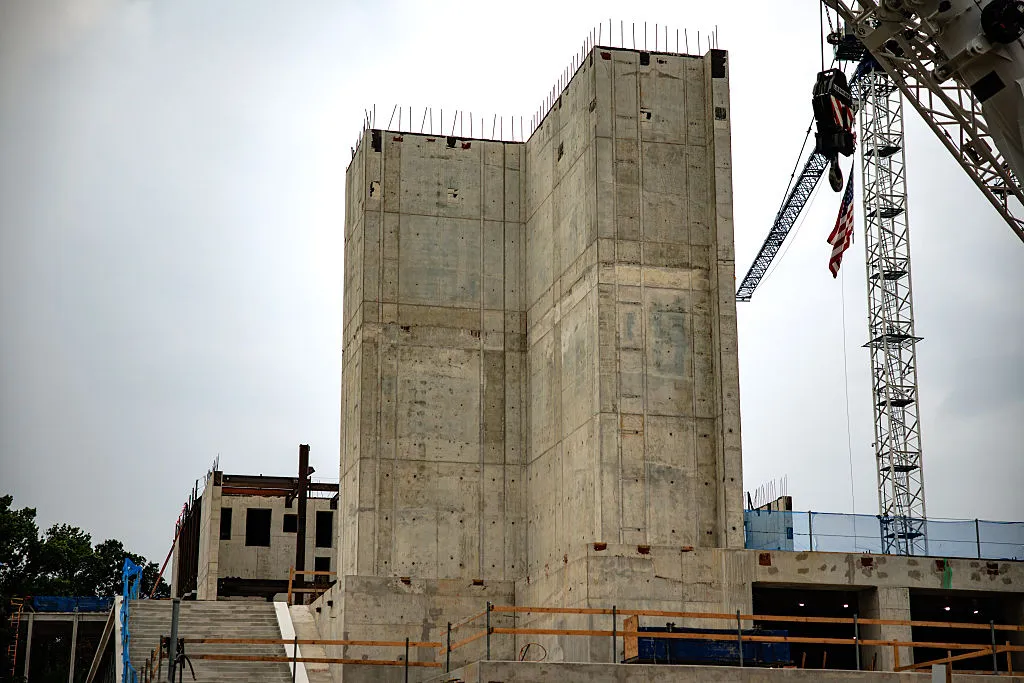
The 250-foot arch in Memorial Circle is not meant to celebrate the bicentennial. It is a drone hangar. President Trump announced on Sunday that the structure, initially pitched as a commemorative monument, will now house military drones, ammunition storage, and sniper positions on the roof and plaza. He claims the design changes came at the “strong request of the United States Military” for national security purposes. This pivot turns a piece of public art into a fortified perimeter.
The arch mirrors the fate of the White House ballroom. Initially, the administration sold the ballroom as a private venue for state dinners. When a judge halted construction on March 31, citing lack of congressional authorization, the government responded by redefining the project. Solicitor General John Sauer argued the facility was a “massive” military complex vital to national security. On August 31, the Supreme Court stayed the injunction, allowing work to continue while legal questions remain unresolved. The arch is now following this same legal pathway, repackaging civic pride as a security imperative.
Congress remains the missing piece in this equation. Republicans control both the House and Senate, yet they have not authorized the arch. House Democrats introduced a bill to block the project on National Park Service lands without express congressional approval. A group of Vietnam War veterans and a historian, in the case *Lemmon v. Trump*, argue the structure disrupts historic sightlines between the Lincoln Memorial and Arlington National Cemetery. Attorney Nicolas Sansone states that without congressional authorization, construction on Memorial Circle is unlawful. The administration’s new military justification does not fix this constitutional deficit.
The pattern here is a systematic expansion of executive power. Legal scholar Kimberly Wehle notes that administrations have long invoked national security to bypass congressional oversight. This precedent dates back to the Bush administration’s post-9/11 wiretapping and military commissions. By labeling architectural projects as military complexes, the White House creates a buffer against judicial review. Courts have historically deferred to the executive branch on matters of military necessity. This deference allows the administration to act unilaterally, treating the President’s wishes as superior to statutory limits on federal spending and land use.
Architectural logic crumbles under this military overlay. Sara Bronin, a law professor and architect at George Washington University, points out that no other major world capital combines a public tourist monument with sensitive military infrastructure. Placing drone storage and sniper nests in a space intended for general public access creates an inherent contradiction. A tourist attraction requires open sightlines and crowd density. A military complex requires security perimeters and restricted access. This hybrid design is functionally incoherent. It serves the political narrative of strength but fails the basic tenets of urban planning and security operations.
The pendulum has swung from civic commemoration to tactical infrastructure, rendering the Constitution’s checks on presidential power obsolete in the name of defense.
Author bio: Gavin Thorne, an investigative journalist tracking special interests and legislative affairs based in Washington, D.C.