Grayscale Just Built a One-Way Door Between Your Wallet and Wall Street

(SeaPRwire) - This is not a product update. This is Wall Street quietly installing the plumbing to absorb crypto's float without ever touching an exchange. Grayscale now lets eligible investors hand over actual tokens and receive fund shares in return. No cash-out. No taxable sell trigger in theory. Just a clean swap of bearer assets for paper claims on a custodian's vault. Call it what it is. The largest asset manager in crypto is telling big holders the native layer is optional now. The facts first. Ten products accept in-kind subscriptions. Bitcoin Mini Trust ETF. Ethereum Staking Mini ETF. Plus Avalanche, Chainlink, Dogecoin, Hyperliquid, Solana, Sui, XRP and Zcash. The SEC approved in-kind creations and redemptions for crypto ETPs back in July 2025, limited to authorized participants. Grayscale is now operationalizing that permission slip across its shelf. This follows its earlier Zcash ETF launch, and a Dogecoin Trust ETF that saw inflows surge in late September. Now the gatekeeping. Minimum investments run from about $80,300 to $364,800 depending on the product and token price. Solana sits lowest at roughly $80,300. The Bitcoin Mini Trust demands about $364,800. Dogecoin is near $95,550, XRP around $257,000, Zcash at $322,600. These numbers float with prices, but the message does not. This is a wholesale channel for whales and funds, routed through authorized participants and approved intermediaries. Retail watches from outside the fence. The game theory is brutal. Every token swapped in-kind is a token locked with third-party custodians, removed from circulating sell pressure, and converted into a fee-generating AUM stream for Grayscale. Steve Vanourny, Head of Index at Grayscale, framed it around cybersecurity threats, self-custody risk and DeFi exploits. Fair points. But notice the trade. Investors surrender control over the underlying tokens and gain brokerage access, retirement account compatibility, and collateral utility. Ownership becomes exposure. Exposure becomes a product. The macro loop closes neatly. Chairman Paul Atkins said the July approvals would make these products less costly and more efficient. True, and efficiency is exactly what concentrates flows. Cheaper creations pull capital toward the largest shelf. Grayscale already carries brand, custody relationships, and ten token rails. Smaller issuers cannot match minimums, intermediaries, or regulatory runway. Meanwhile facilitator fees, price slippage, tax obligations and counterparty risk remain, per Grayscale's own warning. The risk does not disappear. It just changes counterparty, from you to them. Watch the moment a major pension swaps nine figures of spot Bitcoin for shares and never touches a public order book again.
More
The Crypto Theater: How a Presidential Roundtable Became a Masterclass in Misdirection

(SeaPRwire) - You do not sit at a White House table declaring war on overseas crypto scammers and then refuse to say the word crypto. Trump called it "cybercurrency." His cabinet pointed at "digital extortion." The semantic choreography was deliberate. They wanted to look tough on crime without looking like they were touching the very asset class their family profits from. The numbers the administration floated are real enough. About $833 million in crypto tied to foreign scams was halted. Five hundred three fraudulent websites were seized by the Homeland Security Task Force. Trump claimed $1.6 billion in losses prevented after a March executive order. The FBI puts the 2025 total at $11 billion lost to digital asset scams. Americans have now lost over $20 billion to cybercrime in a single year. None of that is invented. Trump's family made $1.4 billion from crypto ventures last year. Public Citizen estimates his alleged schemes cost investors roughly $4.7 billion. World Liberty Financial's USD1 stablecoin settled a $2 billion Binance investment tied to Sheikh Tahnoon bin Zayed Al Nahyan of the UAE. Meanwhile lawmakers and interest groups accuse the Official Trump memecoin team of pay-to-play behavior. Another tokenholder dinner is scheduled for November 22. The midterms are two weeks away. That timing is never accidental. Lawmakers will ask questions. Interest groups will file complaints. Treasury's Scam Center Strike Force targets pig-butcher networks in Burma, Cambodia, Laos and the Philippines. Sanctions have been issued against websites and infrastructure. Italian police recently arrested 30 people laundering money through a bank allegedly tied to the mafia. The machinery is moving. The optics are managed. What this tells you is straightforward. You can announce a crackdown on crypto scams while your own household becomes one of the largest winners in the industry. The Administration framed this as law enforcement. It functioned as political insurance. Freeze some billions, seize some domains, avoid the word itself, and let the voters decide whether the rhetoric matches the reality. The next two weeks will produce subpoenas, hearing schedules, and carefully staged denials before a midterm electorate that already struggles to separate digital asset crime from digital asset profit.
More
Dogecoin Labs Just Merged Three Teams — But Their Apps Still Say “Coming Soon” Business

Dogecoin Labs Just Merged Three Teams — But Their Apps Still Say “Coming Soon”

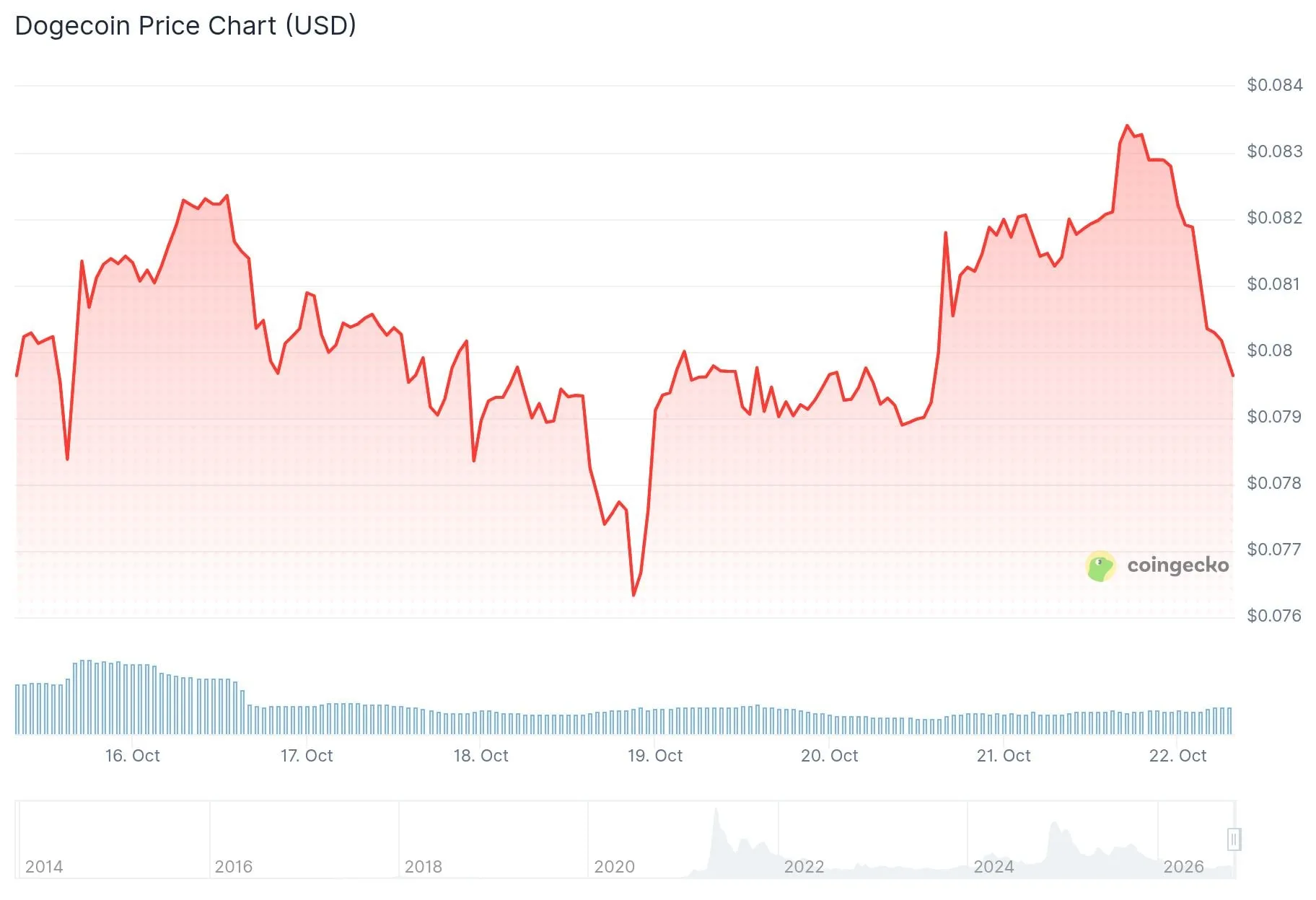
(SeaPRwire) - Dogecoin Labs announced it is merging MyDoge, DogeOS, and Such App under one roof. The press release paints a clean picture. Wallets meet application platforms meet merchant tools. It reads like a serious infrastructure play. You could almost believe Dogecoin is graduating from meme to utility. Almost. The reality lives inside the git commits and the testnet logs. Dogecoin still runs on a joke that refuses to die. The infrastructure is being welded together at breakneck speed. The applications are nowhere to be found. DogeOS opened its public testnet on September 30. That date is locked in source records. Three weeks later the user guide still labels its featured applications as "coming soon." The platform supports Ethereum-style lending services, exchanges, and games. Developers can build on test DOGE. But there is a structural dependency that the PR document does not emphasize enough. DogeOS handles coin transfers on a separate system from Dogecoin itself. The planned security link to the Dogecoin blockchain remains a draft rule change. Until that rule passes, users must rely on DogeOS selected operators and hardware to confirm application execution. There is no cryptographic proof anchored to Dogecoin. DogeOS is effectively running a trust layer that sits outside Dogecoin consensus. You cannot bootstrap decentralization on a system that asks you to trust its operators instead. That tension matters more than any organizational announcement. MyDoge claims more than 500,000 users without paid acquisition. That number is real. The absence of paid spend proves organic distribution. It does not prove engagement. The V3 update is supposed to connect MyDoge to DogeOS applications. No active user count accompanies that claim. The token trades near 8.2 cents according to the press release. Bitwise closed its Dogecoin ETF in September. The CEO called it a gap between ETF investors and crypto brokerage app users. Earlier this year Jefferson told The Block at Consensus Miami that big stuff was coming. Analyst Trader Tardigrade spots a five year triangle pattern since 2021 and targets $0.878 on breakout. Price narratives are easy to project. Building software that survives a mainnet is harder. The architecture exposes the core problem. Dogecoin Labs wants Dogecoin to serve as both payment rail and settlement layer. Such App supports invoices and QR payments in beta. The connection to DogeOS stays in planning stages. DogeOS needs the Dogecoin blockchain to verify application proofs. That mechanism does not exist. The proposed rule change is a draft. There are no deployed contracts. There is no application store. There is no liquidity depth. The PR says No other digital asset has Dogecoin combination of liquidity, community, and cultural reach. The quote is accurate. Liquidity without utility is just a waiting room. Community without products is just an audience. Cultural reach without infrastructure is a hashtag. This is the moment where user sovereignty meets organizational ambition. You can merge three teams and file press releases until the servers melt. The architecture still demands that Dogecoin itself handle verification for applications that do not exist yet. The market is rewarding the narrative. Triangle breakouts generate headlines. Testnet openings generate excitement. The developers who actually ship will earn the users. Dogecoin Labs is consolidating around a platform that has not proven it can run code. The governance structure is new. The engineering debt is older. I will watch the rule change vote and the first deployed contract. Everything else is noise.
More
SoFi Gave PENGU 15 Million Users and Zero Institutional Legs. The Reckoning Is Just Delayed. Business

SoFi Gave PENGU 15 Million Users and Zero Institutional Legs. The Reckoning Is Just Delayed.

(SeaPRwire) - PENGU is bleeding 3.4% on the day and sitting right on the lower edge of a rising channel that's held since August. The market is fixated on whether SoFi's 15 million-plus users constitute a genuine demand catalyst. Or is it just another distribution headline that evaporates by Friday? The token trades around $0.00784. The question isn't whether PENGU deserves a second look. It's whether bank-level distribution access actually matters for a token whose entire brand equity is a cartoon penguin. Most of the time, it doesn't. PENGU opened the session near $0.00811, touched $0.00816, and fell to roughly $0.00782. Market cap is close to $500 million with over $100 million in daily volume per CoinGecko. The key support zone runs $0.0074 to $0.0077, the same trendline buyers defended in September before a bounce toward $0.010. Resistance sits at $0.0085 to $0.0090. The daily RSI is at 44.77, below the neutral 50 but nowhere near oversold territory. MACD remains bearish, though the histogram is small, meaning sellers don't have full control. SoFi added PENGU to its platform. It's the first nationally chartered bank to offer crypto trading to consumers through a banking app. That puts the token within reach of 15 million-plus U.S. members. Analyst Ali Charts flagged a bullish SuperTrend flip as PENGU pushed above $0.0081. He notes every bullish signal has preceded a new rally. Every bearish flip has been followed by a steep correction. Pudgy Penguins NFT sales jumped 77% week over week to about $2.56 million per CoinMarketCap. Adam Weitsman bought 117 NFTs earlier in the month. Igloo plans to shut down its Abstract Layer 2 network on December 15, redirecting resources to the core project. The real story isn't the price tick. It's the distribution channel. SoFi listing a micro-cap NFT-adjacent token signals that banks are commoditizing crypto access. When a neobank tucks PENGU into a checking account dashboard, it stops being a speculative trade. It becomes an option on someone's daily screen. The Igloo shutdown of its Abstract Layer 2 network on December 15 is the counter-narrative. Resources are being funneled back to the core IP. That's consolidation, not diversification. The company is doubling down, which is either smart focus or a sign that the infrastructure bet failed. On-chain, PENGU has roughly 565,000 holder addresses on Solana, up about 0.5% since October 3. Phantom data shows around 55,000 trades in 24 hours and approximately $11 million in DEX liquidity. There is no U.S. spot PENGU ETF, so institutional flow data simply doesn't exist. The holder count is creeping up, but slowly. The floor is set by a trendline and community sentiment. Not by treasury backing. Not by regulatory clarity. Not by any institutional mechanism that creates a bid. The SoFi listing bought PENGU time, not legitimacy, and every extra week it holds the $0.0074 floor will only sharpen the reckoning that a $500 million memecoin with no ETF pipeline, no yield mechanism, and no enterprise adoption to speak of will eventually need a reason to exist beyond a cartoon penguin, because when the holder count stalls and the NFT sales growth cools, PENGU will face the same cold math every speculative token eventually does.
More

$145 Billion in, 0.1% Adopted: Meta’s AI Spending Is a Cash Trap in Slow Motion

(SeaPRwire) - Meta's balance sheet is hemorrhaging capital, and today's earnings call won't stop the bleeding. The company has committed up to $145 billion in capital expenditures this year. They're carrying nearly $700 billion in long-term supply and lease obligations. Free cash flow has completely evaporated. Management says it won't return until 2029. That's a multi-year cash desert. Wall Street isn't panicking about the top line. Revenue is expected to hit around $63 billion, up 24% year over year. Meta has beaten its revenue estimates for 16 consecutive quarters. That streak alone is remarkable. It says the company can generate demand at scale. The stock closed near $694 on Tuesday and has already dropped about 2% on Wednesday morning. It's up about 5% for the year. But that modest gain masks a violent recent whipsaw. Last month the stock rallied on early signs of success with the Muse AI agent. Then the market caught up to the spending. The pullback followed almost immediately. Options are pricing a 6% move either way. That puts the stock between $650 and $738 by the end of the week. But here's what nobody at the sell desk is pricing correctly. Revenue growth funded by balance sheet destruction is not growth. It's a solvency event in slow motion. The question isn't whether Meta can print revenue. The question is whether the next $145 billion will produce a return that justifies the risk taken. The financial details compound the concern. Meta's EPS forecasts vary significantly between sources. One report cites $6.54. Another cites $5.29. Both are against $1.05 a year ago. Last year's figure was distorted by a large noncash tax charge. Without that charge, EPS would have been $7.25. This quarter introduces a $10 billion charge tied to the August multistate settlement over child-safety issues. That's enormous. Last quarter already carried $2.4 billion in legal costs and $1.2 billion in severance. These aren't one-off items. They're recurring structural drains on an already overstretched balance sheet. The capex pipeline doesn't pause for legal settlements or regulatory fines. Expenses are expected to outpace sales growth. Operating income is seen slipping slightly from last year. Meta already has $700 billion locked into supply agreements and leases. Every additional dollar spent on data centers, GPU clusters, and inference infrastructure extends the commitment horizon. Free cash flow doesn't come back until 2029. That means years of operating at negative cash conversion. Meta's infrastructure commitments now rival the scale of national defense budgets. The company isn't investing cautiously. It's betting the entire enterprise on an AI thesis that hasn't been validated at the scale of its capital commitments. The $10 billion legal charge alone could consume a meaningful fraction of this quarter's expected profit. And it's not the last one coming. Now look at what's actually being built. The Muse AI agent launched in the second week of September. Similarweb reports over 3 million daily users. That number sounds meaningful until you check the denominator. Meta's total user base dwarfs that figure. Three million represents less than 0.1% of the entire addressable audience. This is a product demo in front of billions of potential users. Fewer than one in a thousand have walked through the door. Meta also announced the Wonder AI models last week. They claim these rival OpenAI and Anthropic. That's a bold assertion. The real test isn't model benchmarks. It's inference cost at production scale. The Muse agent can process retail purchases. Meta takes a small fee per transaction. But Amazon is blocking it. When your clearest monetization path is walled off by the world's largest e-commerce platform, the unit economics get tense. Amazon has every incentive to protect its marketplace. Meta's AI agent is a direct threat to that moat. Morgan Stanley's Brian Nowak raised his target to $820 from $775. He kept an Overweight rating. He specifically urged investors to "keep adoption rates in perspective." Deutsche Bank called Meta "at the start of a rich product cycle." Those are bullish framings. They come from analysts who need to maintain institutional relationships. Eighteen of nineteen tracked analysts rate the stock a buy. The mean target is $881. That's nearly 27% above Tuesday's close. But a price target means nothing when the capex commitment curve keeps accelerating. The Muse agent at 3 million daily users tells you exactly where the revenue side stands. It's a start. It's not a business. The next earnings call will reveal whether spending is converting to adoption or simply extending the runway. Watch the capex guidance and free cash flow commentary more closely than the revenue beat. That's where the real signal is buried. The company that runs out of cash first in this AI infrastructure race loses. Meta is already well into a cash vacuum it didn't engineer.
More

Bloom Energy’s Earnings Gamble: Why the AI Power Premium Is Cracking

(SeaPRwire) - The market has decided to punish optimism before validating it. Bloom Energy (BE) stock sits at $233.75, down 14.3% in the last month. The sector is bleeding. Tuesday’s sell-off hit hard after a weak IPO from a South Korean data center company spooked investors. It sparked a broader retreat in AI energy infrastructure names. Bloom bucked this trend Wednesday pre-market, rising 5%. Yet the underlying anxiety remains. Wall Street expects Q3 revenue between $1.06 billion and $1.07 billion. That is a 107% year-over-year jump. Traders price in a 9% post-earnings move. This volatility signals a lack of confidence in the sustainability of current growth rates. The consensus is that the stock is overextended on hype. The 52-week low stands at $75.70. The gap between the low and current price creates a fragile psychological support level. Investors are no longer pricing for long-term utility. They are pricing for immediate quarterly proof. The official release data paints a picture of aggressive expansion. Truist lifted its price target to $240 on October 16, maintaining a Hold rating. The average analyst target is roughly $285. RBC Capital Markets predicts a strong recovery in Q4 2026. These forward-looking claims rest on current execution. Bloom recently reported Q2 revenue of $1.07 billion, up 166%. The company beat estimates for EPS and EBITDA. Analysts have kept their numbers unchanged over the past 30 days. The company rarely misses revenue targets. This consistency builds a narrative of reliability. However, the static nature of the estimates contrasts with the dynamic risk in the energy sector. The market is waiting for a slip. A 9% expected move in options implies significant uncertainty about whether the next quarter’s numbers will hold the line. The disconnect between the high average target and the current price action suggests analysts are lagging behind real-time sentiment. Bloom’s primary anchor is Oracle’s Project Jupiter in New Mexico. Oracle confirmed last week that construction is progressing rapidly. This project serves as the key demand driver for Bloom’s solid-oxide fuel cell technology. The link to Oracle creates a direct tether to the AI compute boom. Yet, this tether is also the source of vulnerability. When the broader Nasdaq dipped, Bloom suffered disproportionately. The group of electrical equipment peers is down 5.1% over the past month. Bloom is down 14.3%. This divergence highlights its pure-play exposure to AI infrastructure. Acuity Brands, a peer, missed revenue estimates and saw no stock reaction. Bloom’s stock moves with the heartbeat of AI capex, not utility rates. The commercial loop is clear. Data centers need power. Bloom supplies it. But if AI capex slows, Bloom’s revenue stream faces a cliff. The industry end-game depends on whether fuel cells can scale beyond single-campus deployments.
More

Peter Brandt’s Monero Chart Isn’t Silver—It’s Just Another Privacy Coin Trap

(SeaPRwire) - Peter Brandt looked at a Monero chart and saw silver. The pattern he spotted was clean, nostalgic, and dangerously easy to romanticize. It is also fundamentally misleading. What he described as a silver precursor is better understood as a textbook descending resistance line that has rejected price action at least four times since 2017. The chart does not show a breakout forming. It shows a crowd convinced it is watching one. Brandt compared the monthly structure of XMR to silver before its January rally toward $125. He was careful to exclude the January 2026 OOL movement from the comparison. The structural resemblance is there, yes. Silver peaked at roughly $121.6 in late January and then fell sharply, losing more than half its peak value in what followed. Monero traded near $575.89 at the time of the market snapshot, ranging between $570.44 and $625.37 over the preceding 24 hours. It sits below that $625 level and has been rejected there repeatedly. Brandt noted that XMR remains above its eight-month and 18-month moving averages. That is a lagging observation. It confirms what the price already did, not what it will do next. The descending resistance line stretching back to the 2017–2018 bull market remains intact. The 2021 high also sits near that same line. Four rejections do not constitute a pattern break. They constitute a pattern. The subtext here matters more than the chart overlay. Brandt is a respected voice in technical analysis, and his mention of Monero drew an immediate wave of attention. The post itself acknowledged the similarity in structure only, explicitly stating that the observation focused on chart shapes rather than demand, supply, or any change to the underlying network. That qualification should have been the headline, not the silver comparison. The market did not read it that way. Retail traders saw a familiar setup and began positioning accordingly. Meanwhile, Zcash announced an upgrade aimed at reducing block times from 75 seconds to 25 seconds. The privacy coin sector remains competitive and structurally divided. US spot funds recorded renewed Bitcoin ETF inflows on October 19, but those flows measure institutional Bitcoin demand, not Monero demand. The two datasets exist in separate lanes. This is not a bearish take on Monero. It is a caution against narrative-driven entry. The asset has gained roughly 90.3% over the previous 12 months and ranks 13th by market capitalization. Those are real numbers. They are also numbers that attract momentum capital, which sells into weakness and amplifies rejection. The $625 level is not a theoretical barrier. It is a line that has held every time it was tested. A clean break above it on monthly close would change the thesis entirely. Until that happens, the silver analogy is decorative, not directional. Monitor the monthly close, not the tweet. Wait for the resistance line to break with volume, not narrative. If you are already long, set your stops below the 18-month moving average and accept the drawdown risk. If you are waiting, do not buy the comparison. Buy the breakout or stay out. There is no middle ground that works here.
More

ISRG’s $450 Million Fine Is the Smoke Screen Hiding a Structural Margin Squeeze

(SeaPRwire) - The market ignored the top-line beat. It focused on the crack in the armor. Intuitive Surgical stock dropped 8% in premarket trading to roughly $405. The headline numbers looked fine. Adjusted EPS hit $3.00 against a $2.65 estimate. Revenue jumped to $3.05 billion, topping the $2.91 billion forecast. Yet the stock is down 23% for 2026. It is pacing for its worst year since 2022. The sell-off was not about the past quarter. It was about the next two years. The real story is the narrowing of the moat. The $450 million antitrust settlement is a distraction. It is a one-time cash outflow. It cut GAAP net income to $523 million, or $1.49 per diluted share. That is painful, but it does not change the operating model. The core issue is the pricing guidance. Management admitted that instrument pricing cuts will lower revenue per procedure by 3% to 5% in 2027. This includes a China price cut starting in November. Instruments and accessories are the recurring revenue engine. If that margin per unit shrinks, the entire valuation model collapses. Investors priced in growth. They are now pricing in deflation. The U.S. procedure growth slowed to 10%. That is the softest domestic reading since the pandemic. International growth is still robust at 20%. Total procedures rose 15%. The 2026 worldwide growth forecast narrowed to 14% to 15%. The previous range was broader. Management expects growth near the midpoint. The competitive landscape is tightening. Johnson & Johnson’s Ottava system won approval in July. Medtronic’s Hugo system cleared for urology in December 2025. These rivals are not distant threats. They are active participants in the same hospital corridors. JPMorgan raised its target to $475. The street remains optimistic. The market disagrees. The premium on exclusive positioning is eroding. This is not a cyclical dip. It is a structural margin compression. The era of easy volume growth is ending. Competition is forcing price concessions. The settlement is just the tip of the iceberg. The real risk is the shift in power dynamics with hospital customers. Intuitive is bleeding pricing power to keep shelf space. The endgame is a commoditized surgical robotics market. The multiple will compress further. Holders must accept lower yields per dollar of revenue.
More
SpaceX’s 161% Rocket Ride Can’t Hide the Tesla Merger Stunt. Netflix’s 6% Slide Tells the Real Market Story Business

SpaceX’s 161% Rocket Ride Can’t Hide the Tesla Merger Stunt. Netflix’s 6% Slide Tells the Real Market Story

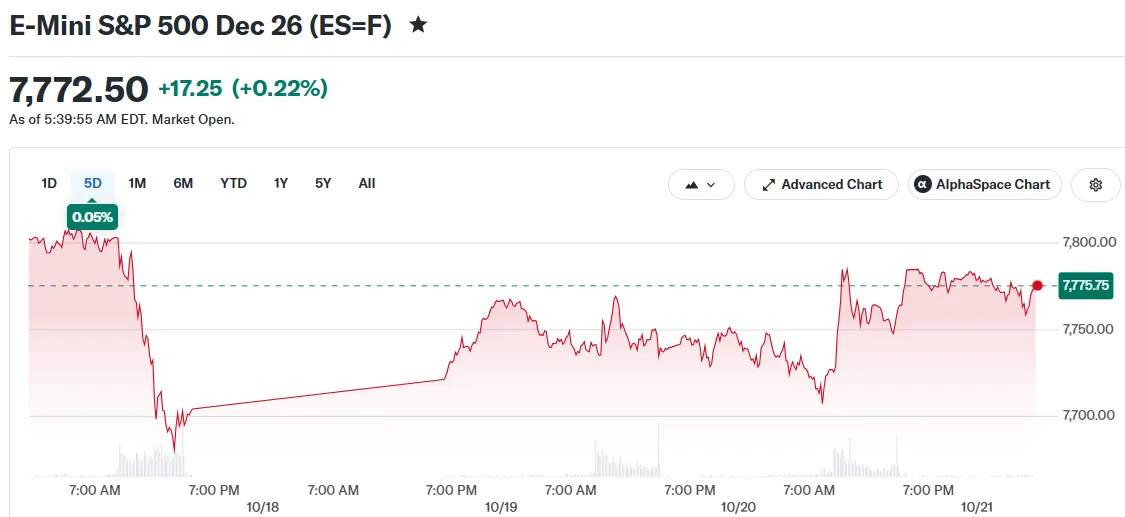
(SeaPRwire) - The market opened with a weird sense of calm. Futures crept up, but the real story is raw merger talk and a streaming giant finally admitting gravity. SpaceX shares jumped 9% premarket. Revenue grew 161%. That number is absurd. Yet the market’s attention snapped to Elon Musk’s throwaway line about Tesla merger committees. That is not investing. That is narrative-chasing. Meanwhile Netflix fell 6% because its guidance stinks. The contrast is the whole market in one frame. Everyone wants a rocket story. Nobody wants to pay for slow-growth reality. Let’s hold the facts first. Stock futures rose Wednesday as traders waited for Meta Platforms after the bell. S&P 500 futures gained 0.11%, Nasdaq-100 futures added 0.44%, Dow futures slipped 42 points. On Tuesday the Dow advanced almost 530 points, or 1%, and S&P 500 gained 0.3%, while the Nasdaq Composite ended marginally lower. SpaceX beat third-quarter earnings expectations and saw its stock up as much as 10%, then settled near 9%. CEO Elon Musk said SpaceX and Tesla have formed committees to explore a possible merger. Tesla gained more than 2% in premarket trading. Meta reports after the close. Tesla does too. Netflix beat Wall Street’s third-quarter earnings target. That is not the headline. The streamer issued weak revenue guidance and posted its slowest sales growth in three years. Shares fell about 6% in premarket trading. Intuitive Surgical dropped 7.6% despite beating estimates. It disclosed a $450 million antitrust matter and narrowed its outlook for procedure growth. Capital One rose 3.3% after saying it will spend more on marketing. 3M gained more than 5% on Tuesday after raising full-year profit guidance. Meta shares slid 0.3% before the opening bell. It is the first Big Tech hyperscaler to report this earnings season. Wall Street will read its capital spending guidance like a ransom note. Here is what the tape hides. The AI trade is starting to crack under its own debt. Traders worry about debt-backed AI investments and whether infrastructure demand justifies the spending. Goldman Sachs Research’s Christian Mueller-Glissmann says earnings support, lighter positioning and lower valuations should help equities into year-end. But he flags AI concerns, Middle East tensions and midterm elections as near-term volatility. Oil is climbing. WTI crude futures gained 1.25% to $99.04 a barrel. South Korea’s Kospi jumped 3.29%. Japan’s Nikkei 225 added 0.85%. Europe’s Stoxx 600 rose 0.14%. Those borders matter less than the balance sheet question underneath every AI hyperscaler. SpaceX and Tesla merging would be enormous. But the timing feels desperate. Musk needs to keep attention on the rocket narrative while Tesla earnings loom after the close. The committees are real, according to the company statement, yet real committees are also a way to delay any decision. Meanwhile Meta’s Muse Wonder launch earlier this month is paywalled. That is a micro signal. The entire industry is trying to monetize AI directly because enterprise buyers are no longer handing out blank checks. Seagate Technology added 2% and CoreWeave advanced more than 1% on Tuesday. Those moves look like relief rallies, not conviction. IBM, Southwest Airlines, Lam Research, SAP and Texas Instruments all report Wednesday. Their guidance will matter more than any merger chatter. The AI trade will not die from missing revenue targets or a weak guidance call at Netflix; it will die from the cost of the debt piled behind data center build-outs, and when the next hyperscaler capex line disappoints, the market will stop pricing in vision and start pricing in cash flow, leaving every vendor that sold shovels to the boom holding unsold inventory and underwater contracts while the banks that financed the expansion quietly tighten the next credit line.
More

The Regulatory Quagmire: Why Predicting Reality Has Become Crypto’s Biggest Legal Battlefield

(SeaPRwire) - The noise around prediction markets is deafening, but the signal is buried under a mountain of legal friction. We are witnessing a fundamental shift in how exchanges view revenue. It is no longer just about trading tokens; it is about trading outcomes. Binance US and Blockchain.com are sprinting toward the Commodity Futures Trading Commission, seeking licenses to trade contracts on real-world events. This move is not merely a product expansion. It is a desperate bid to secure a foothold in a market where the rules are still being written. The industry is betting that federal oversight will eventually supersede state-level chaos. But that bet is risky. The core pain point here is simple. Regulators are fighting over jurisdiction, and companies are running out of time to find safe harbor before the legal landscape hardens against them. Let’s look at the official release facts first. The Financial Times reported on October 21 that Binance US applied for CFTC approval to enter the prediction market sector. Stephen Gregory, the CEO, has outlined plans for a regulated exchange license since July. The company is also seeking up to $100 million in financing at a valuation near $1 billion. This capital injection signals intent. They want to scale. Meanwhile, Blockchain.com confirmed on October 13 that it requested two specific approvals. A designated contract market license and registration as a futures commission merchant. These moves allow them to operate a regulated exchange and broker derivatives. They aim to offer US retail and institutional customers contracts on sports, politics, and economic results. It is a clean, structured approach to entering the US market. Now, let’s peel back the PR layer to see the true commercial intentions. The driving force here is volume. Combined trading volumes on Kalshi and Polymarket climbed from $17 billion in January to $72 billion in September. That is a fourfold increase in eight months. This growth proves demand exists. But the supply side is constrained by legal disputes. Several US states challenge sports-related prediction contracts, arguing they are betting services, not financial instruments. Crypto.com and Novig have sued state officials in Missouri to fight these orders. The subtext is clear. Exchanges are moving to Washington D.C. because state laws are patchy and unpredictable. They are using the CFTC as a shield. By getting federal licenses, they hope to preemptively override state-level bans. It is a strategic hedge against regulatory fragmentation. The $100 million raise for Binance US is likely earmarked for this very legal and operational setup. They are not just buying technology; they are buying immunity. The endgame for this sector depends on a single, unresolved question. Who has the final say? If the CFTC successfully asserts jurisdiction over event contracts, the market will consolidate around federally licensed players. Binance, Blockchain, Coinbase, and Crypto.com will dominate. State-level challenges will fade, overridden by federal preemption. However, if states win the legal war, the market will fragment. Users will face a patchwork of restrictions, driving volume offshore to platforms like Polymarket, which currently exclude US traders but attract global attention. StarkWare’s new privacy tool for Polymarket, launched on October 14, is a symptom of this pressure. It helps maintain user anonymity, but it does not solve the jurisdictional issue. The industry is holding its breath. The real profit will not come from the trades themselves, but from the regulatory certainty that allows large institutional capital to flow in. Until the courts settle this dispute, the prediction market remains a high-risk, high-reward gamble for the companies involved. The boardroom strategy is clear. Secure the federal license, withstand the state attacks, and capture the volume surge. Anything less is a failure of execution.
More

SMCI Just Doubled Its Own Forecast — The AI Server Gold Rush Has a New Scorekeeper, and It’s Not Nvidia

(SeaPRwire) - Super Micro just did something companies almost never do. It raised its own quarter by roughly 27% at the midpoint, weeks before reporting. This is not normal corporate behavior. Pre-announcements usually flow the other direction, quietly lowering bars. Here the bar got hoisted so fast that Dell and HPE both popped in sympathy, 5.3% and 4.5% after hours. SMCI itself jumped about 13% premarket off a $32.47 close. The Street is reading this as confirmation that AI infrastructure spend is not slowing. Maybe. Or maybe this is one vendor vacuuming up share while the market mistakes it for a rising tide. Both readings matter right now. The raw numbers first. Super Micro now expects fiscal Q1 revenue of $18.5 billion to $19.5 billion for the quarter ended September 30, up from prior guidance of $14.5 billion to $15.5 billion. The new midpoint blows past the analyst consensus of $14.99 billion. If it holds, revenue nearly quadruples year over year. Gross margin guidance also moved up, to 12.0% to 12.5% from 10.4% to 10.8%. The company credits a more favorable customer and product mix. Mizuho analysts cited "rapidly increasing server demand and agentic AI tailwinds." Full results land November 3, and new CFO Mark Long, formerly of Western Digital, started last week. Context makes this stranger. Super Micro had recently warned that fiscal Q4 revenue would land near the low end of its own forecast. That spooked people. Wednesday's update flips the narrative entirely, from caution to near-quadrupling in a single announcement. Chip stocks caught a modest bid too — Nvidia, AMD, Micron, and Marvell each gained roughly 2% after hours. That bounce came after the Philadelphia Semiconductor Index dropped eight straight sessions before a 1.6% Monday gain and a 0.3% Tuesday slip. So this rally arrives against a tape that was actively bleeding. Relief rallies on one company's guidance are fragile things. Now the game theory. The anxiety hanging over AI data-center names is not demand. Nobody doubts customers are buying hardware. Barron's framed it correctly: the question is whether those customers earn enough return to justify the spend. Debt-funded buildouts, higher borrowing costs, CoreWeave and Oracle wobbling last week — the financing chain is the weak link. Super Micro sits downstream of all of it. Its quarter tells you GPUs are shipping into racks. It does not tell you the renters of those racks are profitable. Watch the credit markets, not the server bookings, for the real stress signal. The second possibility deserves equal weight. Super Micro could be winning business from rivals, or selling pricier configurations, without industry-wide demand rising to match. The muted 2% chip move versus SMCI's 13% hints the market half-believes this. If it were a clean demand signal, Nvidia would have reacted harder. A new CFO arriving days before a massive guidance raise is also worth filing away — not sinister, just notable timing. Companies do not pre-release 27% upward revisions casually. Either the pipeline genuinely detonated, or management badly misread its own quarter a few weeks ago. Neither option is entirely comforting. November 3 is when the mix story gets audited, and if that gross margin print lands anywhere near 12.5%, the short thesis on SMCI is effectively dead for two quarters.
More

40x Faster Is Not the Real Story. Solana’s Alpenglow Upgrade Is About Money

(SeaPRwire) - Solana's Alpenglow upgrade promises to cut transaction finality from six seconds to 150 milliseconds. Forty times faster. The number is staggering. But here is the catch. Nobody has tested this on mainnet yet. The community test cluster restarted six times. One migration attempt failed completely. Operators had to reverse the switch. A second attempt worked. All of this happened with no real funds on the line. The upgrade moves validator voting off-chain through a new protocol called Votor. Under the existing system, validators submit votes as blockchain transactions and wait for enough approvals to finalize blocks. Votor exchanges those votes directly and compresses them into certificates that record validator support without clogging the chain with individual vote data. The result changes the economics of running a node. Validators currently burn roughly 2 SOL per day on vote transactions. The new admission ticket replaces that with 0.8 SOL per epoch, roughly one day. That is a 60% cut in voting costs. Hardware and hosting expenses remain unchanged. But block producers no longer collect fees from vote transactions. Validator income streams shift. The speed improvement and the economic restructuring are two separate stories wrapped into one upgrade. Solana price analysis tracks resistance around $107 to $108. Faster finality does not automatically lift the token price. That disconnect between technical performance and market value is the anxiety that no press release addresses. The certificate-based system means individual vote transactions no longer fill blocks. Network transaction counts may drop on the surface, even if actual user activity remains the same. Anyone watching on-chain metrics for activity levels needs to adjust their models. The data story and the user story are diverging. That creates confusion for analysts who track Solana by transaction volume. The upgrade delivers a genuine technical improvement. It also restructures the financial model of validator participation in ways that the headline numbers do not capture. The technical specifications are straightforward. Under Alpenglow, finality drops from six seconds to a target of 150 milliseconds. Finality means a transaction can no longer be reversed. Exchanges, trading firms, and payment applications that currently wait six seconds for settlement could compress that window to milliseconds. Galaxy Digital confirmed that the community test cluster restarted six times during development. Approximately 100 operators participated, using different hardware and geographic locations to expose edge cases. One migration attempt failed across the test cluster, forcing a full rollback. A subsequent migration succeeded. Test activity involved no real funds. The mainnet rollout begins at epoch 1064. Existing voting rules stay active for 5,000 slots. Alpenglow activates at slot 459,653,000. The planned launch date is October 21. Galaxy Digital noted the activation time can move. Validators currently spend about 2 SOL daily to cast votes following shorter block intervals. The new 0.8 SOL admission ticket per epoch replaces per-vote charges entirely. That is approximately a 60% reduction in voting expenses. The certificate-based system means individual vote transactions no longer fill blocks. Network transaction counts may drop on the surface, even if actual user activity remains the same. That distinction matters for anyone modeling network health or tracking active addresses. The test restarts reveal something about operational risk. Six restarts and one failed migration in a test environment with no real money suggests the transition process itself carries meaningful complexity. Mainnet conditions will be harsher. Higher throughput, more heterogeneous hardware, and actual economic stakes all introduce variables the test cluster could not replicate. The Votor protocol's off-chain vote exchange also introduces new failure modes. If certificate aggregation breaks under load, the finality target evaporates. The test environment had no way to prove that the system holds under real economic pressure. The 150-millisecond number is a design target, not a guaranteed outcome. The commercial picture is more complex than the speed numbers suggest. Faster finality creates a new competitive dynamic. Solana positions itself as a settlement layer that can handle high-throughput applications. The Alpenglow upgrade removes a structural bottleneck that has limited the network's appeal to latency-sensitive use cases. Exchanges and institutional traders have specific settlement windows. Six seconds of finality is workable but not ideal. 150 milliseconds changes the calculus entirely. But block producers lose fee revenue from vote transactions. That revenue gap has to be compensated somehow. If validator earnings compress without offsetting income, node operators may face pressure to drop stake or consolidate. Validator consolidation shifts power to fewer participants. That is a governance concern even if it is not a technical one. The broader competitive landscape is shifting too. Zcash is planning its own speed upgrade in November, cutting block intervals from 75 seconds to 25. Different architecture, same end goal. JPM Coin expanded to Ethereum this week, bringing tokenized bank deposits to another network and allowing eligible institutions to transfer funds around the clock. The race for settlement speed is no longer abstract. It is a feature competition happening in real time across multiple chains. Solana's Alpenglow is one data point in that race. The mainnet test is what matters. If it goes smoothly, the 150-millisecond target becomes a new baseline for proof-of-history networks. If it fails, the 60% validator cost savings and the speed gains remain theoretical. Validator economics determine whether this upgrade holds. A 60% cost reduction helps individual operators, but it also removes a revenue stream that block producers relied on. The October 21 activation date is a test. The next five thousand slots will tell everyone what Alpenglow actually delivers.
More

The Empty Check: Why MoonPay and Dunamu’s Stablecoin Pact Lacks Teeth

(SeaPRwire) - Read the fine print before you cheer. This announcement is a press release for potential, not performance. MoonPay and Dunamu are "exploring" stablecoin payments and corporate treasury services. The word "explore" is doing all the heavy lifting here. It signals a lack of binding commitment. In Silicon Valley, we know that when two giants shake hands without ink on paper, it’s usually because neither side has validated the unit economics yet. The core pain point is not technology. It is regulatory ambiguity and commercial viability. Until a transaction clears a border and settles in a won-backed asset, this is theater. Look at the official facts versus the industry subtext. The release states they will connect GIWA blockchain services with overseas markets. Technically, this is sound architecture. GIWA is an Ethereum Layer 2 network. MoonPay has global reach. But the subtext is critical. No stablecoins are named. No financial terms are disclosed. No launch date exists. Last week, Mastercard launched a similar platform for business payouts. Why isn’t Dunamu partnering with them directly? Because they want to control the on-ramp. They want to use MoonPay as a distribution channel to push their own L2. It is a play for data and volume, not just payments. The second layer of facts reveals the real game. Dunamu is pursuing a merger with Naver Financial. Hana Bank holds a 6.55% stake. They are building a fortress around Korean financial infrastructure. The "exploratory" nature of this deal protects them. If the won-backed stablecoin regulations in the Digital Asset Basic Act fail, this partnership evaporates. JPMorgan expanded its deposit token to Ethereum this week, but they do not call it a stablecoin. That distinction matters. It matters for legal liability. MoonPay is trying to solve the off-ramp problem for GIWA, but they cannot do it without a compliant, regulated asset class that actually moves real corporate cash flow. Here is the blunt reality. The supply chain for stablecoin payments is not broken by lack of networks. It is broken by lack of trust in the legal wrapper. If South Korea’s regulators do not provide a clear lane for corporate treasury using won-pegged tokens, this deal remains a pilot program. It will not scale. It will sit in a sandbox while Mastercard and Visa build the actual commercial rails. Dunamu is betting on a regulatory lottery. Until that lottery pays out, MoonPay is just a conduit for experimental traffic, not revenue. The endgame is simple. Only the player with the deepest regulatory moat and the clearest legal liability shield will survive the next five years. Everyone else is just testing the water.
More

Tesla’s $5,000 Illusion: Why Merging with SpaceX Is a Valuation Trap

(SeaPRwire) - The market is drunk on the potential of a SpaceX-Tesla merger. It sees a trillion-dollar monster. I see a liquidity disaster waiting to happen. The idea that two distinct hardware businesses can fuse without cannibalizing their respective capital structures is fantasy. Investors are chasing a narrative of infinite growth, ignoring the brutal physics of manufacturing and launch cycles. When you combine a car factory with a rocket foundry, you do not get a synergy. You get a balance sheet nightmare. The stock price reaction of 2.2% after-hours tells you exactly where the fear lies. Traders are pricing in optimism. They are not pricing in the reality of dilution. Let us look at the raw facts. Tesla closed at $373.71 on Tuesday. Musk announced independent special committees for a potential merger. Any deal requires 50% approval from all outstanding Tesla stock. RBC modeled a hypothetical all-stock deal at $480 per share. This values the combined entity at $3.74 trillion. Cantor Fitzgerald kept its target at $485. Options traders are bullish. The put-to-call ratio sits at 0.47. These numbers are not just financial data. They are signals of how badly the market wants this deal to happen. The 50% threshold is a massive hurdle. It is designed to protect existing holders from being flushed out. But the market ignores this protection mechanism. It focuses on the end price. Now consider the long-term projections from Ark Invest. Cathie Wood’s team set a 2031 base case target of $4,400. The bull case is $5,000. The bear case is $3,300. All of these figures sit far above current trading levels. Ark expects robotaxis to drive 80% of enterprise value by 2031. They believe Optimus robots will scale alongside autonomous vehicles. A merged entity would generate $3.8 trillion in revenue and $2.7 trillion in EBIT by 2031. SpaceX would contribute 62% of that revenue. This is not analysis. This is a forecast based on utopian assumptions. It assumes zero friction in integrating two massive, unrelated supply chains. It ignores the physical limits of capital expenditure. The hardware reality check is stark. Tesla’s new Roadster is a marketing stunt. It accelerates to 60 mph in under a second. It tops out at 230 mph. Production does not start until 2028. Deposits are $50,000 for the Performance version and $250,000 for the Thrust version. These are niche numbers. They do not move the needle on mass adoption. Meanwhile, SpaceX’s stock jumped 8% after its Q3 report. The Nasdaq gained 0.8%. The S&P 500 added 0.3%. Tesla reports earnings Wednesday. The market is bracing for the verdict. If the merger proceeds, we enter a new era of hardware consolidation. The endgame is not a dominant global platform. It is a cash flow squeeze. Both companies burn capital to maintain technological lead. A merger locks in that burn. It eliminates the optionality of divestment. For a hardware vendor, the key to survival is efficient cash conversion. Merging a car company with a space company destroys that efficiency. You cannot amortize rocket development costs against car assembly lines. The supply chain for electric drivetrains is fundamentally different from the supply chain for propulsion systems. The result will be operational bloat. The stock may hit $5,000 in a frenzy. But the fundamental value will collapse under the weight of its own complexity. We are building a house on sand.
More

Beat the Quarter, Lost the War: Netflix Just Repriced Its Own Growth Story

(SeaPRwire) - Netflix just told Wall Street a story it should have told a year ago. The company beat profit and inlined on revenue. Then it handed back a fourth-quarter number that whispered out loud what investors already suspected. Growth is decelerating. The advertising bet is softening. The stock paid the bill immediately. Netflix closed Tuesday at $68.69, down 1.66 percent on the session. In extended trading it slid another six percent to $64.69. Q3 EPS came in at 87 cents against an 82 cent consensus. Revenue landed at $12.87 billion. Right on the line. Fourth-quarter guidance sat at $13.44 billion. The Street was modeling $13.51 billion. That 70 million dollar gap is not the news. The news is that Netflix is now guiding conservatively while spending aggressively to defend a position it is losing. Every sell-side deck for the last two quarters argued for a re-rating. This quarter just proved the opposite. On the surface, the numbers are fine. Revenue climbed 12 percent year over year. Membership growth and a March price increase did the heavy lifting. Operating income hit $4.46 billion. Up 37 percent on the year. Operating margin expanded 640 basis points to 34.6 percent. Net income rose to $3.66 billion from $2.55 billion a year earlier. The company credited the timing of expenses. That is the story that sells the quarter. The subtext runs the other direction. Full-year 2026 revenue guidance was narrowed to $51.1 billion. That sits at the bottom of a previously given $51 billion to $51.4 billion range. Wall Street was modeling $51.2 billion. Advertising revenue guidance dropped from roughly $3 billion to about $2.7 billion. The company blamed a slower rollout of ad product capabilities. Co-CEO Greg Peters called the build-out the fastest of its kind in the industry. Then admitted Netflix is "a bit behind our aggressive target for the year." That admission is the sentence the market traded on. A 10 percent cut to a full-year ad forecast is not an execution detail. It is a strategy being rewritten in real time. I sat with a media buying manager last month. He told me the question at every pitch is now not reach but retention. Netflix's own numbers imply they have not answered it yet. The human side of the release tells the same story. Last week Netflix announced cuts of about 6 percent of its staff. Roughly 1,000 positions. The largest reduction since 2022. Chief Content Officer Bela Bajaria is leaving the role. Peter Rice, a former Disney executive, will replace her. The company expects the cuts to dent fourth-quarter operating margin by about 120 basis points. In its shareholder letter, Netflix addressed investor concern about view hours growth. It argued engagement remains healthy. Peters told analysts US engagement is solid. The goal is to go "from very good to great." Geetha Ranganathan of Bloomberg Intelligence read the outlook differently. She said it speaks to a slowing growth algorithm. In her words, it "spells trouble for the company." The official line is a well-run turnaround. The commercial reality is a company spending through its own moat. Advertising at $2.7 billion is still a small fraction of total revenue. Subscription growth has run into its ceiling in the developed markets. Content spend remains the dominant cash sink. The company is cutting people to protect the quarter. At the same time it is betting the franchise on a monetization channel that has yet to scale. A former C-suite contact in the industry told me over coffee that every streaming exec he knows is now quietly measuring attention share, not subscriber count. Netflix still reports on the old scoreboard. The stock sits 48 percent below its June 2025 record high. Roughly 25 percent down this year. That is not one bad quarter. That is a re-pricing of what the franchise can still compound at. Streaming is no longer a land grab. It is a slow consolidation. Netflix is trading share of attention to YouTube's free tier. To TikTok's short-form habit. To whatever the big tech advertisers prefer as a low-cost inventory line. The 70 million dollar guidance miss is a rounding error. The signal is real. Netflix needs to decide whether it is still the premium narrative home of the decade or a mid-tier ad-supported feed. Until it does, the market will keep marking the difference. The right move is to slow content spend, double down on the ad inventory engine, and repackage the brand for a fragmented attention economy. A $3 billion ad target was wishful thinking at a $300 billion valuation. A $2.7 billion target is a reality check at $250 billion. Anything else is paying last decade's bills with this decade's discount.
More

SpaceX Isn’t Selling Rockets Anymore. It’s Selling Compute. And the Capex Numbers Are Terrifying.

(SeaPRwire) - SpaceX just told Wall Street it plans to spend more than half its market cap on capital expenditures in a single quarter. The fourth-quarter guidance of $35 billion to $40 billion isn't a rounding error. It's roughly double what analysts had penciled in. The stock moved 5% on the conference call, not on the earnings beat itself. The market isn't excited about revenue. It's pricing in whether Musk's infrastructure bet can actually turn into cash flow before the money runs dry. Let me walk through the actual numbers before we get lost in the narrative. Q3 revenue came in at $14.58 billion, blowing past the $12.7 billion Bloomberg consensus. That's a 161% year-over-year increase, yes, but the growth didn't come from rockets. SpaceX added $6.7 billion in incremental SI solutions and infrastructure revenue. Cloud services agreements, the Cursor acquisition, and software applications including Grok Bot drove that number. The Space segment itself grew only 6% to $1.8 billion. The real engine is now connectivity and compute, not orbital launches. Total capital spending in Q3 was $19.59 billion, essentially in line with expectations. AI capex came in at $16.44 billion against a $16.9 billion forecast, so they didn't overspend. Operating cash flow for the quarter hit $13.1 billion, and net income landed at $4.4 billion. Adjusted EBITDA reached $8.81 billion, well above the $6.59 billion consensus. These are strong operational results. But the forward guidance changes the entire calculus. Here's where the hardware reality bites. SpaceX is guiding Q1 2027 revenue between $33 billion and $37 billion against a consensus of $22 billion. That's a staggering jump. To get there, they need to deploy massive compute infrastructure. Hyperscalers are already renting capacity from SpaceX. Musk stated pricing for AI compute is rising and that demand is not an issue. The constraint is build-out speed. The question every semiconductor and data center analyst is asking is whether the fab supply chain can keep pace. The cash flow math is brutally simple. SpaceX generated $13.1 billion in operating cash flow last quarter. If Q4 capex runs at the midpoint of $37.5 billion, they're spending nearly three times what the business produces. They'll fund the gap through debt, equity, or existing cash reserves. Either way, the burn rate turns a once-capital-constrained aerospace company into a hyper-capital-intensive compute infrastructure play. The valuation model shifts entirely. I've sat through enough hardware buildouts to know the bottleneck isn't design. It's silicon procurement, cooling infrastructure, and fiber deployment. Foundry capacity for high-performance AI chips is allocated years in advance. If SpaceX doesn't have secured wafer commitments with TSMC or Samsung ahead of this spend, the capex guidance is theater. If they do have those agreements locked, the question becomes whether the revenue materializes fast enough to service the debt. The endgame here isn't about who builds the most efficient launch vehicle. It's about who controls the compute layer that sits between hyperscalers and frontier models. SpaceX is betting the company on that transition. The earnings were clean. The guidance is reckless. Whether that recklessness pays off depends on one variable nobody outside the company can verify yet. Do they actually have the hardware supply agreements to back the spend, or are they asking investors to fund a promise?
More

Anthropic’s Leaked S-1: $80 Billion in Phantom Losses, $600 Billion in Real Silicon

(SeaPRwire) - Anthropic's leaked S-1 is the most honest document in the current AI cycle. A draft prospectus reviewed by the Wall Street Journal and Reuters surfaced on October 20. Yahoo Finance broke the leak within hours. The headline number is staggering. A net loss of $80.7 billion in the first six months of 2026. One of the largest half-year losses ever reported. It sounds like a company on its knees. It is not. Roughly $72 billion of that figure is an accounting charge tied to convertible notes and other financing instruments. Those instruments may eventually convert to equity at higher valuations. Nothing walked out the door. The same mechanism produced a $42 billion net loss in 2025. As Anthropic's valuation rose, the estimated value of those notes tripled year over year. Without that charge, the underlying operating loss for the full 2025 year sat near $8.1 billion on $4.6 billion of revenue. For H1 2026, the non-cash mark-up drives most of the $80.7 billion headline too. Strip it and the underlying loss runs near $8.7 billion on $16.3 billion of revenue. That is still a heavy burn. It is dwarfed by the real trap baked into the filing. Anthropic has committed more than $600 billion to compute infrastructure it may never need. Most of these contracts are non-cancelable. The company asked its cloud partners for more capacity than they were willing to provide. Some of the data center operators on Anthropic's books have limited operating history. Their facilities may be less reliable than the risk model assumes. The filing admits something rarer. Anthropic's biggest suppliers increasingly see it as a competitor. A hyperscaler renting chips to a rival is one contract. A hyperscaler negotiating to keep that rival alive while watching it grow into a peer is a different problem entirely. The risk section also flags growing political resistance to data center projects. Permits and local opposition can stall even already-committed capacity. The compute overhang is no longer a story about ambition. It is a story about leverage, and the leverage is not in Anthropic's hands. The supply ledger is where the panic hides. Anthropic owes roughly $111 billion to Google. AWS sits at $110 billion. Microsoft is at $31 billion. These three hyperscaler contracts alone total about $252 billion across a seven-to-ten-year window. Most cannot be canceled. The rest of the $450 billion cloud stack is spread across other agreements. Anthropic is separately renting Nvidia silicon from Nscale and Lambda for up to $86 billion. A fourth line routes Google chips through Broadcom for more than $160 billion. Stacked together, future infrastructure costs top $600 billion. The company is still in negotiations on deals that could add another $150 billion on top of that stack. The filing admits Anthropic asked its cloud partners for more capacity than they were willing to provide. That is a quiet signal that supply has become the scarce resource, not demand. It also notes that some data center partners have limited operating history. Their facilities may be less reliable. Meanwhile, cash is burning at a faster pace than a year ago. Compute spend hit nearly $9 billion in the first half. That exceeds the $7.3 billion burned across all of 2025. Year-on-year first-half spend jumped from $2.3 billion to $9 billion. In six months, Anthropic spent more on compute than it did in the entire prior year. That annual run-rate has more than doubled in a single half. It is not slowing. The infrastructure bill is compounding faster than the accounting charge that produced the headline loss. Convertible note marks are one-time noise. They disappear when the notes convert or when the valuation stabilizes. Committed cloud and chip rental contracts are ten-year promises that show up in cash flow every quarter. When a company cannot cancel its silicon contracts, every dollar spent on compute becomes a dollar it must first earn. Anthropic is building its revenue curve on top of a rent payment due regardless of outcome. The cloud partners know this. Their willingness to keep shipping capacity will cool as Anthropic's own products compete with their own model offerings. The filing admits those partners increasingly view the company as a competitor. Some data center operators now on the books have limited operating history. Reliability risk compounds on top of the volume risk. That dynamic will tighten before it loosens. Revenue is real, and it is growing fast. First-half 2026 revenue reached $16.3 billion, up from $1.1 billion a year earlier. Claude Code is the driver. Revenue more than doubled in Q2 to $11.6 billion. Q3 then rose 45% to $16.8 billion, according to an October 14 investor meeting Reuters reported. Some investors were disappointed by the slower growth rate compared with the Q2 doubling. Concentration is the quieter risk. Two customers account for about a fifth of first-half revenue. Anthropic's filing says a large share of revenue will come from a limited number of accounts for the foreseeable future. Losing one anchor customer would crater the quarterly print. The November listing is pricing toward a $1.5 trillion valuation. Earlier talk pointed at $2 trillion. That is still a huge market capitalization. It assumes $16 billion of quarterly revenue is a floor, not a peak. The Amodei co-founders took base salaries near $655,000 each in 2025. Dario's total compensation was around $18 million. Daniela's was around $16.5 million. Against an $80.7 billion loss, that is a rounding error. The executive pay structure is not the story. What is the story is what Anthropic is doing with the shares it plans to list. The company has committed 5% of its shares to a new public benefit fund. That carve-out is unusual for a growth-stage IPO. It suggests the founders are pricing in long-term political friction from the start. The filing's risk section runs to a third of the document. It warns models can show self-preserving behavior. It warns they can produce responses resembling blackmail. It warns a major AI-related incident could cause damages too large to insure. Those are not generic risk factor boilerplate. They are specific admissions. The math behind the public-market bet is brutal. Q3 revenue annualizes to roughly $67 billion. The cloud contract stack alone runs to about $450 billion over the next seven to ten years. Anthropic needs revenue growth that never slows. Every year it fails to compound the growth rate, the gap between committed compute and earned cash widens. The hyperscalers already sitting across the table own the leverage. Google, AWS and Microsoft control the silicon. When the model makers fail to monetize it, the hyperscalers will not lose a customer. They will inherit a monopoly on inference.
More
Zcash at $1,259: The Easy Money Is Gone, and Everyone at the Table Knows It Business

Zcash at $1,259: The Easy Money Is Gone, and Everyone at the Table Knows It

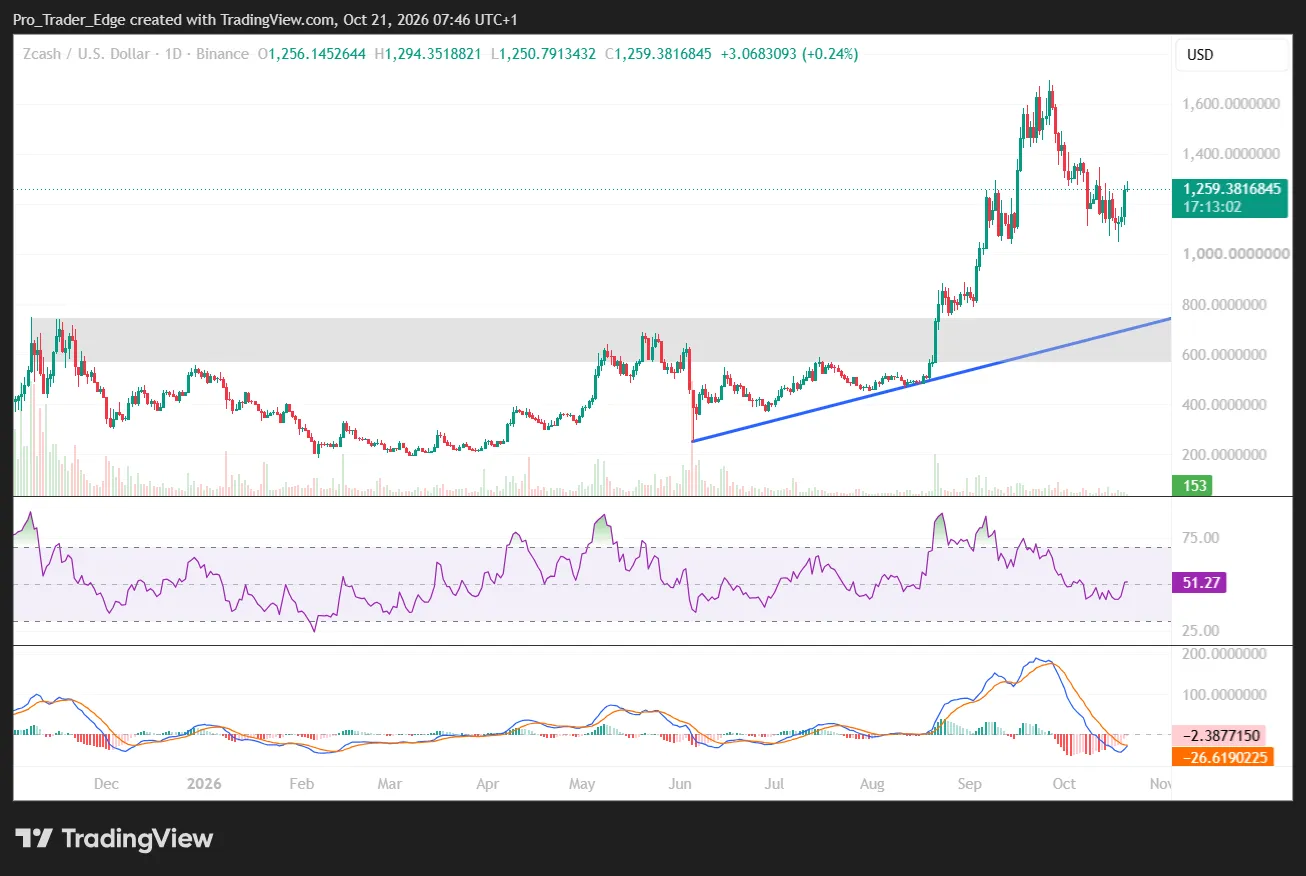
(SeaPRwire) - Here is the uncomfortable tension hanging over Zcash right now. The privacy coin just delivered one of the strongest runs of 2026, ripping from below $300 earlier this year to above $1,600 in September. Yet the loudest voice still endorsing it is telling you the best part is already over. Altcoin Sherpa called the current zone near $1,259 "a very solid area to start building a long term position," then immediately admitted the era of "super asymmetric returns" is mostly done. ZEC is no longer cheap. That is the anxiety underneath every chart being shared this week. Traders are staring at an asset that has already quintupled, trying to decide whether they are early to a re-rating of privacy as a category, or late to a trade that already paid out. The September peak near $1,650 sits overhead like a ceiling everyone can see, and the October correction toward $1,100 proved sellers are real. This is no longer a story about discovery. It is a story about conviction at elevated prices, which is a far harder game to play. The facts, stripped of noise, look like this. ZEC gained about 9% on October 20, moving from roughly $1,150 to $1,257, and trades near $1,259 as of October 21. The daily RSI reads 51.27, barely above neutral, a long way from September's overbought froth. The MACD remains below zero, but the histogram has ticked positive and the MACD line crossed above the signal line. Translation: the selling pressure is exhausting itself, not reversing into euphoria. Resistance clusters at $1,300–$1,400, exactly where sellers appeared before. A clean break opens $1,500 and a retest of the $1,650 high. Support sits at $1,100, then $1,000, with $800 below that. Underneath the price action, the fundamentals moved quietly. CoinDesk Research reported on October 20 that holders voted overwhelmingly to keep the four-year halving schedule. NU7 is scheduled to activate November 5, cutting block intervals from 75 seconds to about 25 seconds. Roughly 29.18% of circulating ZEC, or 4.96 million coins, now sits in shielded pools per the ZecZcash tracker as of October 19. That shielded figure matters more than any candle. It means actual usage of the privacy feature is growing in absolute terms while the price reprices. So can ZEC reach $2,000 in 2027? That requires roughly 59% upside from here, which sounds modest until you remember the base case from PrimeXBT's August analysis projects a 2027 range of $848.25 to $1,719.08, averaging near $1,211.75. The house model, in other words, expects ZEC to be roughly flat a year from now. Bullish scenarios at $1,800–$2,200 need NU7 to land cleanly, the halving narrative to hold, and privacy demand to keep compounding. Bearish cases at $700–$1,000 need only a low-volume bounce failing at $1,400. The commercial loop here is straightforward. Zcash monetizes nothing directly. Its value accrues purely from demand for shielded settlement, and that demand must outrun issuance until the halving cuts supply growth. The endgame is binary. Either privacy becomes a premium category with ZEC as its large-cap benchmark, justifying $2,000, or it remains a niche that already got priced. Watch volume on the next test of $1,400. That print will tell you which future you are buying.
More

The AI Money Machine Has a Leak

(SeaPRwire) - Elice Group’s 30% crash on its first trading day is not a story about one Korean cloud company. It is the first loud alarm that the capital markets are no longer willing to fund the AI buildout without asking hard questions. Retail investors pitched in with 400 times oversubscription. Institutions went in at 389 times. The stock still opened at 60,500 won against a 90,500 won offer price. That gap is not just volatility. That is a structural rejection of the price, a market saying that the asset underneath simply does not support the liability of its own expansion. Look at the numbers underneath the event. Elice’s operating profit hit 10 billion won in the first half, and revenue tripled to 34 billion won. That is a healthy company by most measures. The problem is that it now needs to build modular data centers, and it needs cash. The market granted the cash but immediately slashed the price. Compare that to the deals being discussed at the top of the market. Anthropic is reportedly in talks with Nscale for another $45 billion AI cloud deal. That is roughly 60 times what Elice raised, for a single contract. The disparity should bother you. The market is punishing a small Korean operator for wanting to do what the giants are already doing at a larger scale. Then there is CoreWeave, which fell another 3% in premarket trading. The real story here is the 15% yield on its unsecured bonds, a number that belongs in distressed debt, not in a growth infrastructure story. JPMorgan says the contract returns are fine and that the company will keep burning cash until 2030. That means CoreWeave’s survival depends on its ability to refinance, not on its operations. It needs the capital markets to stay open, and it needs them to be patient. The moment that patience wears thin, the entire stack of AI data center financing gets re-priced. You saw Samsung Electronics lose 2.98% and SK Hynix fall 4.23% on the same day. They make the chips that go into this infrastructure. They are telling you the same thing. The old logic ran like this: put money in, build the data center, sign the contract with a big AI lab, and the cash flow will eventually arrive. That worked while interest rates were low and capital was free. That logic is now broken. Higher borrowing costs plus a 15% bond yield plus a 30% IPO pop that goes the wrong way, those are the ingredients of a capital strike. The KOSPI dropped 3.73% in the same session, and Brent crude spiked above $111 per barrel because of Middle East supply disruptions. You have an energy shock and a financing shock hitting at the same time. That is not a coincidence. That is the macro environment reasserting itself over the micro AI story. What happens next is not about whether AI is real. It is real. The demand is there. The question is who gets to finance it and at what cost. Elice raised its money, but the public market just told it the equity is not worth what the company thinks it is. CoreWeave is still trading, but its debt is now shouting stress. The oversubscription numbers from Seoul look like a last gasp of retail enthusiasm that the pricing desks simply ignored. If you are a founder or a CFO planning a data center IPO in the next twelve months, you should read the Elice prospectus again and then look at CoreWeave’s bond yields. The spread between the growth story and the financing cost is now the only number that matters. That spread is widening, and it is about to crush everyone who needs cheap capital to keep the lights on. The meat and potatoes of AI infrastructure is suddenly a game of survival for the most patient balance sheet.
More

The Treasury Nobody Talks About: Evernorth’s Quiet XRP Gambit and What Swell 2026 Is Really Selling

(SeaPRwire) - Something is off about the way crypto treasury companies announce things now. They tell you an announcement exists, then refuse to say what it is. That is exactly what Evernorth did on October 19, posting on X that "something special is planned" for Ripple Swell 2026, complete with a bear emoji and a legal disclaimer longer than the tease itself. This is not marketing clumsiness. It is a calculated tension play, and it exposes the core anxiety running through the entire XRP institutional trade right now. The industry has spent years arguing that digital asset treasuries are the next evolution of corporate finance. Yet the flagship XRP vehicle just listed on Nasdaq and immediately went quiet about its most important event of the year. If the strategy were airtight, the company would be shouting specifics. Instead, XRPN shareholders and the broader XRP market are being asked to trust a teaser. The anxiety underneath is simple. XRP investment products just saw fund outflows that snapped a 13-week inflow streak. The institutional narrative needs a fresh catalyst, and everyone at The Shed in Hudson Yards on October 27 through 29 knows it. The teaser is not confidence. It is a hedge against a narrative that has started to wobble. The facts, stripped of spin, tell a more mechanical story. Evernorth began trading on Nasdaq under the ticker XRPN on October 12, following its merger with Armada Acquisition Corp. II. That is a SPAC route to public markets, the same vehicle structure that carried plenty of crypto-adjacent firms through the last cycle. The company holds 473 million XRP and plans to deploy it through institutional trading and yield strategies, as outlined on October 14. It works with Ripple, Kraken, Coinbase and BitGo on these initiatives. Leadership matters here. Asheesh Birla, a former Ripple executive, runs the company. Hugo Jeandesboz, formerly of Coinbase Asset Management, was named chief investment officer on October 12 to oversee treasury allocation, liquidity and trading relationships. That is not a crypto-native crew. That is traditional asset management DNA grafted onto a single-asset balance sheet. Meanwhile, Ripple Swell 2026 itself has been restructured. The event now absorbs XRPL Apex and UBRI Connect, merging financial institutions, developers and university researchers into one venue. Roughly 1,500 attendees are expected across banking, payments, digital assets and research. Confirmed speakers include executives from Robinhood, BNY and CME Group, alongside Ripple CEO Brad Garlinghouse. On October 28 at 4:30 p.m. Eastern, XRP Ledger co-creator David Schwartz and Ripple engineering leader Ayo Akinyele will present "Building What's Next for XRPL," covering network privacy, scalability, decentralized finance and institutional services. Ripple also expanded XRPL wallet support through Privy, letting developers embed XRP and RLUSD wallets directly into applications. Evernorth sits on the partner list next to Ondo, RedotPay and the XRP Ledger Foundation. None of this is coincidence. It is choreography. Now follow the commercial loop, because that is where the endgame hides. A treasury company's stock price is a function of two things. The value of its holdings, and the market's belief that management can generate yield on those holdings without blowing up the balance sheet. Evernorth's entire model depends on XRP Ledger infrastructure maturing fast enough to support institutional-grade yield strategies. Ripple's own XRP lending plans remain tied to proposed network upgrades. That means Evernorth's revenue thesis is partially gated by engineering decisions it does not control. The Schwartz and Akinyele session on October 28 is therefore not a technical keynote. It is a dependency briefing for XRPN's business model, delivered in public. This explains the event merger. Swell absorbed the developer conference and the university research summit because Ripple needs the ledger's upgrade pipeline, its developer base and its institutional sales motion to move as one system. Fragmented communities produce fragmented roadmaps, and fragmented roadmaps kill treasury yield products. Watch what happens if the October 19 tease turns out to be a concrete yield product, a lending launch or a major custody arrangement. XRPN becomes the proof case that single-asset treasuries can be more than leveraged proxies on token price. If the reveal is thin, the stock becomes a sentiment derivative with a Nasdaq wrapper. The sharper deduction is about market structure. Every treasury company of this type is ultimately a financing machine that converts equity premium into asset accumulation. That loop only spins while public market investors pay more for the wrapper than the underlying asset costs. Evernorth's 473 million XRP position gives it scale, but scale without differentiated yield is just a passive fund with management fees. The BNY and CME executives on the speaker list are the tell. Ripple is not courting crypto natives anymore. It is auditioning for the firms that control actual settlement flows. The endgame is clear enough. Either XRP Ledger upgrades land on schedule and treasury yield products become a repeatable institutional category, or the wrapper premium compresses and the treasury model collapses back into a simple holding company trading at a discount. There is no stable middle state, and the teaser on X is a bet that the market will wait for the answer.
More