





(SeaPRwire) – Stop pretending that haptics are dead. The industry has been shipping flat glass for a decade, claiming that touchscreens solved the problem of input. They didn’t. They just made us accept a lesser quality of life. I sat with the Clicks Power Keyboard, the clip-on accessory that snaps to magnetic phone backs. It isn’t smart. It’s just mechanical. The keys have curvature, row separation, and specific actuation points. The goal is pure physical satisfaction. It’s a rebellion against the silent, frictionless void of modern mobile interfaces. This is hardware remembering its body.
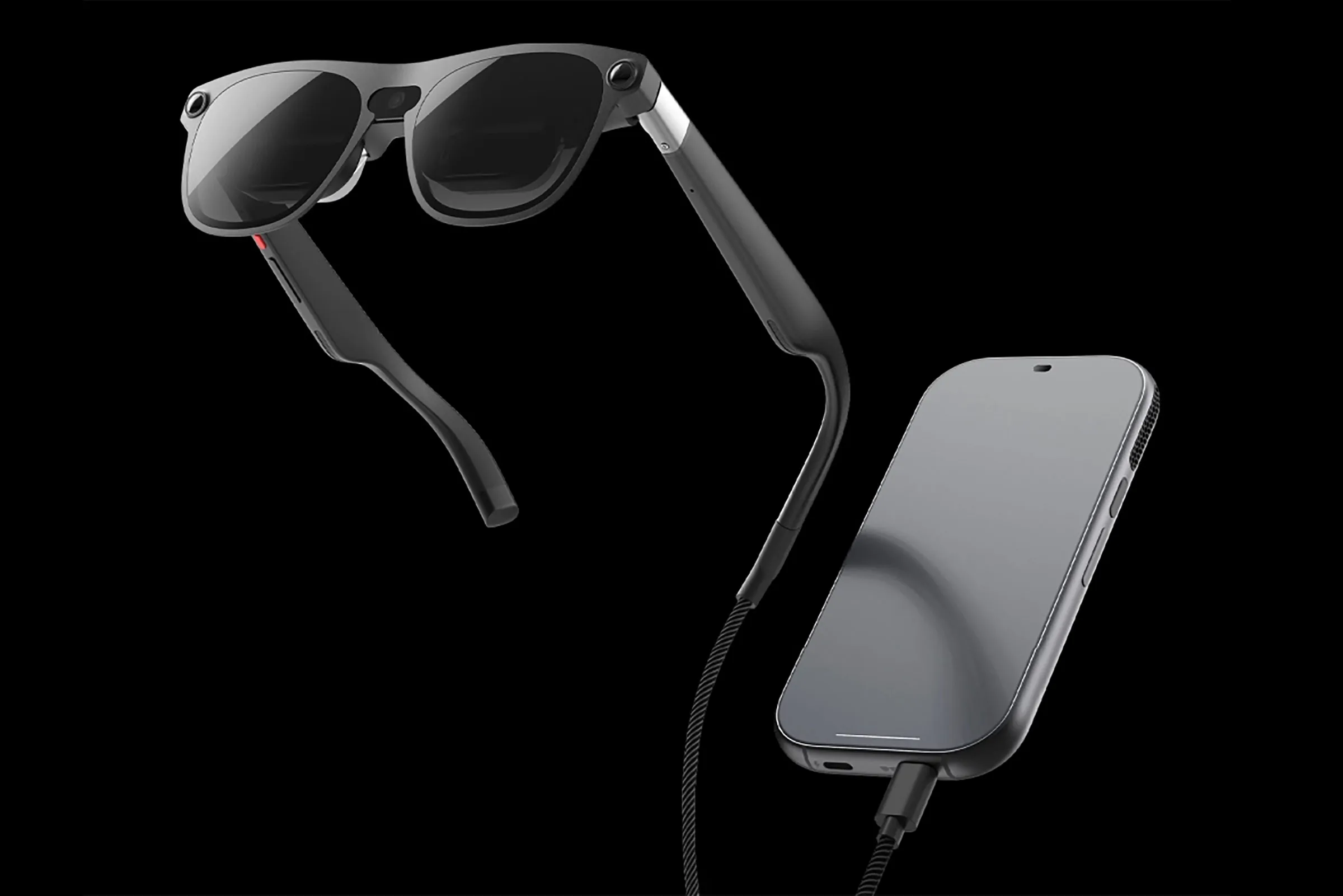
Look at the official specs versus the market reality. XREAL Aura claims a 70-degree field of view with hand tracking. It uses a tethered “puck” for computing power. This design choice screams a specific industrial truth. We are not ready for standalone spatial computing at a comfortable weight. The GPU heat management still forces a tether. Meanwhile, the Samsung Odyssey G8 G80HS hits 6K resolution at 165Hz. It can switch to 3K at 330Hz. This dual-mode capability is the real product. It tells you that panel manufacturing is hitting physical limits on speed versus clarity. You have to trade one for the other. The hardware is the ceiling, not the software.
The subtext in the minimalist camp is louder. Caligra Workbench is a terminal-first operating system. It lacks aesthetic artifice. No flashing icons. No selling you things. It runs on a dedicated C100 terminal. This isn’t just a UI choice. It’s a philosophical rejection of the attention economy. Compare this to the Plaud NotePin S. It’s a pin-on stenographer. It records and transcribes at the press of a button. The company admitted their original 30 templates had limitations. Now they have a community template system. This reveals the gap between AI capability and user intent. The hardware is the capture device. The software is the bridge. That bridge is where the friction lives.
Supply chain reality check. The XR market is projected to hit $2.13 trillion by 2034. That is a massive number, but the current path is fragile. You are relying on external tethers for heavy lifting. You are relying on magnetic snapping mechanisms for keyboards. These are component-level constraints, not just design choices. The OhSnap Mcon controller adds a magnetic back plate. It pops out to a full-size gamepad. This modularity requires precise magnetic alignment tolerance. If the tolerances drift, the user experience breaks. The hardware roadmap is not linear. It is a patchwork of workarounds for physics and thermal constraints. The next decade isn’t about better chips. It’s about better packaging of the chips we have. The tactile revival is real, but the tethered future is here to stay.