SeaPRwire – The Federal Aviation Administration began replacing 3.5-inch floppy disks at five air traffic facilities this week, the first stage of a program that is meant to reach 435 sites by the end of 2028. The replacement is called the Enterprise Information Display System, or E-IDS, and it consolidates four separate legacy setups onto one digital dashboard. It is the first visible piece of a modernization effort that the agency has been funding and defending for years.
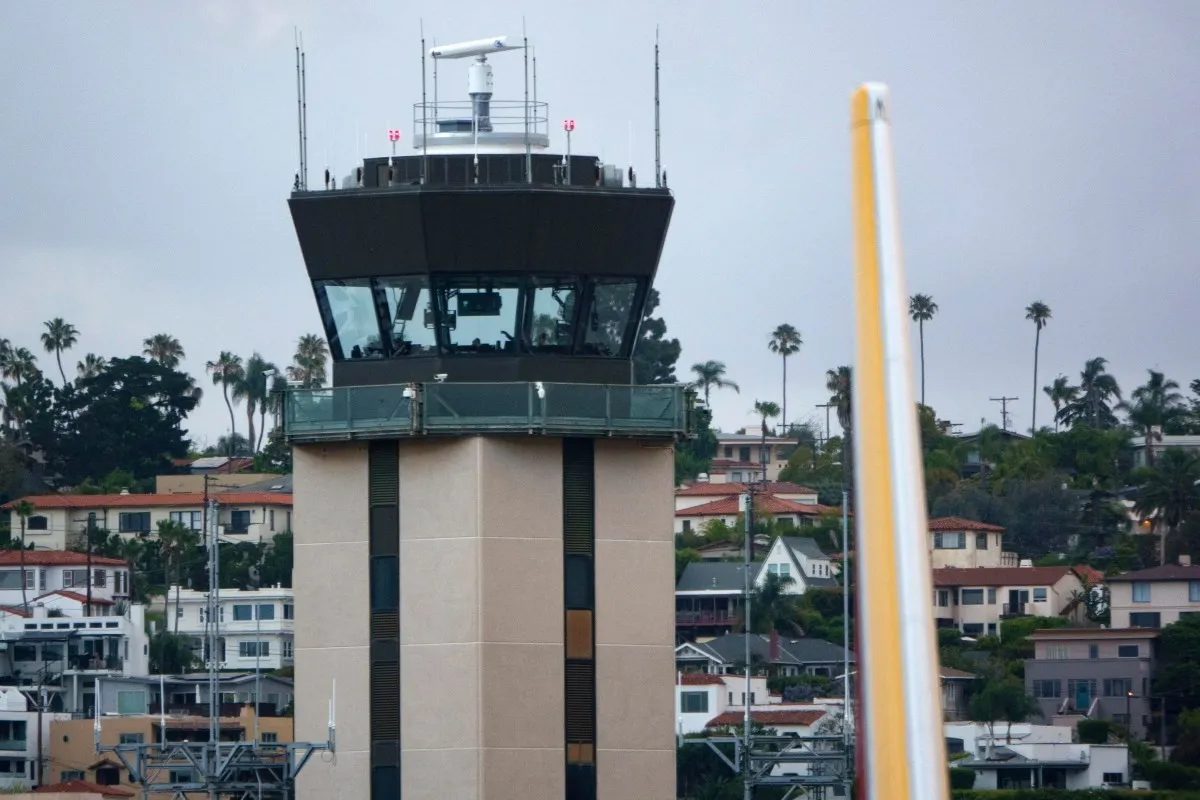
What the dashboard carries is the operational detail. Weather alerts, equipment outages, restricted airspace changes and pilot reports currently arrive through a mix of manual relay and physical media, and controllers assemble the picture themselves. E-IDS puts those feeds on a single screen and updates them in place.
The five sites named so far are control hubs in Atlantic City, Nashville, Rochester, Atlanta and Salt Lake City. The stated scope covers more than 400 facilities today and 435 at completion.
Floppy disks make a good photograph and a poor unit of analysis. A facility that reads weather off a disk and relays it by voice has a latency problem, and latency in a control room is a safety margin being spent. But the disk is a symptom of a procurement cycle that outlived the hardware it bought, not the cause of the delay.
The contract history supports that reading. E-IDS was awarded to Leidos, the Reston, Virginia defense contractor, in August 2020. Six years passed in procurement, safety validation, testing and vendor scheduling before the first five sites went live. That gap is the part of the story a ribbon cutting does not explain.
An audit published two years into that contract put numbers on the backlog. The Government Accountability Office found in September 2024 that 90 percent of the nation’s critical air traffic infrastructure was due or past due for a technology refresh. Of the 138 systems surveyed, nearly half were judged unsustainable or potentially unsustainable, and the reasons listed were funding shortfalls, thin maintenance expertise and missing spare parts.
Missing spare parts is the line worth pausing on. A system kept alive by cannibalizing identical units elsewhere is not a system in service. It is a system in deferral, and the deferral ends when the last donor unit is consumed.
That is the arithmetic of a system running out of donors.
E-IDS addresses one layer of that backlog, and a comparatively shallow one. A display system is the interface between the controller and the data. It is not the radar, the radio, the flight data processor or the network that carries the feeds.
The staffing picture sits outside the program entirely. The agency has been working against a deficit of thousands of certified professional controllers, a shortfall that shows up as mandatory overtime, fatigue and reduced training capacity, since trainee hours depend on certified staff having hours to spare. A dashboard does not staff a tower.
Funding for the wider modernization effort is still in motion. The department received a $12.5 billion down payment in 2025 and has been asking Congress for another $30 billion. E-IDS itself sits inside that envelope, which means the schedule depends on appropriations that have not been settled. Appropriations timing also governs how many facilities can be cut over in a fiscal year, which makes the schedule a budget question wearing a technical costume.
The rollout pace is the number to track. Five sites are live, and 430 more are planned over roughly two years. That is a facility roughly every other day, across a country with controllers already working overtime, which raises a practical question about who performs the cutover work and whether it happens during low-traffic windows or during the shift.
Consolidation also changes the failure surface, and the announcement does not address it. Four separate legacy setups fail separately, which is inefficient and survivable. A single dashboard that aggregates weather, outages, airspace restrictions and pilot reports concentrates the dependency in one place, and the argument for it is the same as the argument against it: everything a controller needs is now in one system. The design question that follows is whether the underlying feeds stay reachable when the aggregation layer does not.
A failover path is cheaper to design at the start than to add later.
Nothing in the announcement gives a per-site schedule, a cost figure for E-IDS on its own, or a measure of how many manual steps the new system removes. Those omissions matter for oversight, because the program will be judged on whether information reaches controllers faster and with fewer transcription errors, and neither can be established from a list of sites.
There is a reasonable case for starting with displays. They are the cheapest layer to modernize, the failures are visible to controllers immediately, and a replacement can be validated against existing procedures without changing the underlying data sources. A program that begins where the feedback is fastest is easier to defend than one that begins with the network. There is a risk in that sequencing, though. A visible modernization at the top of the stack can absorb the political attention that the unglamorous layers need, and the unglamorous layers are where the 2023 NOTAM failure originated. That outage took down a system pilots depend on for pre-flight notices, and it was a software and process failure rather than a hardware one.
The controllers who will use E-IDS are the same people being asked to absorb overtime while the system changes underneath them. Training on a new display is not free, and the agency’s own staffing numbers suggest little slack for it.
What the program will be measured against, eventually, is whether the information a controller needs arrives without a human relaying it. Five sites will show whether that works in the easy case. The remaining 430 will show whether it works at the pace the schedule requires.
For now the record contains a date, a contractor, a facility count and an audit from two years ago. Those are enough to describe the program and not enough to say whether it closes the gap the audit identified.