Every Joke Is a Tiny Revolution: Why Sacha Baron Cohen Thinks Satire Is Infrastructure, Not Entertainment Hot News

Every Joke Is a Tiny Revolution: Why Sacha Baron Cohen Thinks Satire Is Infrastructure, Not Entertainment

(SeaPRwire) - Sacha Baron Cohen believes the world owes satirists something it refuses to pay. He writes this essay like a man staking a claim in a courtroom where the verdict is already sealed. He was eight years old in a London cinema when Monty Python's Life of Brian detonated his worldview. He was twenty when he spent six months under Philippe Gaulier, the French clown who kept a drum to cut short performances he deemed sh-t. Gaulier taught him about the bouffon, a figure dating to 11th century France where societal outcasts, gay people, heretics, those with deformities, were let back into their villages once a year to viciously mock the ruling class. It was the humor of the dispossessed. Clowns were naive idiots. Bouffons were weapons pointed at power. Cohen inhaled Peter Sellers, Peter Cook, and Not the Nine O'Clock News with its biting commentary on Thatcherite Britain. Each generation of satirists picks up the weapon where the last left it and points it at whoever holds the reins. Gaulier's greatest gift, Cohen says, was helping his students discover what he called their inner idiot. That is not a compliment. It is an initiation. The historical evidence is not subtle. Aristophanes lampooned Athenian militarism and demagoguery with phallic jokes so obscene that Plutarch sneered at the coarseness in words, vulgarity, and ribaldry. Juvenal wrote Roman satire that his contemporaries barely acknowledged. Nearly two millennia later, Lenny Bruce's four-letter comedy was branded sick in the pages of TIME magazine in 1959. Charlie Chaplin, when Hollywood largely avoided anti-Nazi content, used The Great Dictator to point to the destruction Nazism would bring. Peter Sellers' sinister Dr. Strangelove showed the insanity of mutually assured destruction. Abbie Hoffman, whom Cohen later played in The Trial of the Chicago 7, deployed outrageous stunts to oppose the Vietnam War. Cohen met Hoffman while researching his undergraduate thesis on civil rights. The pattern is unmistakable. Every editor and critic who dismissed a satirist as coarse or sick missed the point. Cohen calls out the pattern directly. You missed the point, he tells Plutarch and every editorial board that ever dismissed a satirist. Cohen's characters are the modern application of this ancient weapon. Ali G is a white imbecile, a delusional cultural appropriator who steals fashion and lyrics from gangsta rap and dancehall idols from Compton to Kingston. The joke is on him and on the predominantly white male establishment that takes him seriously enough to hire him as an HBO interview host. Borat, an antisemitic journalist, exposes Jew hatred, xenophobia, sexism, and casual racism. Erran Morad, a stereotypical tough-guy Israeli commando from Cohen's new film Ali G: Who Iz I? who claims to have survived fourteen terror attacks and started two, targets Islamophobia and the ludicrous things people will do when gripped by irrational fear of the other. Admiral General Aladeen from The Dictator warned in 2012 how easily democracies slip into autocracies, a mash-up of personality-cult authoritarians from Kim Jong Il to Idi Amin. Cohen acknowledges his work offends people other than the intended targets, and on social media he is lumped in with the bigots he lampoons. But each character is engineered to make powerful people underestimate him and answer in earnest. At a fox-hunting rally, he rummaged through his car trunk for two minutes, found a hat bought in Astrakhan, Russia, stuck it on, proclaimed Jagshemash, riffing off a Polish greeting, and asked English toffs whether criminals should be hunted. They said yes. On camera. That was the moment, for a twenty-five-year-old Cohen, when the light bulb exploded in his brain. Ali G operates on another level. He is not extreme. He is just extremely dumb. But his absurd questions lead powerful people to underestimate him and answer in earnest, revealing their own biases. Satire has limits, and Cohen does not pretend otherwise. More satirists in Weimar Germany could not have prevented Nazism. But the evidence for satire's political potency goes beyond theory. Ben Lewis's Hammer & Tickle credits Soviet joke-telling with helping topple communism, making it impossible for the system's own enforcers to take it seriously. Volodymyr Zelensky was a Ukrainian comedian who once pretended to play piano with his penis, a stunt Aristophanes would have loved. His TV show Servant of the People parodied the country's corrupt oligarchy so effectively that just four years after it premiered, he was elected president. George Orwell observed that every joke is a tiny revolution. Cohen admits most of his humor is indeed juvenile. That is because satire works best not when it preaches but when it lives among the laughter. Then, once you walk out of the theater or switch off the TV, it makes you think. The question Cohen poses is whether modern society still understands that a laugh line aimed at power is not entertainment. It is infrastructure. And when the infrastructure rots, the regime goes with it.
More
Delete 130 Million Names, Detain the Cockroaches: How India’s Election Machine Got Hacked From the Inside Hot News

Delete 130 Million Names, Detain the Cockroaches: How India’s Election Machine Got Hacked From the Inside

(SeaPRwire) - Here is a number that should make every democracy-watcher sit up. Election authorities in India have struck roughly 130 million names from voter rolls. One hundred and thirty million. Officials call it a cleanup exercise, a way to weed out ineligible voters through what they term a Special Intensive Revision. Critics call it something else entirely: a politically motivated purge engineered to tilt the field toward Prime Minister Narendra Modi's Bharatiya Janata Party. The protesters flooding New Delhi's streets in recent weeks clearly believe the second version. Authorities answered them by locking down the capital and throwing movement leaders in detention cells. When a government responds to questions about voter lists with mass arrests, the questions stop being administrative. They become existential. Follow the institutional thread and the picture sharpens. India's elections were, as historian Mukul Kesavan concedes, "a bit iffy" until T.N. Seshan took over as chief election commissioner in the early 1990s. Seshan, an "awkward egomaniac" in Kesavan's memorable phrase, took the office seriously enough to scrub the whole process. The Election Commission became a three-member body, more or less impartial. Then the Modi government passed a law giving itself the majority on the three-member panel that appoints election commissioners. Read that again. The incumbent now controls who referees the contest. Chief Election Commissioner Gyanesh Kumar stands accused of being "grotesquely partisan," and the Special Intensive Revision is described as so obviously shaped to favor the BJP that the institution itself has been publicly discredited. Kesavan's comparison lands hard: India begins to resemble electoral autocracies like Turkey. Protesters are demanding Kumar's resignation. He is not resigning. Now watch how the state treats the street. The youth-led Cockroach Janta Party, the CJP, emerged earlier this year and proved its muscle fast. Its sit-in at Jantar Mantar, the traditional protest ground in the capital, forced Education Minister Dharmendra Pradhan to resign on July 25. That was the moment the government's posture flipped. At what Kesavan calls Jantar Mantar 1.0, officials underestimated the cockroaches, assuming the sit-in would fizzle. Then came the massive turnout of the young on July 20, and the police violence that discredited the government on camera. The lesson New Delhi absorbed was not to listen. It was to prevent. Before the October 10 rally, police detained movement leaders preemptively. Days later they detained two of them again at Jantar Mantar. On Monday, an Indian court extended the detention of Ashutosh Ranka and Saurav Das. Preemptive detention is now the strategy. The goal is simple: never again let massed citizens and police stand face to face where phone cameras can record it. The October 12 march, the one captured in images of protesters swarming a bus carrying Leader of the Opposition Rahul Gandhi, was a different animal. The Congress Party organized it alongside other conventional parties. The CJP had no hand in organizing, though one of its progressive-left stars, Neha Bora, joined the march to the Supreme Court. That detail matters. The youthful insurgency and the creaking opposition establishment are circling the same grievance without yet fusing into one force. Kesavan's read on Modi is worth quoting at length, because it is the sharpest line in the whole episode: the mockery and rudeness of young cockroaches, especially the young women crowding Jantar Mantar, did what solemn ideological opposition failed to do. It made Modi seem "ridiculous, old and out of touch." Twelve years in power, and the aura of menace has dissipated into punchlines. But aura is not arithmetic. Whether this fizz converts to votes is a question only an election can answer, and the opposition has not yet built the machine to convert it. Strip away the drama and the structural ledger looks bleak. Modi's tangible achievements after 12 years are the kind authoritarians do well: roads, airports, infrastructure. Geopolitically, Kesavan calls his tenure a disaster. Bad terms with every neighbor. Denial on China. In the doghouse with Trump. Meanwhile the republic's load-bearing institutions, the press, the courts, the election commission, have been degraded one by one, and Hindu supremacist rhetoric has been normalized into the background hum of public life. Layer on top of that a youth population of historic scale trapped in school and university systems that are generally poor outside a few elite institutions, while China improved education at every level. Nepal, Bangladesh, Sri Lanka have all seen youthful insurrections under similar conditions. The apparatus that appoints India's election referees now answers to the incumbent, and the next election will tell us whether that was the point all along.
More
Phony Is Not a Thriller, It’s a Mirror: Why Gen Z’s Identity Crisis Is the Real Plot Twist Hot News

Phony Is Not a Thriller, It’s a Mirror: Why Gen Z’s Identity Crisis Is the Real Plot Twist

(SeaPRwire) - People keep mislabeling Hulu’s new series *Phony*. They call it a thriller. They see the cliffhangers, the deceptions, and the mystery and assume the standard genre rules apply. That is a fundamental misunderstanding of the text. The show’s creators, Nick Paley and Anthony King, are comedy veterans coming from *Broad City* and *The Afterparty*. They did not build a procedural. They built an uncanny dramedy. The tension is not just about who is doing what to whom. It is about the fragility of social contracts among teenagers. When the protagonist wakes up in the hospital, the world has shifted in a way that feels more social than supernatural. This is not a crime scene investigation. It is a study of adolescent instability under pressure. Let us look at the hard facts that anchor this narrative. Sam Nivola plays Sonny Cooke. He is a high school student who is universally liked. He fits in with jocks and theater kids alike. His mother, Ellen, is played by Connie Britton. Ellen is also the school principal. This creates a specific power dynamic. Sonny shares a fierce bond with her. After a car crash into an eerie pond, Sonny wakes up to find Ellen slightly different. Britton’s transformation uses makeup and visual effects. It is subtle. Yet it is decisive. No one else notices. Sonny’s friends chalk it up to injury. He fights with his best friend, Vogel. He drifts toward outsiders, Mallory and her cousin Weldon. They help him investigate. The show resists the easy tropes. A love triangle between Sonny, Chloe, and Mallory would be the lazy choice. The writers avoid that. Instead, they focus on idiosyncrasies. Sonny and Chloe call each other Bobo. The mother cooks a dish called Chicken Nummers. There is no expository hand-holding. The humor is awkward-adolescent. Chloe rambles about cows having best friends. A party scene spans a midseason episode. It recalls *Dazed and Confused*. Kids are intoxicated and clumsy. The atmosphere feels natural. It grounds the crisis in real, messy, phone-mediated daily lives. It is not painfully quirky. It is specific. Now consider the deeper structural shift happening here. The mystery of Ellen’s doppelgänger is the hook. But the real story is Sonny’s self-discovery. His conviction that his mom is fake destabilizes his own identity. He has been faking it too. He shifts views depending on who he is talking to. He worries about Chloe’s first sexual experience to the exclusion of his own. He lacks strong opinions. The genre framework allows for a supernatural or criminal explanation. Or it is all in his head. The possibilities remain endless midway through the eight-episode season. But the theme of developing a self distinct from what others want is the core. Paley and King are operating in a rigidly genre-bound market. Most thrillers offer no surprises. They follow a checklist. *Phony* breaks that checklist. It uses the thriller bones but fills them with the flesh of a coming-of-age story. The process of getting to the big reveal is the pleasure. The characters are too specific to disappear into clichés. The show proves that even in a thriller, the emotional logic matters more than the plot logic. Watch the prototypical TV mom and son play into and against their types.
More
The Winter Audit: Why Brussels Is Betting Everything on a 2027 Election Cycle Hot News

The Winter Audit: Why Brussels Is Betting Everything on a 2027 Election Cycle

(SeaPRwire) - Putin is not just losing ground on the battlefield. He is bleeding credibility. Five years into the war, Russian forces are stalled. Ukrainian drones are hitting targets in Moscow. This is a nightmare for a leader whose personal brand is welded to military victory. The reaction is predictable. Escalation is no longer about winning the war. It is about changing the rules of the game in Europe. The strategy shifts from the front line to the ballot box. The core anxiety driving Brussels is not just about missiles. It is about the 2027 European Parliament elections. Ten member states will hold votes then. Russian intelligence understands that fatigue is a weapon. The goal is to make European voters feel the cost of support. This costs money. It disrupts supply chains. It creates a narrative of economic decline. If the electorate feels the pinch, they will punish pro-Ukraine leaders. The hybrid warfare campaign is designed to weaponize this political timing. We must look at the specific threats outlined in the new security assessments. First, there is the physical layer. Ukrainian air defenses are depleting. Patriot interceptors are scarce. Russian missiles will find the gaps. They will strike power grids and heating infrastructure. This is not just about killing. It is about turning off the lights. A cold, dark winter in Berlin or Paris breaks morale faster than a skirmish in the Donbas. Second, there is the infrastructure layer. We saw the foiled attack on a Ukrainian cargo plane at Leipzig on August 4. This was a test. It was not an accident. These incursions are probes. They measure how quickly NATO can respond. They disrupt the flow of weapons to Kyiv. They keep European police agencies on edge. But the most chilling element is the political subtext. Moscow hopes to destabilize the Baltics. Estonia and Latvia have large ethnic Russian populations. The playbook from 2014 is still active. "Little green men" without uniforms. Troops deployed without clear identification. This forces a dilemma. NATO must defend its borders. But does it invoke Article 5? If it does not, the alliance looks weak. If it does, it risks full war. Russia wants this ambiguity. It wants European leaders to hesitate. The new National Security Strategy addresses this. It includes an "emergency protocol." The European Commission can summon heads of state quickly. This is a speed adjustment. It is meant to remove the bureaucratic drag that allows Russian agents to operate freely. The financial leverage is real, though often understated. Europe controls over $225 billion in frozen Russian assets. This is not just a statistic. It is a gun held at the head of the Russian economy. The threat is that these assets could be seized. This is a massive economic shock. It would decouple Moscow from Western finance. The stated hope is that this coordinated clarity will deter escalation. The message to Putin is blunt. Europe is united. It is prepared. Further aggression will not split the alliance. It will only accelerate the economic strangulation of the Russian state. There is a secondary audience here. It is President Donald Trump. European officials are crafting this strategy to show independence. They want to prove they can handle the threat without relying on American taxpayer dollars. They present this as a complement to NATO, not a replacement. This is critical. A credible NATO response is still the ultimate deterrent. But Europe must show it has its own muscle. The timeline is tight. These preparations must be in place by the end of this year. Intelligence sharing must improve. Cyber defenses must be hardened. If they miss this window, the 2027 elections become a landslide for revisionist parties. The pendulum will swing. And it will swing hard.
More
$10 Billion and Counting: The Midterm Is Being Auctioned Off in Plain Sight Hot News

$10 Billion and Counting: The Midterm Is Being Auctioned Off in Plain Sight

(SeaPRwire) - Political advertising for this midterm cycle has already crossed $10 billion, and AdImpact projects $11.6 billion by Election Day. That figure would eclipse the $11.2 billion spent during the entire 2024 presidential cycle. Let that sink in. A midterm, once treated as the sleepy off-year contest, now costs more than a presidential race. The previous midterm record, set in 2022, was $8.9 billion. We blew past that weeks ago. This is not organic democratic enthusiasm. It is a capital arms race, and the ammunition is being supplied by a very short list of names. The geography of the money tells the real story. Texas alone has drawn over $500 million in combined ad spending and reservations, only the second non-presidential race in history to cross that line, after Ohio's $542.7 million Senate race in 2024. Democrat James Talarico outraised Republican Ken Paxton by roughly $50 million from July through September. Yet Paxton holds the broadcast edge. Why? Elon Musk, who has given $369 million to Republicans since the start of 2025, moved $158 million last month into the Senate Leadership Fund, which passed matching sums to Texas PAC. Another $10 million went to Lone Star Liberty PAC in August. As OpenSecrets' Brendan Glavin put it, that money "essentially went directly into supporting Paxton." One donor, one decision, one stabilized candidacy. The pattern repeats up the ballot map. Ohio's Senate race has consumed over $450 million, with Republicans spending nearly $270 million behind Jon Husted against over $180 million for Sherrod Brown. Maine, a state you could drive across in an afternoon, is hosting a $200 million Senate race, the most expensive per capita this cycle. Across nine tight Senate contests last month, Republicans outspent Democrats $233 million to $121 million on broadcast television. In toss-up races overall, the tally stands at $947 million to $625 million. Democratic candidates keep winning the grassroots fundraising game. Republican super PACs keep winning the airwaves. The Uihleins gave $138 million. Jeff and Janine Yass gave $110 million. George Soros-linked entities put $102 million into Democracy PAC. A handful of households are functionally setting the agenda of a national election. The legal architecture making this possible is no accident. The 2010 Citizens United ruling and a subsequent appeals court decision built the super PAC system, where contribution limits simply do not exist. An individual can give a candidate's campaign $3,500 per election. That same individual can write a nine-figure check to a super PAC, so long as there is no formal coordination. Worse, super PACs disclose donors, but those donors can be nonprofits that conceal their own funders. That is the dark money loop. And research in the American Political Science Review estimated a $2 million television advantage could net a Senate candidate about 10,000 votes. In a toss-up, that is the seat. Glavin is right that spending the most does not guarantee victory. But the parties are not behaving as if they believe him. Strip away the civic framing and what remains is a machinery problem. Campaign finance limits now function as a velvet rope at a side door nobody uses, while the loading dock stands wide open. Candidates raise hard money in $3,500 increments, then watch billionaires decide the actual battlefield through entities they cannot legally coordinate with but absolutely depend on. The party that masters this apparatus does not need better candidates or better ideas. It needs a longer donor Rolodex. Unless the disclosure rules around nonprofit pass-throughs are rewritten, the 2028 cycle will not be a contest between parties at all, but between balance sheets.
More
225% More Chronic Cases. That’s What the CDC’s ‘Shared Decision-Making’ Model Costs in Math. Hot News

225% More Chronic Cases. That’s What the CDC’s ‘Shared Decision-Making’ Model Costs in Math.

(SeaPRwire) - For 34 years, the United States treated the hepatitis B birth dose as bedrock public health protocol. Since 1991, routine infant vaccination has been standard practice across the country. By the late 1990s, guidance specified the first dose within 24 hours of birth. The clinical rationale was unambiguous and well-documented in the infectious disease literature. Babies infected before age one develop chronic, potentially lifelong infection in up to 90% of cases. Left untreated, that chronic infection carries a one-in-four lifetime risk of liver cancer. The virus transmits silently through mother-to-child contact at birth or through exposure to infected blood and semen. Many carriers have no awareness they possess the virus until their liver fails or cancer surfaces, sometimes decades later. There are treatments but no cure for chronic hepatitis B. The birth dose was the frontline defense. It prevented the cascade before the cascade began. By intercepting the infection at the most vulnerable window, the protocol eliminated the highest-risk transmission pathway. The CDC's original recommendation was grounded in decades of epidemiological data showing that early-life infection is the primary driver of chronic hepatitis B in the United States. The birth dose was not optional policy architecture. It was the single most effective point of intervention in the infection lifecycle. Now, in December 2025, the CDC under the Trump Administration has decided that this well-established rationale no longer applies to every American family. The change is not about safety or efficacy. It is about a philosophical shift in how preventive medicine gets delivered. The policy modification is narrow in its drafting but wide in consequence. For mothers who test negative for hepatitis B, the CDC has ceased recommending the birth dose. A shared decision-making model now replaces the previous directive. Parents and clinicians jointly determine whether the vaccine goes in shortly after birth or waits until no earlier than two months of age. For mothers who test positive or whose status is unknown, the birth dose recommendation continues without change. The American Association of Pediatrics has pushed back publicly, maintaining that all infants should receive vaccination at birth. Fifteen states have filed lawsuits against the administration over this and related vaccination schedule changes. The institutional signal is unambiguous. This is not a technical footnote. It represents a structural break in the federal preventive medicine framework that has operated without challenge for over three decades. The shift reframes a consensus-based public health intervention as a private choice. What was once a system-level guarantee is now a conversation that must be had, or not had, in every delivery room across the country. The legal battles that have followed are not incidental. They are a direct institutional response to a framework that now requires millions of individual decisions where one universal protocol once sufficed. The shared decision-making model does not eliminate the need for vaccination. It redistributes the logistical and communicative burden onto the individual family unit. The new study published in Annals of Internal Medicine converts that break into measurable public health fallout. Researchers used computer modeling to simulate 3.6 million children born in a single U.S. year, tracking their first 20 years of life under the new recommendations. The model tested multiple scenarios, including continuation of the former CDC recommendations, delayed initial dosing, and a shared decision-making framework. Under a scenario where only 26% of children receive vaccination by two months—the estimated outcome under shared decision-making—chronic hepatitis B cases would rise by 225%. Even at a 75% vaccination rate with the two-month delay, chronic cases climb by 19%. Two complementary modeling studies reinforce the finding. One concluded that abandoning birth-dose vaccination would necessitate a substantial increase in screening pregnant women for the virus to maintain current infection control levels. Another found that delaying the first dose by two months adds $16.4 million in healthcare spending on new infections, even if every child eventually gets vaccinated. Dr. Amir Mohareb, an infectious-disease researcher at Harvard Medical School and Massachusetts General Hospital, frames the stakes with precision. He notes that clinical trials already proved the birth-dose approach decades ago. The experiments are finished. The question is not whether it works. It is whether the system will implement what it already knows works. The three studies complement each other and provide evidence without requiring new human trials. The modeling does not introduce new uncertainty. It quantifies existing risk under a policy that removes a proven intervention. The cumulative trajectory across multiple birth cohorts would push chronic infection numbers into the thousands within a few years. The modeling approach is not speculative. It is based on established epidemiological parameters and transmission dynamics that have been validated in prior clinical and observational studies. This is a governance fracture dressed in the language of clinical flexibility. When a federal agency reclassifies consensus-based preventive medicine as a matter of individual preference, the compliance burden shifts from the public health infrastructure onto individual families. The study's modeling captures one year of births. The policy implication is cumulative. Every year of implementation compounds the chronic infection baseline. Hepatitis B infections acquired before age one do not resolve with time. They persist for decades, leading to cancer and liver failure in a significant fraction of carriers. The cost is not merely clinical. It is economic, familial, and institutional. The states already in court signal that this fracture is structural, not incidental. The governance question has shifted. It is no longer whether birth-dose vaccination is medically correct. It is whether a voluntary framework can withstand the arithmetic of a silent, lifelong epidemic that compounds annually. The math does not wait for shared decisions. A single year of implementation under the shared decision model could add thousands of new chronic infections to the national burden. The governance implication is stark. When a proven intervention is made conditional on individual consent rather than universal implementation, the system loses the ability to scale prevention as a population-level strategy. The policy is not reversible in the way the disease is irreversible.
More

When the Streets Burn and Cabinets Wobble: Inside the French Street Upheaval

(SeaPRwire) - France’s Interior Minister Laurent Nuñez admitted on Monday that police lost control in some cities over the weekend. Violent protests erupted across the country, prompting French President Emmanuel Macron to call for a review of the police response. Hundreds of thousands took to the streets to protest underfunded public services and rising cost-of-living pressures. These demonstrations followed weeks of student protests that had also seen some violence. Nuñez offered his resignation to Macron because he felt responsible for the chaos. Macron refused to accept it, citing the need for a continuous command of the police.The official narrative from the Élysée Palace frames the administrative response around transparency and order. Macron ordered the Interior Ministry to take all necessary steps to ensure transparency over planning and intelligence failures. Prime Minister Sébastien Lecornu extended local mayors the power to enforce partial curfews to protect businesses and people. The French government also vowed to create a fund to financially assist shops impacted by the riots. Yet, the underlying geopolitical reality points to a severe systemic fracture. State apparatuses are struggling to absorb grassroots economic shockwaves while maintaining public order across major urban centers.Behind the rhetoric of administrative accountability lies a deep-seated convergence of socio-economic grievances. The Interior Ministry reported around 550,000 demonstrators on Saturday, while a French trade union put the number at over 800,000. Nuñez noted that more than 2,000 people were arrested and over 600 police officers and firefighters injured. In Paris, at least 300 businesses were vandalized. Arson attacks targeted a historic town hall in Limoges and a main tourist office in Lyon. In Bordeaux, the prefect's residence was attacked. Protesters also revived the spirit of the Yellow Vest movement of 2018, blending student anger with demands from farmers, firefighters, workers, teachers, and healthcare workers. Similar unrest spilled over into Milan, Lisbon, and Brussels, signaling a broader European crisis of governance.The geopolitical pendulum is swinging back toward profound domestic instability across Western Europe. Governments can no longer rely on standard public relations maneuvers to quell widespread disillusionment with public spending and inflation.
More
The Last-Minute Lifeline: How Trump’s endorsement reveals the transactional core of the US-Israel alliance Hot News

The Last-Minute Lifeline: How Trump’s endorsement reveals the transactional core of the US-Israel alliance

(SeaPRwire) - Trump finally gave in. Three years into his second term, after more months of public friction and carefully calibrated silence, the American president chose Sunday to officially throw his weight behind Benjamin Netanyahu. The endorsement arrived just days before Israel's October 27 election, when Bibi needed every advantage he could get against a resurgent challenger. Trump called him a "great warrior" on Truth Social and framed the choice in stark terms: any leader other than Netanyahu would leave America standing alone against Iran. The language was warm. The calculus was not. The official gesture masked a much rougher reality. Inside the White House, the two men had been drifting apart for months. After their February joint strike on Iran kickstarted a wider regional war, Trump tried to pull back, pushing negotiations instead of escalation. Netanyahu pushed forward, bombing Iran's South Pars gas field in March. By April, Trump publicly prohibited further strikes on Lebanon. The June call about the Beirut operation ended with Trump reportedly calling Netanyahu "f-cking crazy." Netanyahu's own defense was characteristically measured — common goals, tactical disagreements, great friends. That last line, delivered weeks before his July US visit where Trump complained about intelligence sharing on Iran's nuclear program, said everything and nothing. The picture inside Israel tells its own story. Most Israelis still see Trump as a friend, according to a Jewish People Policy Institute poll. But trust has eroded. Gadi Eisenkot built an entire political movement on the failure to deliver security after three years of war. His son and nephews died in Gaza. The Yashar! Party now runs neck-and-neck with Likud in several surveys. Trump's endorsement may register politically, but Eisenkot's response was pointed: only Israelis decide their prime minister. The timing suggests Trump knew he couldn't stay silent forever, but his public ambivalence throughout September — refusing to answer when asked repeatedly if Israelis should re-elect Netanyahu — tells you exactly how reluctant he was. This was never a friendship. It was a transaction, and the ledger has always been written in American leverage and Israeli dependence. Trump gets a reliable ally on Iran. Netanyahu gets a shield against legal and political pressures at home — a shield Trump already tried to use when he wrote to President Herzog in November asking for a pardon in the corruption trial, calling it a "political, unjustified prosecution." The Board of Peace arrangement with Turkey and Qatar representatives fell apart over Gaza reconstruction control. The 15-point ceasefire plan was rejected because Netanyahu insisted Hamas must fully disarm first. Every disagreement was handled privately until it couldn't be. The pattern is clear. The endorsement arrives at a moment when the geopolitical pendulum is about to swing hard one way or another. If Netanyahu wins, the US commitment to the Iran confrontation deepens without question. If Eisenkot wins, Washington faces an immediate recalibration it has not prepared for. Trump has built his entire foreign policy narrative around personal relationships over institutional ones. That works until it doesn't, and the last three years suggest we are approaching that threshold. The question is no longer whether the friendship is real. It is whether it survives the next crisis. The real story here is not about loyalty between two leaders. It is about what happens when a transactional alliance hits its expiration date. Israel's next government will face choices Trump did not design for. The United States gets the ally it wanted, right up until the moment that ally makes decisions Washington cannot control. The endorsement was always going to arrive eventually. Its significance lies not in the timing but in what it reveals about the architecture of the relationship — and how fragile that architecture has become.
More
The Wilder Precedent: How a Horse Racing Warrant Justifies Mass Detainees Hot News

The Wilder Precedent: How a Horse Racing Warrant Justifies Mass Detainees

(SeaPRwire) - The federal government is currently running a dangerous stress test on the Fourth Amendment, using the Idaho border as the laboratory. The core issue is not merely a local dispute over horse betting. It is a structural pivot in how immigration enforcement interacts with traditional criminal law. By exploiting a narrow legal loophole, agencies have effectively decoupled mass detention from specific, individualized suspicion. This shift creates a legal gray zone that favors speed over due process. The result is a system where the presence at a crime scene becomes sufficient grounds for arbitrary detention, regardless of citizenship status or individual culpability. The official narrative relies on the specificity of the original FBI warrant. Authorities state that agents targeted the owner of La Catedral Arena and four others for unlicensed gambling and animal fighting. The Department of Homeland Security argues that detaining others present during a valid warrant execution is "common practice." They frame the action as a dismantling of an illegal enterprise. This language minimizes the broader impact. The claim suggests that collateral arrests are a natural, if unfortunate, byproduct of rigorous law enforcement. The administration maintains that the arrests were lawful because the primary target was correctly identified and seized. The reality on the ground contradicts this tidy legal fiction. The raid involved more than 200 law enforcement officers. They utilized armored trucks and snipers. Rubber bullets and flash-bang grenades were deployed against vehicles where civilians had fled. Approximately 105 people were arrested for alleged immigration violations. This included minors as young as fourteen. Two U.S. citizens, a mother and her three-year-old son, were zip-tied and denied food for hours. Of the 105 detained, seventy-five are believed to have been deported. The legal challenge argues that ICE piggybacked on an unrelated warrant to conduct a "fishing expedition." This distinction is critical. The warrant was for gambling, not for the mass of attendees present at a cultural festival. This case sets a dangerous precedent for future operations nationwide. If courts uphold the government’s position, it validates the use of general warrants as cover for broad immigration sweeps. The potential for institutional abuse is high. Communities will face heightened anxiety and self-censorship. The chilling effect will suppress participation in public life among vulnerable populations. The legal pendulum is currently swinging toward executive authority. The outcome will determine whether Fourth Amendment protections apply to immigration enforcement or remain a dormant statute. Watch the judge’s ruling on the qualified immunity motion. That decision will define the scope of federal power for years.
More
Silicon Valley Is Minting Billionaires. The Least Fortunate Are Waiting for the Billions to Show Up. Hot News

Silicon Valley Is Minting Billionaires. The Least Fortunate Are Waiting for the Billions to Show Up.

(SeaPRwire) - The AI revolution will not distribute itself. That is the uncomfortable arithmetic no one in a Palo Alto boardroom seems willing to articulate aloud. The same technology minting a new generation of billionaires can deliver life-saving vaccines at $2 a shot in Somalia and bring 92 percent recovery rates for malnourished children in South Sudan. Yet the capital keeps flowing upward. The question is not whether the tools exist. It is who gets to hold the checkbook when the crisis hits. The evidence base for what works in humanitarian crises has never been stronger. The IRC alone has conducted over 50 impact evaluations since 2020 and 500 cost analyses. They know how to negotiate with armed groups to reach populations cut off from healthcare. They know that tackling violence against women and violence against children together reduces both by over 70 percent. They know that giving aid before a climate disaster hits—in Afghanistan, recipients were three times less likely to fall deeper into poverty. But official development assistance from OECD countries dropped by a historic 23.1 percent in 2025. Governments are retreating from global problems. The IRC's digital helpdesk Signpost has reached 20 million displaced people in 12 languages. Major tech companies helped build it. And less than 1 percent of all aid is invested in anticipatory action. There is a brutal contrast between the rhetoric and the reality here. Philanthropy remains almost entirely domestic. Around 94 percent of American philanthropy stays within U.S. borders. Meanwhile, the 20 countries ranked at greatest risk of humanitarian crisis on the IRC Emergency Watchlist represent just 12 percent of the global population yet account for 90 percent of those in humanitarian need. Children in Sudan, Gaza, and South Sudan are three times more likely to die before their fifth birthday and ten times more likely to grow up in extreme poverty than children born elsewhere. These populations contributed the least to climate change and face its consequences alongside armed conflict with virtually no support to adapt. The effective altruism framework—treating generosity as a calculation rather than a sentiment—should not surprise anyone who has watched development work collapse under its own bureaucracy. We have the data. We have the tools. What we lack is the incentive structure to redirect capital toward the places where each additional dollar travels furthest. The same technology delivering fortunes in Silicon Valley built the infrastructure for Signpost. That technology is not neutral. It will go where the attention and the rewards are. If philanthropy stays local, the gap widens. The real test for this generation of wealth creators is not how much they give. It is where they choose to give it.
More
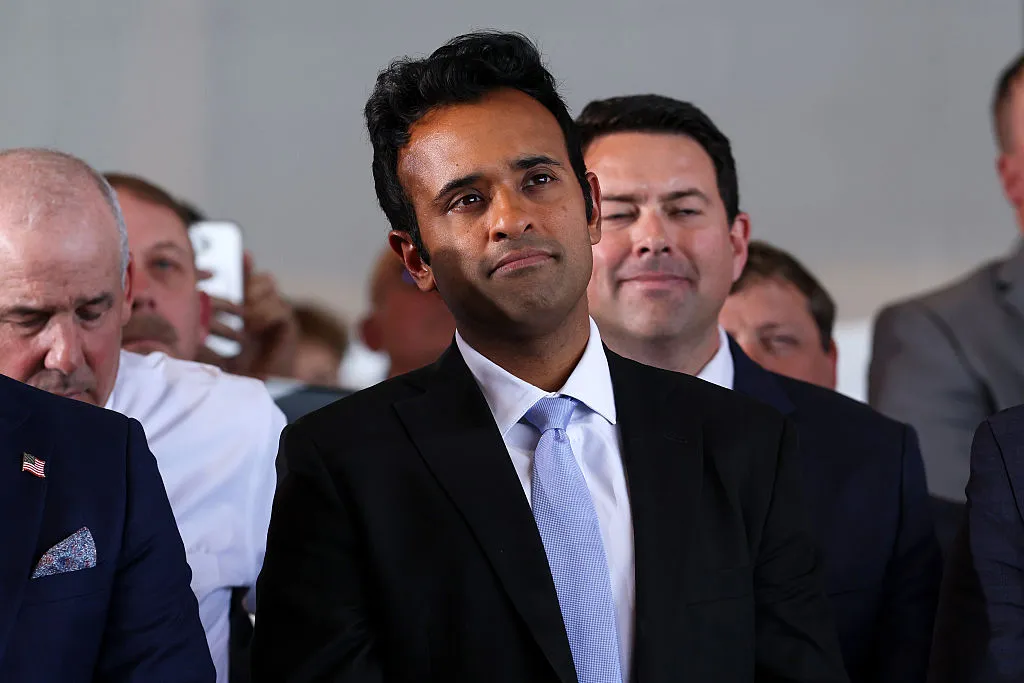
The $101 Million Burning Pit: Vivek Ramaswamy Discovers Trumpian Capital Cannot Buy the Buckeye State Hot News

The $101 Million Burning Pit: Vivek Ramaswamy Discovers Trumpian Capital Cannot Buy the Buckeye State

(SeaPRwire) - National political consultants still treat Ohio like a solved equation. They assume a reliable red electorate will rubber-stamp any endorsed brand. Vivek Ramaswamy is currently running into the harsh limits of that arrogance. Donald Trump carried Ohio by eight to eleven points across three cycles. Yet Ramaswamy now finds himself trailing Amy Acton. She is a former state health chief and a political novice. The demographic coalition that swept populist candidates into office does not automatically transfer to tech wealth. Suburban moderates are quietly stepping back. Working-class voters are unimpressed by performative social media stunts. Ohio has spent decades backing cautious, predictable conservatives. Ramaswamy promised to be the most conservative governor in the state's history. That friction is now turning what should have been an easy coronation into a brutal knife fight.The spending imbalance exposes deep structural panic inside the Republican apparatus. Ramaswamy and his aligned groups have unleashed $101 million on negative advertising. Ramaswamy personally funded $36 million of that war chest. Meanwhile, Acton and her supporters have spent barely a third of that amount. Money typically insulates an establishment candidate in statewide races. Here, massive capital deployment is delivering diminishing returns. Cracks appeared early during the spring primary. Auto entrepreneur Casey Putsch challenged Ramaswamy from the right on an explicit America First platform. Putsch ran hostile spots challenging Ramaswamy to games of cowboys and Indians. Trump endorsed Ramaswamy immediately, yet Putsch still captured nearly one-in-five primary votes. That primary margin sent an unmistakable warning signal. Millions of regular primary voters rejected the anointed national figure. Down-ballot mechanics expose a fractured state operation. Acton’s campaign has framed Ramaswamy as an out-of-touch corporate operator. She attacks his personal fortune and weaponizes local anti-billionaire grievances. The lifestyle disconnect is obvious to local precinct captains. Ohio is a compact, driveable state. Ramaswamy has instead relied on a private corporate jet to hop between events. When hecklers confronted him at Xavier University in Cincinnati, he walked off the stage entirely. Online videos showing him hitting tennis balls while rattling off economic talking points drew widespread ridicule. He was publicly booed during the Ohio State football season opener. Observers later mocked him for wearing a knock-off team jersey. At an October rally in Youngstown with Trump, Ramaswamy pivoted to safe meritocracy talking points. The scripted rhetoric cannot mask the ground-level resistance across suburban wards.The candidate's economic messaging clashes violently with local community interests. In boardrooms and suburban chambers of commerce, he pitches deregulation and broad tax cuts. Outside those rooms, he champions industrial AI data centers. Local communities widely distrust these power-hungry installations. The ads targeting Acton have devolved into accusations about personal stability. Her team retaliates by labeling him an investment fraud. Both sides are burning cash on personal character destruction. Neither nominee has an extensive legislative voting record to defend. In the parallel Senate contest, Jon Husted and Sherrod Brown duel over known legislative histories. In the governor’s race, voters face raw character assassination. Ramaswamy is running out of message discipline. When high-volume ad spending fails to move polling needles, campaigns get ugly fast.The party machine engineered this crisis by stripping away local gatekeeping. On February 24 of last year, Trump posted his absolute endorsement on Truth Social. That single post sidelined seasoned state veterans. It boxed out state Attorney General Dave Yost. It shut down state Treasurer Robert Sprague. It forced Lieutenant Governor Jim Tressel out of contention. Party leaders sacrificed regional institutional memory to satisfy national populist media figures. If Democrats flip the mansion, Ohio immediately re-enters the 2028 presidential battleground map. State party chairs across the Midwest are watching closely. Imposing charismatic donors over battle-tested local administrators creates massive electoral vulnerability. Centralized endorsements cannot override fractured base fundamentals.
More

Four Bodies, One Dry October: What the Wainwright Fire Exposes About Canada’s Strategic Blind Spot

(SeaPRwire) - Four soldiers dead inside a peacetime training installation is not a war story. It is a systems failure dressed in the language of tragedy. Prime Minister Mark Carney used the word "violent" to describe the blaze at Canadian Forces Base Wainwright on October 17, 2026. He called it one of the worst tragedies for forces on Canadian soil in peacetime. Those words carry weight, but they also reveal something uncomfortable. A country with a professional standing army of over 1,300 personnel at its busiest army base cannot explain why high winds, dry October conditions, and a rapidly spreading fire killed four of its own. The fact that Defense Minister David McGuinty told the public he "cannot recall an incident like this" tells you everything about how much institutional memory exists around this failure. Wainwright is not a secondary facility. It hosts the Canadian Manoeuvre Training Centre and the 3rd Canadian Division Training Centre. It is the preferred ground for army field force units based in Western Canada. Retired Major-General Denis Thompson described the training there as bringing together infantry and artillery in large-scale live-fire exercises, sometimes including air-dropped munitions. This is where Canada's land force learns to do the hardest things the country asks of anyone. And on this dry October day, the ground itself became the weapon. The raw facts are stark. The fire ignited within the training area in the late afternoon of October 17. The Canadian Armed Forces said the flames spread rapidly due to high winds, extending beyond the base perimeter toward the adjacent Municipal District of Wainwright. Four service members died. Dozens were wounded. Edmonton hospitals declared a Code Orange alert, a designation reserved exclusively for external disasters or mass casualty incidents. Wainwright Mayor Bruce Pugh confirmed to CBC that this was the largest mass casualty event the community had ever seen. Pugh, who lives over 100 miles southeast of Edmonton in a town of 6,600 where neighbors play on the same hockey teams and send kids to the same schools, said the base went quiet after the cannon fire stopped. He realized something had happened when the fire department was activated. The mayor noted that October had been dry and that high winds were a contributing factor. Alberta Health Services said it was gathering additional information. The military stated there is no indication of terrorism. McGuinty said an investigation would be launched and was en route to Edmonton. He had spoken with both Carney and Alberta Premier Danielle Smith. Meanwhile, Carney had recently returned to Ottawa after a visit to Alberta, where the province was preparing to vote on Monday about whether to begin the legal process of potentially separating from Canada. No details about what started the blaze had been released. The Canadian Armed Forces said additional details would be confirmed after next-of-kin were notified. The political arithmetic here is brutal. This incident lands in Alberta on the eve of a sovereignty referendum. A province already debating its place inside the country just lost four soldiers in a training accident its own government cannot yet explain. Carney's statement that "Canadians come together in crisis" reads as both sincere and strategically necessary. The phrase "worst tragedies for forces on Canadian soil in peacetime" is not neutral. It positions this event as a defining moment for the current government's competence. McGuinty's call to describe the incident as "very active and delicate" suggests an awareness that premature statements could trigger panic or political exploitation. But the real cost is not political theater. It is structural. Wainwright is one of Canada's busiest army bases, and it absorbed a catastrophe that triggered a Code Orange across the Edmonton hospital system. If a single dry October afternoon with high winds can take down one of the country's most critical training nodes, the question is not whether the investigation will find negligence or bad luck. The question is whether Canada has a realistic understanding of how fragile its military training infrastructure is against environmental and operational stress. The investigation is underway. The answers do not change what already happened. Four dead service members, dozens wounded, one Code Orange, and a national conversation about sovereignty happening 100 miles away. The investigation will take months. The political damage took one afternoon.
More
Denmark Tripled Cardiac Survival by Mandating School CPR. Seven U.S. States Are Still Missing the Memo. Hot News

Denmark Tripled Cardiac Survival by Mandating School CPR. Seven U.S. States Are Still Missing the Memo.

(SeaPRwire) - Two Michigan high school students sat in the bleachers on a late afternoon in 2024 when their physical education teacher collapsed from cardiac arrest during a student-teacher basketball game. Both had recently completed CPR training at a career-focused technical nursing center. They ran. They began chest compressions. They located and used an automated external defibrillator before emergency responders arrived. Their teacher lived. He is one of approximately 350,000 Americans who suffer an out-of-hospital cardiac arrest each year. Roughly nine out of ten of those victims do not survive. The difference between those who live and those who die is not primarily a question of hospital speed. It is a question of whether the person standing closest has the skill to act in the first few minutes. The U.S. school CPR mandate landscape is a patchwork of forty-three states and seven holdouts. Alabama required CPR for high school graduation as early as 1984. In West Virginia and Alaska, educators' unions formally backed CPR legislation. In Washington and Illinois, efforts advanced in memory of students lost to cardiac arrest. Seven states remain outside the mandate entirely: California, Colorado, Hawaii, Massachusetts, Nebraska, New Hampshire, and Wyoming. Massachusetts has since invested $425,000 to expand CPR education in public schools. Colorado includes hands-on CPR and AED instruction in its statewide health education guidelines but stops short of requiring schools to provide it. California Governor Gavin Newsom recently signed a resolution directing the Instructional Quality Commission to include high school CPR in the state's next health curriculum framework. San Francisco is taking an even broader approach, with paramedics and firefighters working to train 100,000 community members in CPR. At the federal level, Buffalo Bills safety Damar Hamlin, who suffered cardiac arrest on the field in 2023, became a leading advocate for the bipartisan HEARTS Act. Congress passed it unanimously in 2024. President Biden signed it into law that year. It supports schools in expanding AED access, CPR and AED education, and cardiac emergency response planning. The real-world survival data supports the mandate argument with unusual clarity. Denmark introduced nationwide resuscitation initiatives including mandatory school CPR education between 2001 and 2010. Bystander CPR rates more than doubled during that decade. Thirty-day survival after out-of-hospital cardiac arrest more than tripled. A study of nearly 300,000 out-of-hospital cardiac arrests across twenty U.S. states found that patients had twelve percent higher odds of receiving bystander CPR in states with high school CPR education laws compared to those without. The International Liaison Committee on Resuscitation research shows children can absorb the early links in the chain of survival from age four and perform effective chest compressions by age twelve. The WHO-endorsed KIDS SAVE LIVES initiative provides a scalable blueprint calling for recurring, age-appropriate basic life support education beginning in childhood. Schools already rehearse fire drills and lockdown drills for dangers that are statistically rare. Cardiac arrest is far more common and far less rehearsed. Legal fears that still slow adoption in the seven holdout states are not grounded in evidence. Every state has Good Samaritan laws protecting those who render emergency aid in good faith. A thirty-year review of U.S. litigation across all fifty states from 1989 to 2019 found no cases in which a layperson who provided CPR was held liable for causing harm. Georgia's Wesley's Law and Indiana's Stop the Bleed programs offer a clear operational playbook. After their son's overdose death, Laura and Larry Gay championed legislation requiring public schools in Georgia to stock naloxone. By 2025, the state launched an opioid-settlement-funded initiative to provide overdose-reversal kits to public schools statewide, along with training resources for staff. In Indiana, emergency-response professionals helped expand Stop the Bleed training in schools, and the state's Secured School Safety Grant program now offers funding for school bleeding-control programs and kits. Broadening collaboration among the American Medical Association, American Red Cross, Project ADAM, and the American Heart Association could accelerate CPR education nationwide. The seven states that have not mandated CPR education are not facing an unsolved policy question. The data exists. The federal law exists. The legal precedent exists. The funding models exist. What is missing is the final legislative call in seven statehouses. Cardiac arrest does not negotiate legislative timelines. Every minute without CPR is a percentage point the patient cannot recover.
More
The $2 Billion Gaza Pipeline: Netanyahu’s Containment Bet, Now in Black and White Hot News

The $2 Billion Gaza Pipeline: Netanyahu’s Containment Bet, Now in Black and White

(SeaPRwire) - Benjamin Netanyahu built his entire political brand on being the one man who could keep Israel safe. The documents TIME obtained dismantle that claim with brutal efficiency. They show Israel's own intelligence chiefs writing thank-you letters to Qatar's emir for funding Hamas-controlled Gaza. Nearly $2 billion moved through a system Israel helped design, approve, and administer. This was not a policy that happened to Netanyahu. It was his policy. And Israeli voters, heading to the polls on October 27, must now decide whether that policy was deliberate strategy, catastrophic negligence, or both. The paper trail is damning, and it is precise. It begins in 2007, when Hamas seized control of Gaza and Qatar began sending money. Ehud Olmert was prime minister then. Israel kept its distance from the transfers. Netanyahu changed that in 2012. His government approved a system where Israel delivered food and medical supplies, determined which Palestinian families qualified for financial aid, and enabled Qatari financing to expand Gaza's electricity supply. By 2018, Qatar had sent roughly $1.1 billion into the Strip. The number came from an analysis provided to Israeli ministers and reported by Haaretz. The funding covered humanitarian assistance, fuel, and government salaries. That year, the Qataris demanded formal documentation. They were tired of Israeli officials denouncing them in public while privately requesting more money. A senior official from the first Trump Administration confirmed that contradiction to TIME. So Israel, Qatar, and the United Nations formalized the arrangement. On October 2, 2018, they signed an agreement to finance fuel deliveries into Gaza. Two years later, Mossad director Yossi Cohen wrote to Qatar's Emir Tamim bin Hamad Al Thani. "It is indeed a great opportunity to express our gratitude and appreciation for the humanitarian aid efforts that the State of Qatar has provided the last few years to the Gaza Strip," Cohen wrote. "Undoubtedly, these humanitarian efforts have played a crucial role in improving the humanitarian situation within the Gaza Strip, and ensuring stability and safety in the region." A Mossad director does not write such letters by accident. He writes them because the prime minister wants the money to keep flowing. In August 2021, Qatar signed another agreement committing $40 million to a cash assistance program. UN special coordinator Tor Wennesland publicly praised such efforts as vital to improving Gaza's dire humanitarian situation. The strategic logic was twisted but coherent. Netanyahu believed something simple. Keep Hamas strong enough to rule Gaza. Not strong enough to threaten Israel. That would permanently split the Palestinians. No unified Palestinian leadership meant no two-state negotiation. Meanwhile, Israel could normalize relations with the Arab world. The aid would give Hamas something to lose. Containment through cash. That was the bet. It failed catastrophically on October 7, 2023. Hamas terrorists stormed southern Israel, murdered some 1,200 people, and took 251 more hostage. The financial lifeline did not moderate Hamas. It sustained the group's grip on power and helped enable the assault. Qatari officials now point out one thing. All aid passed through Israel. UN organizations delivered it, coordinating with Israeli authorities. Nothing went directly from Qatar to Hamas. Technically true. Politically hollow. Israel oversaw the mechanism, approved the families, signed the agreements, and created the delivery system. This had support across the board. Successive Israeli governments, the Palestinians, the Trump and Biden Administrations, the United Nations, and European powers all backed it. That does not absolve Netanyahu. It indicts an entire establishment that chose convenience over security. Qatar, after all, set up a Hamas political office in Doha at the request of the United States in 2011. Everyone knew who was receiving the money. Netanyahu's office declined to comment. One former Israeli defense official put it plainly: "It was a policy failure on our part born of good intentions that multiple prime ministers kept going. But Netanyahu was unquestionably at the center of it. He was the one who championed and accelerated the program, his government was in charge of the way it was run, and now we know as a society that we can never afford to make a mistake like that again." Israeli voters face their verdict on October 27. The documents guarantee they will render it with full knowledge of what their leader did. That is the only honest outcome left.
More
Trading Democracy for Diesel: How One Signature Rewired Washington’s Russia Playbook Hot News

Trading Democracy for Diesel: How One Signature Rewired Washington’s Russia Playbook

(SeaPRwire) - Washington just performed a magic trick. Congress passes a sanctions bill with overwhelming bipartisan support, names it after Lindsey O. Graham, and schedules it to bite on Oct. 18. Then the President picks up a pen on Friday and waves most of it away. The Lindsey O. Graham Sanctioning Russia and Iran Act, aimed at Russian officials, banks, and buyers of Russian crude, never gets its first day of enforcement. Jeff Colgan at Brown University calls it plainly: trading Ukrainian democracy for diesel. He is not being poetic. He is reading the receipts. The blocked law carried real teeth. Tariffs up to 100% on goods from major purchasers of Russian oil and gas. Sanctions on the financial plumbing feeding the war machine. The U.K.'s Foreign Office estimated in June 2025 that existing sanctions had already cost Moscow at least $450 billion in war funds since February 2022. Trump's waiver keeps old measures in place but kills the added squeeze. One week earlier, on Oct. 9, he announced a diesel deal with Russia. Treasury issued a temporary license authorizing Russian diesel transactions, including U.S. imports, through April 7, 2027. Trump claimed Russia would supply over 4.8 million tons and cut prices "IN RECORD NUMBERS." The economics do not support the theater. Tatiana Mitrova of Columbia's Center on Global Energy Policy says any pump-level benefit for Americans would be small, delayed, and modest at best. The waiver itself creates no new supply. The real winner is Moscow, which dodges sanctions that could have hit its far larger crude export revenues. Meanwhile Trump claimed an "energy ceasefire" on Oct. 11. Ukrainian officials reported Russian strikes hours later, and Zelensky said the agreement was news to him. That same day, Trump called for Zelensky's replacement. Now watch the maneuvering behind the curtain. The bill cleared Congress on Sept. 16 with overwhelming bipartisan backing, which means the waiver is not a partisan skirmish. It is an executive overriding his own party's stated position, days before midterm elections on Nov. 3. Fuel prices are the domestic obsession. Trump has repeatedly pressed Kyiv to halt strikes on Russian fuel infrastructure, blaming those attacks for American pump prices. Yet war-related disruptions tied to Iran and reduced Russian refinery activity are the bigger drivers. The political math favors cheap diesel over allied pressure, and everyone in the Capitol knows it. The alliance consequences compound quietly. Konstantin Sonin at the University of Chicago reads the waiver as a symbolic gift to Putin, a morale boost signaling that Washington is drifting away from its European role. Europe keeps tightening sanctions while Washington reverses direction. Mitrova warns this undermines a central pillar of Western strategy and reinforces the Kremlin's belief that it can simply outlast support. Zelensky responded on X: blocking the sanctions "definitely helps only the Russians" and "certainly does not stop the war." Both parties criticized the waiver. The criticism changed nothing. Watch the next sanctions bill die the same way, and Kyiv will stop asking Washington for permission before it acts.
More
The $1 Trillion Climate Lie: Why Debt Is Strangling the AI and Energy Pivot Hot News

The $1 Trillion Climate Lie: Why Debt Is Strangling the AI and Energy Pivot

(SeaPRwire) - There is a convenient silence at the World Bank and IMF fall meetings in Bangkok. Leaders talk about the war in Iran, the surge in AI, and soaring public debt. Climate change? It has vanished from the top of the agenda. Yet, the data tells a different story. The "triple shock" identified by the United Nations Development Programme is not just an economic problem. It is a climate disaster in financial disguise. The UNDP report points to high borrowing costs, energy price spikes, and extreme weather events driven by El Niño. These are not separate items. They are the same crisis. The most common policy response is not a fix. It is a bandage. Ninety-five countries have implemented fuel price supports. Think subsidies or tax cuts. The UNDP estimates explicit fuel subsidies could surpass $1 trillion this year globally. This approach is unsustainable. Backlash to higher prices persists even as governments bleed cash to keep citizens calm. While the broad majority resorts to subsidies, a smaller group of countries is attempting structural change. These nations are investing in renewable energy, energy efficiency, and electrification. Picture subsidies for electric buses or cutting tariffs on solar panels. This is the right path. But not every country can afford it. Heavy indebtedness and high interest rates are the primary blockers. El Niño and broader climate shocks make it harder for these economies to pay for new infrastructure that reduces exposure to fossil fuel volatility. The IMF’s World Economic Outlook is light on climate talk, but the logic holds. Indebtedness makes it difficult to invest in AI infrastructure. The IMF plots countries’ AI preparedness alongside the non-fossil share of their energy supply. Energy security and the capacity to adopt AI are intersecting. Dependence on volatile imported fossil fuels compounds this challenge, given AI’s massive energy needs. This emergent dynamic adds a new layer to the argument for non-fossil energy in emerging markets. But it also shows how complicated achieving that end will be. Cheap clean tech hardware is not enough. The financial architecture for deployment is broken. If you cannot borrow to build solar farms because your debt load is too high, the transition stalls. The "green" transition is currently a luxury item for the wealthy. For the rest, it is a distant hope blocked by the very debt that climate shocks are creating. The policy gap is not an oversight. It is a structural failure. We are funding the symptoms, not the cause.
More
One Sale in Ten Years: How a Widow with No Art Training Built the Van Gogh Empire Out of a Family Tragedy Hot News

One Sale in Ten Years: How a Widow with No Art Training Built the Van Gogh Empire Out of a Family Tragedy

(SeaPRwire) - The Van Gogh story is usually told as a tragedy of madness. That framing is wrong, or at least badly incomplete. Strip away the mythology and what remains is a brutal commercial failure story, and then one of the most successful asset-rehabilitation campaigns in the history of any market. Consider the numbers. Over ten years, Vincent van Gogh produced more than 800 paintings and 700 drawings. His brother Theo, a Paris art dealer and his sole source of income, managed to sell exactly one painting in Vincent's lifetime: Red Vineyard at Arles. That is a conversion rate no fund manager would survive. Vincent lived on a monthly allowance, complained constantly about being broke, sometimes lacked money for food, and begged his brother for more. The arrangement poisoned the relationship the way money always poisons families. In July of 1890, convinced he had failed as an artist and as a man, Vincent shot himself in the chest. He was 37. Six months later, Theo died from the ravages of syphilis. The ear-cutting episode fits the same economic logic. The standard account blames the fight with Gauguin, who was threatening to leave Arles. But the mutilation happened the very day Vincent likely learned that Theo and Jo were engaged. Experts including Martin Bailey suspect the real trigger was terror of abandonment, the fear that his patron-brother would build a new family and cut off the allowance. And the suicide came days after a tense Paris visit in which Theo talked of quitting his job, budgets were tight, and arguments erupted. Vincent left that apartment convinced he was a burden. This was not simply mental illness. It was a dependent supplier watching his only distribution channel wobble. Now look at what happened to the inventory. Jo van Gogh-Bonger, the young widow, inherited more than 400 paintings, works like The Potato Eaters, Irises, Sunflowers, the self-portraits, and The Starry Night. At the time the market priced them as the unpolished output of a depressed, crazy man. Commercially worthless. She had a baby to feed, little money, and canvases stuffed under beds, in closets, and at a nearby art supply store. She also had no formal art training. What she had was conviction and a plan. She read the hundreds of letters Vincent and Theo had exchanged, first to feel close to her dead husband, then because she recognized what they contained: proof that Vincent was not a lunatic who flung paint, but a deliberate craftsman who thought hard about his work. Her strategy was textbook brand-building, decades before the term existed. She organized exhibitions. She lobbied critics. She controlled the narrative by publishing the letters, which showed Vincent's vulnerability and anguish alongside his intelligence and his bond with Theo. In 1914 she pulled it off, releasing the letters in an ambitious three-volume book now regarded as one of the most revealing documents in art history. She even carried guilt about her own unintended role in the collapse, admitting she understood Vincent grew more isolated after she married his brother. None of that stopped the execution. The woman who was partly a trigger for the tragedy became the chief architect of the redemption. The commercial loop here deserves cold attention. Value in art is not manufactured at the easel. It is manufactured afterward, through narrative control, scarcity management, and relentless institutional placement. Jo understood this intuitively. She did not discount the work to move units. She built context, published primary-source material, and let the letters reframe the painter from madman to misunderstood genius. The market followed the story, not the brushwork. Stand in front of The Starry Night at the Museum of Modern Art today, where visitors whisper that it is overwhelming and magical, and you are looking at the finished product of her campaign. Painted in June 1889 inside an asylum in the south of France, assembled from a village, a sky, a cypress, and things Vincent had seen separately and fused together, it now anchors a reputation that Gauguin, hanging ignored one canvas to the left, never achieved. The lesson for anyone managing undervalued assets is uncomfortable and simple. Genius without a distributor dies broke, and the person who controls the posthumous narrative controls the price. Jo van Gogh-Bonger proved it with 400 worthless canvases and a printing press.
More

275,000 People Proved It. Your Company Is Still Betting on Coffee and Gyms.

(SeaPRwire) - The modern workplace is drowning in productivity frameworks. KPI dashboards and engagement surveys line every executive dashboard. Everyone has one more app telling managers how to motivate their teams. HR departments pour millions into offsites, peer-recognition platforms, and wellness stipends. None of it seems to close the satisfaction gap. Burnout rates keep climbing. Turnover keeps accelerating. Yet here is the glaring oversight. Nobody is measuring the single variable that separates performers who coast from those who actually thrive. The research has been sitting in plain sight for two decades. It is called zest. It is not a fad or a feel-good slogan for a management seminar. It is a measured character strength. It has one of the strongest empirical correlations to mental well-being ever recorded. And most companies still treat it as optional enrichment rather than a core operational input. The data has been waiting patiently. The gap between what we know and what we do in the workplace has never been wider. Every leadership conference produces another engagement framework. Every HR team launches another pulse survey. None of them measure the one trait that the evidence says separates thriving employees from coasting ones. Meanwhile, burnout continues to rise and engagement scores continue to stagnate. Psychologists Christopher Peterson and Martin Seligman pioneered the field of positive psychology. That means the scientific study of human flourishing. They published Character Strengths and Virtues in 2004. It was a groundbreaking text that cataloged 24 universal character strengths. Zest is one of those 24. But it is not just another checkbox on a personality inventory. It is not a nice-sounding value statement on a corporate wall. An analysis of data from 130 studies involved more than 275,000 people globally. The findings should have entered mainstream management discourse long ago. Most character strengths were associated with greater mental health. But zest was one of only two strengths that had the strongest relationship to mental well-being. This held across countries and age groups. The other was hope. Just two strengths cleared this threshold. Zest and hope stood apart from the rest. Zest contributed to life satisfaction among children, adolescents, and adults. In a separate study of nearly 10,000 employed adults, those who scored high on zest reported higher work satisfaction. They were more likely to view their work as a calling. People who scored high on measures of zest also viewed their lives as meaningful. When you cultivate zest, you want to fully engage in life. You do not just view it from the sidelines. You wake to anticipation over the day's possibilities. You do not brace for the inevitable grind. The data is not ambiguous. The evidence base is too large to dismiss. This trait outperforms almost every other measured character strength. The outcomes matter to individuals and to the organizations they inhabit. Ryan Niemiec is a psychologist and author. He wrote The Power of Character Strengths. He also wrote Character Strengths Interventions: A Field Guide for Practitioners. He serves as the chief science and education officer at the VIA Institute on Character. The institute is a non-profit. It focuses on the science and practice of character strengths. Niemiec puts the practical lever for boosting zest in plain terms. He points straight to behavioral activation. He calls it one of the most proven strategies for depression. In practical terms, this means taking action to lift one's energy. He encourages people to engage every day in one healthy pleasure. One form of physical activity. And one action that makes you feel like you accomplished something. The examples are grounded and immediate. Take a brisk 10-minute walk every morning before the inbox opens. Engage in cardiovascular or strength-building challenges during the workweek. Practice Reiki or yoga when the calendar permits. Laugh with friends during a lunch break. Do not scroll through a feed thick with chaos and gloom. Engage in stimulating tasks and meaningful work. Do not default to mindless busywork. The VIA Institute on Character provides activities, workbooks, videos, and webinars. Some are free. They cover improving all 24 character strengths including zest. For those dealing with physical illness or chronic pain, Niemiec recommends professional assistance. A psychologist can help with the mental side. A physician can advise on the physical. A personal trainer can guide the behavioral shifts. For the vast majority of working adults navigating modern noise, the pathway to cultivating zest is straightforward. It is also critically underutilized. Most organizations have never heard of behavioral activation in this context. They have never connected it to character strength development. The tools are free and readily available. They just sit in the VIA Institute's library, gathering dust while companies chase the next engagement gimmick. The commercial implication becomes difficult to ignore once you sit with the numbers. Organizations spend billions annually on engagement initiatives. They fund wellness perks and leadership development programs. Yet the research consistently shows something counterintuitive. The employees who experience work as a calling are not the ones with the fanciest gym memberships. They are not the ones with the most generous parental leave policies. They are the ones who have cultivated genuine zest. They wake up to anticipation rather than dread. They engage fully in their tasks. They do not halfheartedly coast through obligations. They see their work as meaningful. They do not treat it as merely functional. True zest is not hyperarousal or excess caffeine. It is a cultivated cheerfulness and joy. It is vitality, exuberance, and joie de vivre. That is the French phrase for the joy of living. Research supports the idea that no one is ever too old to change. We can learn how to cultivate zest. It works regardless of our starting point. Some of us naturally carry this irresistible aliveness. We invigorate those around us. Others work hard to build it deliberately. The gap between where organizations invest and where the evidence points has never been wider. Every company could restructure a fraction of its wellness budget. They could teach behavioral activation basics to their workforce. The payback would not be limited to well-being metrics. It would show up in retention rates. In output quality. In error reduction. And in the quality of a team that genuinely wants to be present. For those who are hard on themselves, the investment case is even stronger. They expect their mental health to stretch under strain. They expect it to hold without development. Building skills, traits, and perspectives that help is not optional enrichment. It is infrastructure. Acquiring zest is a worthwhile investment. It helps through challenging times. It helps us see beauty and soar in our lives and workplaces. The data from 130 studies and 275,000 people is not a subtle whisper. It is the loudest signal in the room. Most leaders walk past it every single morning. No one needs a new app to start. The data already tells us what works. The question is whether anyone in the room will act on it. The research has been waiting. The next quarter is close enough to matter. It has already passed for most of them.
More
A Party Filmed in 1972, Released in 2025: Why One Unfinished Documentary Is Outclassing Everything in Theaters Hot News

A Party Filmed in 1972, Released in 2025: Why One Unfinished Documentary Is Outclassing Everything in Theaters

(SeaPRwire) - Forget the streaming wars for a minute. The most interesting media story this season is a film shot half a century ago, shelved for decades, and finished by the director's family after his death. Once Upon a Time in Harlem is not a product of any algorithm or content pipeline. It is a rescued asset, a piece of intellectual property that nearly died in the edit bay. And now critics are calling it one of the great documentaries of the year. That should unsettle every executive who thinks volume equals value. Here is the raw material. In 1972, filmmaker William Greaves borrowed Duke Ellington's Harlem apartment and gathered surviving giants of the Harlem Renaissance. Aaron Douglas, Arna Bontemps, Gerri Major, Eubie Blake. Many had not seen each other in fifty years. Greaves filmed the reunion, his son David working as a cinematographer. The goal was a record of how these people lived, and a meditation on how we honor the keepers of our past. Ellington, ill, never made it to his own party. The film nearly never existed. Greaves, already established through Symbiopsychotaxiplasm: Take One and the pioneering public television program Black Journal, called this project one of the most important of his life. He worked on it off and on for years. He died in 2014 with it unfinished. His son David and granddaughter Liani, a producer, finally completed it. Anne DeMare and Lynn True handled the edit. NEON is distributing. The gap between footage and release is over fifty years, which may be a record in delayed gratification. Now the industry angle. Documentaries are drowning in commissioned true-crime filler and celebrity hagiography, cheap to make, quick to forget. This film proves the opposite model works: patient preservation, authentic access, no narration crutch. The footage itself is the asset. Van Der Zee sits at Ellington's piano and plays. Richard B. Moore recites Claude McKay's If We Must Die from memory. Ida Mae Cullen argues, sharply, that the Renaissance lasted exactly one decade. No reenactments needed. Authenticity this dense cannot be manufactured or licensed. The deeper lesson concerns archive economics. Regina Andrews tells of working at the 135th Street library branch, befriending Cullen and Langston Hughes, and her friends quietly collecting dishes from Chinese restaurants so she could host poets. As she puts it, it was the joy of living and creating together. Moments like that are the real scarcity in media. Studios spend billions chasing franchises while unprocessed film cans sit in family storage, appreciating in cultural value. Whoever funds the next archive rescue gets prestige at a fraction of blockbuster cost. The next great documentary is already sitting in someone's attic, waiting for a family stubborn enough to finish it.
More
The Austen Reset: Why Daisy Edgar-Jones Is the Heroine of Modern Resilience Hot News

The Austen Reset: Why Daisy Edgar-Jones Is the Heroine of Modern Resilience

(SeaPRwire) - There is a specific type of cultural anxiety that triggers whenever a new Jane Austen adaptation hits the streamer’s queue. It is not merely nostalgia for Ang Lee’s 1995 classic. It is a fear that the material is too small for a modern, saturated market. The immediate reaction from critics and fans alike was one of dismay. How could anyone dare to top Emma Thompson’s work? But this reaction reveals a deeper structural problem in how we consume literature. We treat famous adaptations as terminal stops rather than starting lines. We cling to familiar favorites out of habit, not hunger. The release of this new *Sense and Sensibility* is a test case for that habit. It asks whether the audience is ready to let go of nostalgia or if they will just re-watch the old version. The answer, so far, is that the new version is not just a copy. It is a deliberate pivot toward a different kind of emotional truth. Georgia Oakley’s directorial debut in this genre brings a distinct shift in tone. She previously directed *Blue Jean*, a 2022 drama with a raw, emotional core. That background is visible here. The film does not rely on the glossy, high-gloss production value typical of period pieces. Instead, it uses the landscape as a character. The drowsy closeups of wildflowers and the placid grazing deer set a specific mood. It is a mood of suspension. The cinematography by Arnaud Potier creates a handsome, genteel look that avoids being pretentious. The contrast between the lively country dance and the formal, regimented London ball is sharp. Oakley makes no mistake about which environment allows for genuine connection. This is not just about costumes. It is about the economic reality of the era. The Dashwood women are in a precarious financial position. Their father died, and his property went to a son from a previous marriage, John, played by Tom Brooke. His wife, Fanny, played by Stacy Martin, is disagreeable. The sisters move into modest quarters arranged by Mrs. Jennings, played by Fiona Shaw. Shaw brings a blissfully dithery energy to the role. She is an unrepentant meddler. Her interventions drive the plot forward with chaotic efficiency. The casting is the true commercial driver here. Daisy Edgar-Jones plays Elinor, the sensible sister. Esmé Creed-Miles plays Marianne, the dreamer. The dynamic between them is the engine of the story. Marianne is set on the flirty Mr. Willoughby, played by Frank Dillane. He is fun and lively, which makes him dangerous. The more suitable suitor is Colonel Brandon, played by Herbert Nordrum. He is stalwart but dull. If you have not read the book, you are left to guess who wins. That is the point. The romance is a mask for a deeper anxiety. Marianne is self-centered. She wears her heart on her sleeve as a way to control outcomes. Creed-Miles makes her likable despite this flaw. When Marianne is hurt, the audience hurts with her. It is a raw, bruised anguish. Edgar-Jones plays Elinor with subdued fire. Elinor matches expectations with reality. She falls for Edward Ferrars, played by George MacKay, who is Fanny’s brother. He is kind and modest, the opposite of her arrogant sister-in-law. Edgar-Jones shows that Elinor wants more but does not ask for it. This is a crucial distinction. It is not just about romance. It is about the cost of being practical in a world that rewards performance. The industry implication is clear. This film targets a gap in the market for emotionally literate period content. It does not compete with the high-octane blockbusters. It competes with the comfort content that drives subscription retention. The success of *Blue Jean* proved Oakley can handle complex emotional narratives. This film proves she can scale that talent to a wider audience. The commercial loop is simple. Streamers need reliable content to keep subscribers engaged during low-impact news cycles. Classic literature offers that reliability. The end-game is not about replacing the 1995 version. It is about owning a new slot in the algorithm. The audience for austen is not shrinking. It is just getting fragmented. This film captures the fragment that is tired of sentimentality. It offers a heroine who is correct but not cold. That is a marketable product.
More