Ancestry.com Uncovered My Grandfather Was Charles Manson—Here’s How a 22-Year-Old Turned Trauma Into a Hulu Doc Hot News

Ancestry.com Uncovered My Grandfather Was Charles Manson—Here’s How a 22-Year-Old Turned Trauma Into a Hulu Doc

(SeaPRwire) - By: Lucas Caldwell Consumer DNA genealogy tools sold as feel-good family reunion hacks have a dark underbelly. They don’t just connect you to distant cousins at barbecues. They can yank back the curtain on a traumatic past that rewrites your entire sense of self. Sophia Maddox’s story isn’t just a personal tragedy—it’s a stark case study of how consumer tech forces ordinary people to confront unasked-for truths. Her journey from a struggling LA filmmaker to the director of a Hulu documentary about her grandfather, Charles Manson, is a masterclass in turning genetic shock into art. In 2022, 22-year-old Sophia was scraping by in LA. She bussed tables and nannied to make rent, her filmmaking career stuck in post-pandemic limbo. A casual call with her dad, Daniel Arguelles, changed everything. Daniel had been on Ancestry.com since 2015, chasing his unknown biological father. For seven years, he only matched with third cousins—until a new link to Michael Brunner revealed their shared dad: Charles Manson. Sophia first guessed Ted Bundy, her only Manson reference being Quentin Tarantino’s Once Upon a Time…In Hollywood. The news shattered Sophia. She sobbed in her dad’s car, praying the DNA test was wrong. But retests confirmed the link. Daniel subpoenaed Kern County to get Manson’s DNA from his estate, resulting in a 99.9999% positive match. Sophia’s mental reality shifted entirely. What started as personal grief turned into a multi-year cathartic journey, chronicled in her Hulu documentary My Grandfather Charles Manson, co-directed with Alexandra Orton. The film blends her video diaries, therapy sessions, and interviews to unpack Manson’s background and media persona. Consumer genetic platforms have redefined family storytelling. Ancestry and 23andMe don’t just sell test kits—they sell access to unvetted, often destabilizing truths that upend lifelong identities. Hulu’s investment in Sophia’s documentary signals a growing demand for raw, personal narratives that bridge consumer tech and human drama. These docs aren’t just entertainment; they’re a reflection of how digital tools force us to rethink what family means, beyond the curated stories we’re told as kids. Sophia faced unexpected barriers while making the film. Law enforcement and Manson historians refused to interview her, dismissing her solely because of her bloodline. This exposes a deep flaw in how society conflates genetic ties with personal identity. Unlike other Manson docs, Sophia’s work doesn’t sensationalize the killer. Instead, it collects data from former cult members, trial prosecutors, and archival footage to present a nuanced view—one that doesn’t excuse Manson’s crimes but avoids reducing him to a one-dimensional monster. Consumer genetic testing will continue to spawn unflinching personal documentaries that challenge our assumptions about identity, guilt, and family. Author bio: Lucas Caldwell, a tech opinion leader with millions of X/Twitter followers, focuses on consumer tech’s intersection with human identity and storytelling.
More
No Exit: Why Asia’s U.S. Allies Can’t Escape Washington’s Security Umbrella, No Matter How Much They Rearm Hot News

No Exit: Why Asia’s U.S. Allies Can’t Escape Washington’s Security Umbrella, No Matter How Much They Rearm

(SeaPRwire) -By: Julian Holbrooke The most overhyped narrative in Asia-Pacific security right now is strategic autonomy. Every few weeks, another capital announces a new defense spending hike, a domestic missile production line, or a regional diplomatic pact. Pundits rush to declare the slow end of U.S. hegemony in the region. They’re dead wrong. The recent Chinese submarine-launched ballistic missile test didn’t push allies away from Washington. It exposed just how little they can do without U.S. support. I spoke to a mid-ranking Australian defense official at a Sydney security roundtable last month. He put it plainly: all their new weapons won’t matter if the U.S. doesn’t show up. That’s the quiet truth no official press release will say out loud. Allies across Europe, the Middle East, and the Asia-Pacific are treading more carefully than ever around Donald Trump’s White House. They’ve been labeled freeloaders, hit with steep tariffs, and even had their sovereignty questioned by outlandish presidential claims. None of that has pushed them to seek an alternative security guarantor. It’s made them double down on keeping Washington close, even as they build up their own defenses to hedge against U.S. absence. Nowhere is this dynamic starker than in the Asia-Pacific, where the stakes of a U.S. retreat are highest. The official record paints a picture of growing allied self-reliance and unified pushback against Chinese assertiveness. On July 6, the day before the NATO summit began in Ankara, China test-fired a long-range ballistic missile from a nuclear submarine. The missile landed in the South Pacific Nuclear Free Zone, and has the range to reach the continental U.S. Washington and several Asia-Pacific allies quickly criticized the test as “irresponsible.” The region’s security architecture is still formally rooted in the post-WWII hub-and-spoke system Washington built. The U.S. has alliance treaties with the Philippines, Australia, New Zealand, Japan, South Korea, and Thailand. It has a mutual defense treaty with Taiwan, though Taiwan is not classified as a formal ally. The spokes of the hub have no formal defense obligations to one another. U.S. soldiers participate in a multinational exercise at a naval base in San Antonio, Zambales, Philippines, on April 28, 2026. —Daniel Ceng-Anadolu via Getty Images Official defense spending pledges across the region paint a picture of growing military capacity. Japan has scrapped its longstanding 1% of GDP defense spending cap, in place since 1967. It is on track to hit 2% of GDP ahead of the 2027 target set by a previous government in 2022. It has purchased American missiles capable of reaching the Chinese mainland, the first such weapons it has owned since 1945. It plans to spend up to $100 billion over five years on ammunition stockpiles, maintenance, and hardening military bases across its archipelago. South Korea has vowed to raise its defense spending from 2.3% of GDP to as much as 3.6%, earning public praise from Washington as a “model ally.” It has become one of the world’s largest arms exporters, with its tanks and howitzers refilling European stocks drained by the war in Ukraine. Australia has made its largest-ever defense investment in nuclear-propelled submarines through the 2021 AUKUS partnership with the U.K. and U.S. It has pledged to raise defense spending from 2% of GDP to 3% by the mid-2030s, expand guided weapons production lines, and allow the U.S. to build a war-ready weapons store on its east coast, out of range of Chinese missiles. It will also invest in naval facilities capable of servicing allied nuclear submarines. Australia tested its first domestically built guided rockets at a test range in April. Japan, South Korea, and Taiwan are all setting up new production lines for missiles of their own. Japan has also stepped up its official diplomatic outreach. In recent months, it has hosted leaders from Canada, France, India, Italy, the United Kingdom, and South Korea. Prime Minister Sanae Takaichi has traveled to Vietnam, Australia, and other countries to promote an upgraded version of Shinzo Abe’s “free and open Indo-Pacific” strategy. The strategy emphasizes pragmatic economic security, strategic supply chains, energy resilience, and proactiveness to counter China. The Trump administration has made its own official moves clear. The Pentagon renamed the Indo-Pacific Command by dropping “Indo” from its title. The U.S. has also redeployed missile-defense interceptors from South Korea to the Middle East amid the Iran war. Beneath all the official statements of self-reliance and unity lies a far more anxious reality. Nearly every Asian capital has grown less certain Washington will honor its defense commitments if put to the test. Trump does not tend to rant against Asian allies the way he does against NATO partners. This offers little comfort to regional capitals. Many read it as a sign Washington does not care enough to even get worked up over them. These anxieties have grown as the Trump administration signals a pivot away from the region, prioritizing U.S. homeland security and the Western Hemisphere. The Pentagon’s decision to drop “Indo” from its regional command name is seen as a quiet confirmation of this shift. The Iran war has deepened these fears. The redeployment of missile-defense interceptors from South Korea to the Middle East stung Seoul. Allies worry promised arms shipments may not arrive on time, as the war burns through U.S. stockpiles and Washington prioritizes its own military requirements. This dual strategy of arming up while clinging tightly to the U.S. is not new. A series of reports by the International Crisis Group on regional military modernization traces the playbook back several years. Recent events have just given allies far stronger incentives to accelerate it. The rearmament push is not an attempt to replace U.S. support. It is an attempt to make allies more useful to Washington, so the U.S. has more reason to intervene in a crisis. Japan’s purchase of Tomahawk missiles, along with its new indigenous long-range munitions, still relies on U.S. targeting data to be used effectively. Tokyo cannot deploy these weapons independently, no matter how many it builds. Japan’s regional diplomatic push is not an effort to form a rival security bloc. It is a way to patch together extra layers of security, to fill gaps left by potential U.S. retrenchment. South Korea’s arms export sales fund its own defense modernization and give it global influence, but the government shows little appetite for a wider regional diplomatic role. Discussions of South Korean nuclearization, once nearly taboo, have entered mainstream discourse. But the prospect remains theoretical in the medium term, leaving Seoul fully reliant on the U.S. nuclear umbrella to deter North Korea. Australia’s AUKUS submarine deal is not a step toward strategic autonomy. It is a bet on even closer integration with U.S. and UK military structures. Canberra recognizes Washington is recalibrating its ally commitments, but sees no substitute for American military support. Its 2026 National Defense Strategy states plainly that the American security umbrella remains “fundamental.” The Philippines has a far smaller defense budget as a share of its economy. It does not even have the luxury of pretending to pursue self-reliance. It is fully dependent on U.S. support to push back against Chinese pressure in the South China Sea. Every ally’s response to growing Chinese power points in the same direction: a stronger, not weaker, American role in the region. The geopolitical pendulum in the Asia-Pacific is not swinging toward a post-American order. It is swinging toward a more expensive version of the existing hub-and-spoke system. Allies will keep raising defense spending, building their own weapons, and hosting more U.S. military assets. They will keep pursuing regional diplomatic pacts to fill small gaps in U.S. coverage. But none of that changes the fundamental reality. No ally has a viable alternative to U.S. military support. They can’t afford to quit America, no matter how much frustration they feel toward the current White House. Author bio: Julian Holbrooke, an international relations analyst who regularly contributes to leading European daily newspapers on Indo-Pacific security affairs.
More
Unleash the Power of Empathy: Support Without Advice Hot News

Unleash the Power of Empathy: Support Without Advice

(SeaPRwire) - By: Logan PierceWhen someone we care about faces a rough patch, our natural instinct is to jump in with advice. But as Alli Spotts - De Lazzer, a therapist in Chattanooga, Tenn, points out, advice often lands better after the person feels understood. Rushing into solutions can make them feel dismissed.Before speaking, we should ask ourselves who we're really trying to soothe. Cheryl Groskopf, a marriage and family therapist in Los Angeles, notes that giving advice might calm us more than the person in need. We can't solve all their problems. Instead, we should help them tolerate uncertainty. Groskopf suggests saying, "You might not need to have all the answers right now."Making the person feel less alone is crucial. Spotts - De Lazzer compares it to sitting quietly on a bench with them. Short responses like "That sounds hard" let them know they're not alone. Asking, "Can I sit with you in this for a minute, just so you're not alone?" can be very comforting.We should also let them be the expert on their own life. Mary McLaughlin, a social worker in Vienna, Va, recommends using empathetic statements like "It makes sense you feel that way." Acting like we know their situation better can make them feel misunderstood. When nudging them towards a decision, asking "What comes to mind when you think about doing this?" is more effective.Guessing what someone needs is a common pitfall. Melissa Gluck, a psychologist in New York, advises asking, "What do you need?" Some may not know, but many do. It only takes a few seconds to ask and can prevent solving unnecessary problems.Sometimes, doing nothing for a second can be the most supportive thing. Groskopf says a moment of silence gives the person more safety and regulation. Big, alarmed reactions can backfire, while a calm presence signals that their emotions are normal and survivable.Rather than giving advice, we can trade it for curiosity. Gluck's question, "It sounds like part of you already knows what you'd do—what's stopping you?" helps the person think through their issues and get unstuck.McLaughlin reminds us to stay in our lane. Before jumping in to solve a problem, we should ask, "Whose problem is this?" Instead, we can remind them of their capabilities, like saying, "I've seen you work through hard things before."When someone is hurting, offering reassurance too soon can seem dismissive. Spotts - De Lazzer says phrases like "Cheer up" or "It's going to be fine" may not work. We should acknowledge the pain first and then offer hope, like "I know it'll pass. But right now it sucks, and I'm here."Finally, support isn't just about words. Practical gestures like dropping off dinner or offering to pick up their kid from school can make a big difference, especially during tough times.Author bio: Logan Pierce, an independent business researcher and corporate governance writer on Medium.
More
AI Data Centers: The Growing Community Backlash Across America Hot News

AI Data Centers: The Growing Community Backlash Across America

(SeaPRwire) - By: Ethan Gallagher In 2023, Laura Beth traded the overdeveloped outskirts of her previous home for the serene rural landscapes of Coweta County, Georgia. Drawn by the vast open spaces and the promise of tranquility, she settled in, envisioning a peaceful haven away from the urban sprawl. Fast forward to 2025, and her idyllic dream was shattered by the unexpected announcement of a new data center set to encroach upon her backyard. The proposed hyperscale data center, spanning over 4.9 million square feet, sent shockwaves through the community. Uncertain about whom to turn to for information, Laura Beth took matters into her own hands and founded the "Stop Project Sail" Facebook group. In a short time, over 8,000 neighbors rallied behind her, organizing petition signings, erecting yard signs, and even mounting a legal battle against Coweta County and Atlas Development, the project's proponents. Despite the community's concerns, Coweta County Administrator Michael Fouts stated that the Board's decision to approve Project Sail, with a 3 - 2 vote, was based on its long-term financial benefits for the county. However, this decision failed to quell the growing discontent among residents. Laura Beth's experience is not an isolated incident. Across the United States, communities are increasingly pushing back against the construction of AI data centers. A June Reuters poll revealed that a mere third of Americans approve of the current pace of data center construction, while a meager 14% are comfortable with having one built in close proximity to their homes. On July 18, 2026, a national day of protest against data centers saw 142 demonstrations unfold across 42 states, highlighting the widespread nature of this discontent. According to The Information, more than 300 cities, towns, and counties, including Monterey Park, Calif., Dekalb County, Ga., and Jefferson County, Pa., have imposed bans or moratoriums on the construction of hyperscale data centers. In the first quarter of 2026 alone, 75 major projects worth over $130 billion were either delayed or canceled due to organized local opposition. New York governor Kathy Hochul's executive order in July 2026 to create a moratorium on new hyperscale data centers further underscores the growing trend, with several other states, such as Pennsylvania, Michigan, and South Carolina, considering similar measures. The rapid proliferation of AI data centers in recent years has brought about significant challenges, particularly in terms of their impact on local water and power supplies. John Farner of the Lincoln Institute of Land Policy notes that while data centers have long been integral to storing and processing digital information, the emergence of hyperscale data centers, which are more powerful and resource-intensive, has introduced new strains. Over the past three years, more than 160 new AI data centers have sprung up across the country, a 70% increase from the previous three-year period. Many of these centers have landed in regions with already scarce water resources, leading to intense competition. A mid-sized data center consumes as much water as a small town, and larger ones can require up to 5 million gallons of water per day, equivalent to the daily consumption of a city of 50,000 people. In addition to their voracious water appetite, data centers also consume vast amounts of electricity. In 2024, they accounted for 4% of total U.S. electricity use, and their energy demand is projected to more than double by 2030. This increased demand often results in higher electricity costs for nearby residents, with prices in states with a high concentration of data centers soaring by up to 267% over the past five years. Steve Swope, another Coweta County resident who relies on well water, fears that the construction of the data center could compromise the integrity of his septic tank and contaminate the groundwater. His concerns are not unfounded, as residents in other rural areas have reported similar issues, with nearby data centers rendering well water undrinkable. When Meta began construction on a $750 million data center in Newton County, Ga., in 2018, it damaged local wells, caused municipal water prices to skyrocket, and raised the specter of a water deficit by 2030, although Meta disputes these claims. The approval of Project Sail was swiftly followed by the proposal of four more data centers in Coweta County. In May 2026, the county approved a data center moratorium, but residents feel that it came too late. "It's like closing the barn door after the horses have bolted," remarks Swope. The ongoing conflict has left Laura Beth and her family in limbo. They had planned to renovate their drafty, window-needing home but are now hesitant to invest in a property they may not be able to keep. "The uncertainty keeps us asking, 'Do we move?' But where can we go? Everywhere seems to be at risk," laments Laura Beth. Staying put also presents its own set of problems, as the looming data center looms large in their backyard. The growth of AI data centers has clearly outpaced the ability of communities to adapt and accommodate them. There is an urgent need for a more balanced approach that takes into account the concerns of local residents while also recognizing the importance of this rapidly evolving industry. Data center developers must engage in more meaningful dialogue with communities, sharing detailed information about the potential impacts of their projects and working together to mitigate any negative effects. This could involve implementing advanced water conservation and energy efficiency measures, as well as exploring alternative locations that are less environmentally sensitive. Local governments, too, have a crucial role to play. They should establish clear guidelines and regulations that ensure data center development is sustainable and in the best interests of the community. This may include stricter environmental impact assessments, requirements for water and energy conservation, and provisions for community input in the decision-making process. Furthermore, there is a need for greater investment in research and development to find innovative solutions to the challenges posed by data center growth. This could involve the development of new technologies for water recycling and energy-efficient computing, as well as the exploration of alternative energy sources to power these facilities. In conclusion, the growing backlash against AI data centers across the United States is a wake-up call for all stakeholders. It is imperative that we find a way to balance the benefits of this technology with the needs and concerns of local communities. Only by working together can we ensure a sustainable future for both the data center industry and the communities it serves. Author bio: Ethan Gallagher, a Silicon Valley Hardware Architect and Infrastructure Strategist
More
Why Only 14% of Workers Dare to Explore—and How AI Could Unlock Their Hidden Potential (Without Replacing Them) Hot News

Why Only 14% of Workers Dare to Explore—and How AI Could Unlock Their Hidden Potential (Without Replacing Them)

(SeaPRwire) - By: Christian Pierce Most leaders talk about passion in the workplace. But they don’t mean the kind that asks questions or takes risks. They want workers who follow scripts and put in extra hours without complaint. This disconnect is costing companies dearly. A survey shows only 14% of U.S. workers pursue exploratory passion at work. That’s a huge waste of potential, especially as AI reshapes every industry. Explorer passion has three key traits. First, it’s about wanting greater impact in a specific area. Second, unexpected challenges are seen as opportunities, not problems. Third, when stuck, explorers reach out to others for help. Large organizations often distrust this style—they call it unruly or risky. But one clinical lab company proved otherwise. Its call center was losing customers because routine calls took too much time. The department head assured workers they’d keep their jobs. Then, they automated routine tasks with IT. Workers formed small groups to tackle hard, new customer issues. Customer satisfaction soared, and workers found their explorer passion. AI plays a big role here: it takes over routine work, freeing people to explore. The zoom out/zoom in approach also helps—look 10-20 years ahead for big opportunities, then focus on 6-12 month steps to get there. The commercial loop here is clear. Companies that let workers explore retain talent and deliver more value to customers. AI isn’t a threat; it’s a tool to unlock human potential. Organizations that fail to cultivate explorer passion will fall behind. They’ll lose workers to companies that value curiosity and collaboration. The end-game? Only those that embrace this shift will thrive in the AI-driven future. Author bio: Christian Pierce, a chief financial columnist and markets commentator with deep insights into corporate strategy and workforce dynamics.
More

The Camera Lens on Silicon: Why Amon’s Media Pivot Matters

(SeaPRwire) -By: Lucas Caldwell The camera lens is a new weapon. Silicon CEOs no longer hide in labs. They must perform for the public eye. Cristiano Amon steps into this light. The headline calls it a CEO Moment. It is not just a title. It signals a shift in power dynamics. Hardware leaders now need media skills. Investors watch the video feed. They want confidence, not just slides. The stage is set for narrative warfare. Specifications matter less than perception. Amon knows the stakes are high. The industry is under pressure. Growth is slowing down globally. He needs to sell the future. The source material is a video embed. No text transcript accompanies the link. TIME Video is the platform. This choice implies a profile piece. It is not a press release. It suggests a deeper dive into leadership. The absence of text is telling. We must look at the medium. Video captures emotion and tone. Text misses these nuances. Amon is presenting his image directly. This bypasses corporate communications filters. It is a raw connection attempt. The link is the only artifact we have. It represents the event's existence. We cannot quote unseen dialogue. We can only analyze the presence. Qualcomm stands at a critical juncture. 5G infrastructure is widely deployed now. The growth engine is shifting gears. AI processing is the new battleground. Mobile chips face scrutiny from cloud giants. Apple designs its own silicon. AMD competes on server infrastructure. NVIDIA dominates the accelerator space. Qualcomm must defend its mobile throne. Amon's message must be clear. They need to prove relevance beyond phones. IoT and automotive sectors offer hope. But execution is key here. The video moment is part of that pitch. It is a strategic communication tool. Game theory applies to semiconductor leadership. Competitors watch every public statement. A slip can cost market share. Partners analyze the tone carefully. Is there aggression or caution? Supply chains react to CEO sentiment. If Amon sounds worried, contracts stall. If he projects strength, orders flow. This is the macro game. Leadership visibility is a double-edged sword. It builds trust or destroys it. The industry is fragmented and tense. Geopolitics add another layer of risk. Every interview is parsed for clues. The media moment is a data point. Hardware consolidation is inevitable in this cycle. Smaller players will fade away. Giants like Qualcomm must absorb talent. They need to capture developer mindshare. The CEO becomes the brand ambassador. Amon's face is the logo now. This is not accidental. It is a calculated strategy. Users trust people more than logos. The tech space is noisy. Standing out requires human connection. The video format supports this need. It allows for storytelling without slides. The narrative must resonate deeply. It must cut through the noise. The ultimate outcome depends on whether the market believes the story he tells through this new visible leadership approach in the coming fiscal quarters, considering the complex interplay of geopolitical tensions and the aggressive expansion of competing silicon architectures that threaten to dilute Qualcomm's historical dominance in the mobile processor sector, while also navigating the shifting demands of automotive partners who require long-term software support commitments that differ significantly from traditional smartphone contracts. Author bio: Lucas Caldwell, a tech opinion leader with millions of followers on X/Twitter known for deconstructing semiconductor narratives and exposing the hidden mechanics of big tech leadership shifts.
More
When Tests Betray: The Salad Safety Mirage Behind the Cyclospora Fiasco Hot News

When Tests Betray: The Salad Safety Mirage Behind the Cyclospora Fiasco

(SeaPRwire) - By: Oliver Hawthorne, a Principal Correspondent permanently stationed at an international technology review. The panic over lettuce safety exposes a deeper fault line in our food surveillance machinery. A false positive for Cyclospora triggered immediate recalls, yet the underlying epidemiological trail still points to Taylor Farms. This contradiction reveals how quickly institutions react to perceived risk without waiting for verification. The episode underscores that detection technologies are fallible, and regulatory responses often race ahead of evidence. Trust erodes when headlines scream contamination while the science quietly corrects itself. Official statements initially claimed the test identified Cyclospora in shredded iceberg lettuce from Taylor Farms. The FDA later reversed course, labeling the finding a false positive due to detection complexity. Despite the error, traceback data continue to link the parasite to Taylor Farms locations in Mexico. Federal health officials had connected these products to at least 1,600 infections across five states. The agency’s public clarification on social media emphasized that epidemiological data, not a single lab result, drives the ongoing investigation. A false positive occurs when a PCR test amplifies non-target DNA, mistaking similar genetic material for the parasite. Food-safety experts note that such errors are common in complex matrices like leafy greens. The process involves repeated DNA doubling until a detectable signal emerges, but too many cycles or compromised samples can create noise. The FDA has not detailed why this specific test failed or why the alert was issued prematurely. Cyclospora’s long incubation period and the short shelf life of lettuce make definitive source identification exceptionally difficult. Consumers were urged to discard recalled lettuce and avoid Taco Bell locations in multiple states. The FDA recommended washing all produce under running water and scrubbing firm items with a brush. Cooking to 158°F can kill Cyclospora, yet some experts suggest that everyday salads pose minimal risk. One Rutgers scientist continues eating salads daily, dismissing the panic as overreaction. Ultimately, the incident reveals a system where technical flaws collide with public vigilance, demanding more precise communication and resilient verification protocols. Author bio: Oliver Hawthorne, a Principal Correspondent permanently stationed at an international technology review, dissects the collision between regulatory science and market perception with unflinching clarity.
More
100 Troops Injured, 3 Dead: Trump’s Iran War Power Grab Faces a Congressional Rebellion Hot News

100 Troops Injured, 3 Dead: Trump’s Iran War Power Grab Faces a Congressional Rebellion

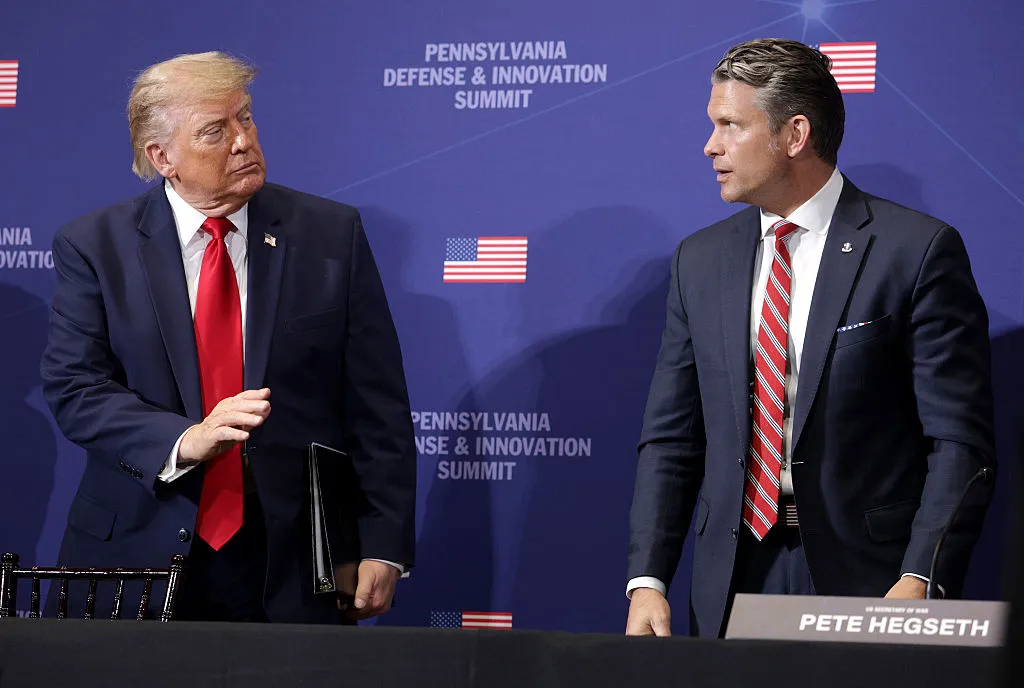
(SeaPRwire) -By: Gavin Thorne President Donald Trump and Defense Secretary Pete Hegseth during a summit at the U.S. Army War College in Carlisle, Pennsylvania, on July 15, 2026. —Alex Wong—Getty Images The Pentagon’s latest injury tally isn’t just a routine update on troop health. It’s a front line in the escalating battle between the Trump administration and Congress over war powers. Nearly 100 troops hurt in two weeks since Iran hostilities resumed, with 96% back to duty, is being framed by the Pentagon as a sign of military resilience. But Capitol Hill lawmakers see it as concrete proof that Trump’s unapproved escalation is putting service members in unnecessary, repeated danger. This isn’t just about casualty numbers – it’s about who gets to decide when the U.S. goes to war and how long it stays there. Since July 7, 2026, nearly 100 U.S. troops have suffered injuries, mostly minor concussions, according to Pentagon spokesperson Sean Parnell. The count came on the heels of three troop deaths in as many days. 1st Lt. Tyler James Feehan, Pvt. Isabella Gonzales, and Sgt. Michael Emmanuel Swinton were killed in Jordan and northern Iraq, victims of Iranian missile attacks and unexploded ordnance. Trump has called them great patriots and vowed that Iran will pay heavily for each American life lost. Since the initial U.S.-Israel strikes on Feb. 28, 447 troops have been injured total. The latest round of violence broke a brief cease-fire established by a June 17 Memorandum of Understanding. That agreement had extended a 60-day pause to allow for negotiations. But on July 7, Iran targeted vessels in the Strait of Hormuz, prompting Trump to declare the cease-fire over. Since then, the U.S. has launched 10 consecutive evening strikes against Tehran. It also reimposed a naval blockade on Iranian ports and Hormuz, a chokepoint carrying 20% of global oil production. Yemen’s Houthi rebels added to regional tensions Monday by declaring their own naval blockade of Saudi Arabia in the Bab el-Mandeb Strait. Senate Minority Leader Chuck Schumer was quick to renew calls for an immediate end to the war. He argued every second Trump prolongs the conflict puts more troops at risk. Senate Democrats plan to force Republicans into another vote to end the war and bring troops home. Last month, both the House and Senate passed War Powers Act resolutions aimed at restricting Trump’s ability to continue the war. California Democrat Sen. Adam Schiff filed a new War Powers Resolution last week to reign in the administration’s actions. Trump notified Congress on July 10 that the war had resumed, claiming this triggers a new 60-day window for military action without congressional approval. Democrats have rejected this interpretation outright and are pushing for a vote to counter it. Defense Secretary Pete Hegseth will face tough questions Tuesday when he testifies before the Senate Appropriations Committee. Maryland Sen. Chris Van Hollen, a committee member, says he’ll ask Hegseth to define the war’s purpose and outline a path to ending it. The hearing will also cover Trump’s supplemental funding request for the conflict. Unless Senate Republicans break ranks to support a new War Powers Resolution, Trump will extend his Iran war through the 60-day window, pushing regional oil markets into chaos and risking more troop deaths and injuries. Author bio: Gavin Thorne, an investigative journalist based in Washington, D.C., tracks legislative affairs and special interest influence on U.S. foreign policy.
More

The Negativity Bias Is Stealing Your Career: Why You Need a Brag Folder Now

(SeaPRwire) - By: Christian Pierce Your brain is lying to you. It is designed to spot threats, not celebrate wins. This evolutionary glitch leaves high achievers feeling empty despite their success. Most professionals hoard failures while discarding proof of competence. They wait for external validation that rarely arrives on time. The result is a quiet erosion of confidence. Impostor syndrome thrives in this silence. It whispers that you are not enough. This feeling is not a character flaw. It is a cognitive error. Psychologists call this the negativity bias. Our minds scan for danger and ignore safety. We remember the harsh feedback. We forget the praise. Adebisi Gbadamosi, a therapist in Deltona, Florida, sees this daily. High-achieving adults often struggle to identify their own value. They view their successes as routine tasks. This perspective distorts reality. It creates a gap between performance and perception. The gap widens when self-doubt creeps in. The solution is not positive thinking. It is evidence collection. Cindra Kamphoff, a performance psychologist in Minneapolis, uses a simple tool. She calls it a brag folder. It is a running record of wins. It includes small milestones. It captures kind words. It documents growth. Kamphoff developed this method while her father recovered from heart surgery. Her family posted one daily win on a hospital board. The notes ranged from getting a pillow to medical progress. The board changed the room’s atmosphere. Nurses noticed the shift in energy. The family focused on progress. They tackled hard things with more strength. This technique works outside hospitals too. Atalie Abramovici, a therapist in Los Angeles, links this to narrative therapy. Therapists use a concept called unique outcomes. Patients list experiences that contradict their negative stories. The goal is not ego inflation. The goal is balance. Your brain needs data to counter its default pessimism. A brag folder provides that data. It acts as a bank account for self-esteem. Every win is a deposit. You withdraw when doubt strikes. Confidence is built by recognizing progress. Chasing perfection builds nothing but exhaustion. Building this folder requires structure. Harvind Singh, CEO of a consulting engineering firm in Chicago, struggled until mid-career. Colleagues asked for an award submission list. She realized how much she had overlooked. Years of committee work vanished from memory. Board service faded away. Industry leadership seemed invisible. Humility does not mean ignoring achievement. Singing logs awards and client kudos. She also logs unceremonious wins. Being asked to join a board counts. Even declining the invitation matters. Personal milestones belong there too. Training for a marathon. Signing up for a solo trip. Finishing a knitting project. Writing an unpublished book. The effort remains valid. The format does not matter. Singh uses an Excel file. Tabs track career highlights. Other tabs hold testimonials. A legal pad works equally well. Some prefer bulletin boards. Others use iPhone Notes apps. The medium is secondary to the habit. The challenge is consistency. Motivation fades quickly. Singh sets a monthly reminder. The question is simple. Did you do anything worth adding? Without this prompt, you will forget. Memory is unreliable. Evidence is permanent. When should you open this folder? Dr. Linda Dolin, chief medical officer at the Sylvia Brafman Mental Health Center in Fort Lauderdale, has specific advice. Open it during vulnerability. Job loss triggers self-doubt. Breakups shake your foundation. Rough stretches at work amplify insecurity. Impostor syndrome attacks during these times. It feeds on vague feelings. "I'm not good enough" becomes your only truth. The brag folder offers concrete counter-evidence. It forces your brain to look at facts. It interrupts the negative spiral. This practice is not vanity. It is strategic self-preservation. You are correcting a biological blind spot. You are building a reservoir of proof. Use it when the world feels heavy. Use it when your inner critic gets loud. The wins you saved will speak for you. They will remind you of your capacity. They will restore your balance. Stop waiting for permission to feel proud. Start logging your proof today. Author bio: Christian Pierce, a chief financial columnist and markets commentator who analyzes the intersection of human psychology and professional performance in high-stakes industries.
More
Forget the “Age Is Inevitable” Myth: Here Are the Dementia Risks You Can Actually Fix Hot News

Forget the “Age Is Inevitable” Myth: Here Are the Dementia Risks You Can Actually Fix

(SeaPRwire) -By: Adrian Kingsley —DBenitostock—Getty Images Most primary care clinics still frame dementia as an unavoidable price of aging. They brush off mild memory slips in patients over 65 as normal. That’s a dangerous failure of public health education. By age 85, one in three people live with Alzheimer’s, per existing research. The latest global guidelines prove dementia isn’t a fate you have to accept. The World Health Organization released updated guidance in July 2026. They estimate addressing all modifiable risks could prevent 45% of global dementia cases. There are nearly 10 million new cases globally each year, per WHO data. The 2024 Lancet Commission on dementia prevention identified 14 such factors, with vascular issues leading. High LDL cholesterol, obesity, hypertension, inactivity, and Type 2 diabetes make up 14% of modifiable risk. These conditions are deeply interconnected. Obesity raises odds of high cholesterol and diabetes. Regular exercise lowers risk for all of them. A 2024 American Heart Association statement linked heart failure and atrial fibrillation to higher dementia risk. Few patients get coordinated care for both heart and brain health. The guidelines also highlight smoking, alcohol use, and social connection as critical. Smoking contributes 2% of modifiable dementia risk. Heavy alcohol use accounts for 1% of that risk. Social frailty, or limited ties with friends and family, raises dementia odds too. The commercial wellness industry has pushed expensive brain supplements instead of these low-cost, evidence-based changes. The 2025 POINTER trial showed combining lifestyle habits improved cognitive function in high-risk patients. Most insurance won’t cover lifestyle coaching for these practices. You don’t need a specialist appointment or costly supplements to lower your dementia risk. Start with 150 minutes of moderate exercise weekly. Quit smoking, and limit alcohol to recommended levels. Stay connected with your community and loved ones regularly. Author bio: Adrian Kingsley, a leading public administration scholar focused on preventive healthcare policy and community wellness programs.
More
Wall Street’s Rent Speculation Is Crumbling—Tenants Pay First, But Banks Are Next Hot News

Wall Street’s Rent Speculation Is Crumbling—Tenants Pay First, But Banks Are Next

(SeaPRwire) - By: Julian Kroon Wall Street’s bet on endless rent hikes is falling apart. Loans backing large apartment portfolios are delinquent at their highest rate in nearly a decade. More than half of the $100 billion in securitized commercial mortgages maturing in 2026 will fail to pay off. Tenants are the first to feel the pain—rent hikes, evictions, forced moves. But banks won’t be far behind. Apartment buildings are now financial assets. Investors borrow against future rent growth to buy them. The most aggressive rent projections let buyers borrow more and outbid others. Once they own the building, they have to hit those numbers. That means raising rents or pushing out low-income tenants. Loans are bundled into commercial mortgage-backed securities (CMBS) and sold to distant investors. Tenants become line items in a model to hit yield targets. In Dallas and Houston, 22% new construction since 2010 didn’t help lower-income renters—their share of housing stayed flat or dropped. The crisis isn’t just about supply. It’s about financial speculation. Black renters face eviction at double the rate of white tenants. Latinx renters are also disproportionately affected. Shelter costs make up 33% of the CPI, so rising rents keep inflation high. Federal regulators are easing capital rules even as stress builds. Cities and states must act. Rent stabilization is a key tool. It exempts new buildings, allows reasonable increases, and stops investors from betting on displacement. Without it, the next financial crisis could start in apartment buildings. Author bio: Julian Kroon, a veteran commercial land appraiser and mortgage-backed security risk modeler focused on real estate debt risks.
More
Trump Dug Up a 95-Year-Old Depression-Era Law to Hit Canada. What’s He Really After? Hot News

Trump Dug Up a 95-Year-Old Depression-Era Law to Hit Canada. What’s He Really After?

(SeaPRwire) - By: Gavin Thorne Most people miss the real story behind Trump’s new 50% tariff on Canada. This isn’t about fixing trade discrimination or leveling the playing field for American exporters. It isn’t even about anger over Canadian dairy or wine tariffs. This is a raw political power play, and it breaks almost 100 years of unwritten trade precedent. It also fixes a legal problem the Trump administration created earlier this year. In February, the Supreme Court struck down most of Trump’s earlier tariffs. The court ruled he lacked legal authority to use emergency powers for broad levies. The administration had to find a new legal route to impose tariffs on targeted nations. They dug up Section 338 of the 1930 Smoot-Hawley Tariff Act, the law that deepened the Great Depression. No past president has ever actually used this obscure statute to impose tariffs. The new tariffs cover $20 billion worth of Canadian imports, 5.2% of total 2025 US imports from Canada. Energy, potash, fish, and critical minerals are exempt from the new levies. Even goods covered under USMCA, the trade deal Trump signed six years ago, are not exempt. The US refused to renew the USMCA earlier this month, adding deep uncertainty to cross-border trade ties. Tariffs will go into effect on August 19, 30 days after Trump signed the proclamations. Canada’s Prime Minister Mark Carney says his country is ready to negotiate, and will take any needed steps to support Canadian workers. The biggest stakes here are domestic, not cross-border. Republicans face midterm elections this November. Trump’s approval rating on handling the US economy is already languishing. The new tariffs will push up prices for American consumers. This comes as the ongoing war in Iran is already driving higher inflation and eating into household budgets. Democrats have already panned the move as an absurd and harmful escalation. Legal challenges are all but guaranteed, just like the Supreme Court challenge that struck down Trump’s earlier tariffs. This entire move fits Trump’s long-standing playbook on trade. He has always used aggressive tariff threats to force last-minute concessions from trading partners. He even floated the idea of Canada becoming the 51st US state to eliminate tariffs earlier this year, an idea Ottawa rejected immediately. Multiple independent studies show American consumers end up bearing nearly all the economic cost of US import tariffs. Past rounds of Trump tariffs did not cut the US trade deficit or deliver broad sustained gains for American workers. This reckless use of a Depression-era law will hand Democrats full control of Congress after November’s midterms. Author bio: Gavin Thorne, investigative journalist covering Capitol special interests and legislative affairs based in Washington D.C., publishes a weekly independent newsletter.
More
The Postpartum Psychosis Surge: A Policy Failure in Plain Sight Hot News

The Postpartum Psychosis Surge: A Policy Failure in Plain Sight

(SeaPRwire) - By: Adrian Kingsley The clinical data is no longer a whisper; it's a siren. A practitioner reports that 6% of her postpartum patients in a recent eight-week stretch met criteria for a psychotic disorder. This is nearly six times the historical baseline of under 1%. The system's official posture is one of low incidence and managed risk. The subtext is a quiet, accelerating crisis. We have a documented 4% risk of infanticide and a 5% risk of suicide attached to this condition. A national study of over 12 million deliveries already confirmed diagnoses rose between 2016 and 2019. The official framework still primarily links it to bipolar disorder. The emerging reality, per landmark analysis, implicates a broader risk landscape including anxiety. Clinicians on the ground are seeing this shift in real-time. The official protocol waits for the six-week postpartum checkup. The subtext screams that this is catastrophically late, as two-thirds of perinatal mental-health conditions begin before birth. The policy announcement promotes awareness and cites successful programs like the Massachusetts Child Psychiatry Access Program for Moms. This program covers 72,000 annual deliveries and was noted in the 2022 White House Blueprint. It has been replicated in 29 states. The real social impact is measured in untreated mothers feeding bottles into their baby's ears, hallucinating from sleep deprivation used as torture. The policy suggests a village of support. The impact reveals an unequipped village. Pediatricians, doulas, and therapists—those who see mothers most in the high-risk first month—lack standardized tools and clear referral pathways. Families are "blindsided," as advocate Kriti Lodha states, because the system failed them. The policy discusses legislative action. The impact shows where it's needed most: moving towards decriminalization so the illness is treated as such, not a crime. The regulatory clauses are about building clinical capacity and launching awareness campaigns. The compliance cost is paid in human tragedy. We have the clinical infrastructure to act, as stated. The compliance failure is a profound lack of urgency. The cost is calculated in the widening gap between a 1% historical rate and a 6% observed rate in some practices. The regulatory framework assumes psychosis is a stable, visible state. Compliance is impossible when the condition waxes and wanes, allowing a mother to appear functional hour to hour while voices tell her to act and tell no one. The policy aims for prevention through early screening and sleep protection. The cost of non-compliance is that we only hear about it in the news, after the break. The governance structure for maternal health is fundamentally misaligned with the biological and psychological reality of the crisis. It is a patchwork of overdue awareness campaigns, under-equipped frontline observers, and legal frameworks that still criminalize a break from reality. The assertion is simple: our policy response is operating on last decade's epidemiology and last century's stigma. The system is configured to react to headlines. It is not built to prevent them. The restructuring required isn't just more funding for access programs, though that's needed. It's a hard integration of mental health protocol into every touchpoint—from family planning through pediatrics—governed by a mandate of proactive intervention, not tragic hindsight. The current governance logic is failing. The data is now arguing with it. Author bio: Adrian Kingsley, an internationally renowned scholar who has long studied public administration and social policy, focusing on the implementation gaps between health policy design and real-world clinical outcomes.
More
That “Free” Qatari Air Force One Gift Is Costing Taxpayers Far More Than Its $400M Sticker Price Hot News

That “Free” Qatari Air Force One Gift Is Costing Taxpayers Far More Than Its $400M Sticker Price

(SeaPRwire) -By: Gavin Thorne President Donald Trump speaks to reporters after stepping off Air Force One upon returning to Joint Base Andrews in Maryland on July 19, 2026. —Mandel Ngan—AFP/Getty Images That $400 million Boeing 747 Qatar gave Trump last year was never a “simple government-to-government” deal, no matter how many times Qatari officials or White House press staff repeat that line. We’re already seeing the first cracks in that lie play out publicly, from the secret mid-trip plane swap at the recent NATO summit to the DOJ subpoenas sent to New York Times reporters who broke the security flaw story. This isn’t just a minor ethics violation. It’s a national security fiasco playing out in broad daylight for anyone willing to look past the spin. The jet was formally accepted by the Pentagon last May, over repeated objections from federal ethics officials and even some Republicans in Congress. The Constitution’s Foreign Emoluments Clause explicitly bans federal officials from taking gifts from foreign governments without explicit congressional signoff. Trump claims the jet belongs to the U.S. Air Force, not him, but openly says it will be transferred to his personal presidential library once he leaves office. The White House initially claimed the plane was fully secured for presidential travel earlier this summer. Earlier this month, Trump switched from the new jet to the older Air Force One mid-trip home from the NATO summit held in Turkey. The New York Times first reported the swap was a Secret Service order tied to rising hostilities with Iran following the collapse of a recent ceasefire. Trump publicly claimed the unscheduled detour to RAF Mildenhall to switch planes was just to show the jet off to U.S. troops stationed there. He later admitted the flight was “dangerous” in an offhand comment about Iranian threats, directly contradicting his earlier statement. Two separate fights are playing out behind closed doors right now over the future of the jet. First, there’s the ongoing clash between the Secret Service and the White House communications team over how to spin the plane’s well-documented security gaps. Multiple major outlets have confirmed the new jet lacks critical anti-missile systems and full mobile command center capabilities the existing Air Force One fleet has. The Air Force initially claimed retrofits would cost less than $400 million, but independent security experts put the real number north of $1 billion. Second, there’s the growing backlash over the DOJ subpoenas sent to New York Times reporters who first broke the security flaw story. The move is widely seen as a clear warning to other media outlets not to dig deeper into the jet’s origins or unpublicized security gaps. Government watchdog groups are already filing multiple lawsuits to get access to redacted records of the gift acceptance process and the full retrofit contract with L3Harris Technologies. The White House has repeatedly refused to release any details of what the upcoming month-long fall upgrades will include. By the time all required retrofits are complete, this “free” jet will end up costing U.S. taxpayers more than twice the original sticker price of the aircraft itself. Author bio: Gavin Thorne, an investigative journalist tracking special interests and legislative affairs based in Washington, D.C.
More
‘I’m In’: Darline Nordone’s Senate Bid—Trump’s Stamp, Lindsey’s Legacy, and the SC GOP Primary Firestorm Hot News

‘I’m In’: Darline Nordone’s Senate Bid—Trump’s Stamp, Lindsey’s Legacy, and the SC GOP Primary Firestorm

(SeaPRwire) - By: Gavin Thorne Darline Graham Nordone’s decision to run for a full Senate term isn’t just a nod to her late brother Lindsey. It’s a litmus test for Donald Trump’s hold on South Carolina’s Republican Party. She has no elected experience, but her quick pivot from temp appointee to candidate shows the power of Trump’s early endorsement. Voters will have to choose between legacy loyalty and fresh faces in the August 11 primary. Lindsey Graham died of an aortic dissection last week, per DC’s medical examiner. Days later, South Carolina Gov. Henry McMaster appointed Nordone to finish his term, which ends in January. Trump had recommended her for the temp role earlier that day. She called the appointment a “privilege” and pledged to carry Lindsey’s work forward. On Monday, Nordone told Sean Hannity she’s running for a full term. “I’m in,” she said. Trump had already given her his “Complete and Total Endorsement” on Truth Social Friday. He urged her to run, saying no one could better honor Lindsey’s legacy. Arkansas Sen. Tom Cotton quickly backed her too, calling her a “principled conservative.” The filing window for the special GOP primary opens Tuesday and closes July 28. Rep. Russell Fry and businessman Mark Lynch are already in the race. Nordone’s lack of experience could be a liability, but Trump’s endorsement might overshadow that. Primary voters often prioritize loyalty to the former president over resume depth. Nordone’s background in disabilities services could resonate with some voters. But the primary will likely hinge on name recognition and Trump’s influence. Her campaign will need to balance honoring Lindsey’s legacy with forging her own identity. She’ll have to prove she’s more than just a stand-in for her brother or a Trump loyalist. Nordone’s success in the primary will depend entirely on whether Trump’s base turns out in force to support her on August 11. Author bio: Gavin Thorne, an investigative journalist in Washington, D.C., tracking special interests and legislative affairs for independent outlets.
More
Three Fallen Troops, a Broken Cease-Fire, and Congress’s Desperate Bid to Reel in Trump’s Unchecked Iran War Hot News

Three Fallen Troops, a Broken Cease-Fire, and Congress’s Desperate Bid to Reel in Trump’s Unchecked Iran War

(SeaPRwire) -By: Gavin Thorne A U.S. flag flies next to a soldier during a ceremony in Wiesbaden, Hesse, on July 2, 2026. —Hannes P. Albert—Getty Images The three U.S. service members killed in Iran-related strikes aren’t just a gut-wrenching tragedy. They’re the spark that’s reignited Congress’s fight to wrest control of war powers from a president who’s ignored legislative pushback for months. For Democrats, this isn’t about partisan politics—it’s about stopping a conflict most Americans already reject. The deaths have turned quiet frustration into urgent action, forcing lawmakers to confront the gap between White House rhetoric and the human cost of endless tit-for-tat strikes. The timeline of this renewed chaos is stark. On Feb. 28, the U.S. and Israel launched initial strikes against Iran, kicking off a war that’s now claimed 17 American military lives. A 60-day cease-fire was signed June 17, giving negotiators room to talk. But on July 8, after Iranian strikes targeted vessels in the Strait of Hormuz, Trump declared the interim agreement “over.” What followed was a string of retaliatory attacks that left three troops dead in 48 hours. Two of those troops died July 17 at Jordan’s Muwaffaq Salti Air Base, defending against Iranian ballistic missiles and drones. The third was killed July 18 in northern Iraq, during a controlled detonation of unexploded ordnance from a downed Iranian drone. The Pentagon identified the fallen as 25-year-old 1st Lt. Tyler James Feehan of Hawaii and 19-year-old Pvt. Isabella Gonzales of Texas. Meanwhile, Trump paid tribute to the troops on July 20, linking the ninth consecutive U.S. strike on Iran to their memory. Democratic lawmakers didn’t wait for these latest deaths to act. When Trump notified Congress the war had resumed July 10, they blocked an annual defense policy bill in protest. Now, they’re doubling down. House Minority Leader Hakeem Jeffries called the war a “reckless and costly disaster.” Rep. Suzanne Bonamici and Sen. Chris Van Hollen echoed calls for an immediate end. Sen. Adam Schiff filed a new War Powers Resolution last week, aiming to restrict Trump’s ability to continue the conflict. Public opinion is on their side. An Economist/YouGov poll from July 10-14 found 57% of American adults believe the decision to go to war was wrong. Both the House and Senate passed War Powers resolutions last month, but those measures haven’t slowed the strikes. Sen. Chris Murphy warned the scale of attacks is escalating rapidly, claiming Trump has “frighteningly lost control.” Rep. Ted Lieu is now urging Republicans to cross party lines and support the latest resolution. If congressional Republicans refuse to break ranks, the Iran war will drag on, with more American troops paying the ultimate price and regional instability deepening by the day. Author bio: Gavin Thorne, an investigative journalist based in Washington, D.C., tracks special interests and legislative affairs for independent outlets.
More

Your Local Pool Is Way Grosser Than You Think: The Mistakes That Make You Sick

(SeaPRwire) - By: Adrian Kingsley Most people think a dip in a chlorinated pool is a safe summer activity. This common assumption hides a messy truth. Bad routine hygiene habits turn a cool retreat into a pathogen breeding ground. Public health experts have documented these risks for years. We rarely talk about how small, unthinking choices put every swimmer at risk. This isn't a call to avoid pools entirely. It's a call to fix the habits you don't even know are wrong. The most common mistake is trusting chlorine to kill everything instantly. Chlorine is an effective disinfectant, but it is not all-powerful. Ordinary bacteria die in less than a minute of direct contact with chlorine. A waterborne hepatitis virus needs 15 minutes to be killed. Cryptosporidium, the single most common cause of U.S. pool outbreaks, can live 10 days in chlorinated water. Pool operators need 20 times the standard chlorine dose to kill this bug. Even that dose takes hours to work. Most pools only have one part chlorine per million parts water. Hand sanitizer is 60% alcohol, for comparison. Rinsing dirty hands in the pool just adds more pathogens to shared water. Almost no one takes 30 seconds to rinse off before getting in the pool. A quick pre-swim shower washes off sweat, sunscreen, body oils and trace bathroom waste. That keeps all that gunk out of the shared water. A post-swim rinse washes away stray pathogens and excess chlorine that dries skin and hair. Getting in the pool with a large open wound or fresh surgical site raises your infection risk. Chlorine cuts this risk but never brings it down to zero. If you must swim with an open wound, seal it with a waterproof dressing like Tegaderm. Change the dressing immediately after you get out of the water. Most people never actually wash their feet before swimming. Feet are one of the highest bacteria zones on the human body. Pseudomonas, the bacteria that causes swimmer's ear, lives on unwashed feet and thrives in under-sanitized pools. Peeing in the pool isn't just gross. It reacts with chlorine to use up the disinfectant meant to kill germs. It creates chloramine, the strong "pool smell" most people mistake for cleanliness. Lounging all afternoon in a wet bathing suit creates the warm, dark, damp environment microbes love. Waterlogged skin is more permeable, so pathogens can easily set up camp. Even your bathing suit isn't clean just from sitting in pool water. It still holds your skin cells, body oils, sunscreen and any germs floating in the pool. You should wash it after every use, just like you wash your underwear. Most public pool hygiene regulations place too much responsibility on operators and not enough on individual swimmer education. Author bio: Adrian Kingsley, internationally renowned scholar of public administration and public health policy.
More
The Unbearable Cost of Digital Silence: When Encryption Becomes an Accomplice Hot News

The Unbearable Cost of Digital Silence: When Encryption Becomes an Accomplice

(SeaPRwire) - By: Oliver HawthorneThe digital age promised connection, efficiency, and, crucially, privacy. Yet, the very architecture designed to shield our most sensitive communications now stands implicated in a horror almost unimaginable: the livestreamed sexual abuse of children. This isn't a fringe issue confined to the dark web. It's unfolding on the same ubiquitous chat applications we use daily, forcing a brutal reckoning for the tech industry. The core contradiction is stark: how much digital confidentiality can society afford when it directly facilitates the systemic exploitation of millions of the most vulnerable? The industry's anxiety is palpable, caught between its foundational commitment to user privacy and an escalating moral and legal imperative to protect children.Consider Teresita, a name changed to protect her identity, whose story lays bare this grim reality. Growing up north of Manila, she found herself, at just 13, coerced by her stepsister into performing livestreamed sex acts four times a day for paying customers. These transmissions, she recounts, occurred over regular chat apps, shielded by end-to-end encryption (E2EE). This technology, intended to secure private conversations, became the very mechanism for her abuse, hiding it from any external scrutiny. Teresita was eventually rescued in 2021 by a Philippine National Police raid, but her experience is far from isolated. A 2022 study by the International Justice Mission (IJM) NGO and the University of Nottingham Rights Lab revealed nearly half a million Filipino children were sexually exploited in livestreams that year alone. The average age of these victims is a shocking eight years old. Martin Conley, national program manager for Homeland Security Investigations (HSI), calls this "probably the largest emerging form of child abuse and exploitation." He emphasizes that it doesn't happen in obscure corners of the internet, but on platforms like WhatsApp, Zoom, and Telegram, all leveraging E2EE. This technology, while vital for journalists, dissidents, and businesses, simultaneously provides an impenetrable cloak for criminals. The debate over tech platforms' responsibility has intensified, with recent verdicts in California and New Mexico finding Meta liable for harm inflicted on young people. Senator Dick Durbin, co-sponsor of the bipartisan STOP CSAM Act, awaiting a full Senate vote, states plainly that "Big Tech consistently prioritizes profits over people." Google, for its part, highlights its use of hash-matching on stored content and reporting to NCMEC, but Senator Risa Hontiveros of the Philippines argues for "safety built into their platforms by design, like proactive detection, especially for live-streamed content."The commercial loop here is tightening, forcing tech giants to confront their role beyond mere content moderation. The ultimate industry end-game is no longer about whether to act, but how. New AI tools offer a glimmer of hope, promising real-time detection of abuse even within E2EE environments, theoretically without creating "backdoors" for mass surveillance. Yet, privacy activists remain wary, fearing any system built for one purpose could be expanded for another. This tension defines the current landscape. Platforms face increasing legal liability, as seen with Meta, and the looming threat of legislation like the STOP CSAM Act, which would allow victims to sue. The cost of inaction—both financial and reputational—is becoming prohibitive. The industry must move beyond reactive takedowns. It must embed proactive safety measures into its core design. The question is no longer if society is willing to trade some privacy for child protection, but how tech companies will finally engineer that balance, or be forced to.Author bio: Oliver Hawthorne, a Principal Correspondent permanently stationed at an international technology review, covers the intersection of emerging technologies, policy, and societal impact.
More
The 2024 Democratic Loss Was Written in Blood on the Southern Border – And Both Parties Let It Happen Hot News

The 2024 Democratic Loss Was Written in Blood on the Southern Border – And Both Parties Let It Happen

(SeaPRwire) -By: Gavin Thorne Border wall between Ciudad Juarez and New Mexico on April 22, 2026. —Christian Torres—Anadolu/Getty Images No one on Capitol Hill will say this out loud. The US immigration system is not broken by accident. It’s a deliberate political asset for both major parties. The 56 Guatemalan migrants who died in that 2021 trailer crash in southern Mexico are not collateral damage. They are the predictable outcome of decades of intentional inaction that lets politicians score points instead of solving problems. Voters deserve to know their elected officials are choosing this chaos for electoral gain. On December 9, 2021, the then-US Ambassador to Mexico got an urgent alert from his Mexican counterpart. The alert referenced a fatal truck crash in Tuxtla Gutiérrez, 140 miles north of the Mexico-Guatemala border. The truck carried more than 160 Guatemalan migrants, each paying smugglers known as coyotes $15,000 to be stuffed into the trailer for days. 56 people died in the crash, and over 100 suffered serious injuries that required immediate cross-national coordination to address. A few days after the crash, the ambassador flew to the city and visited the local ICU. He met a young mother named Vanessa, who suffered severe head trauma in the wreck. Her toddler son Damián was miraculously unharmed. The pair were traveling to Wisconsin to meet Vanessa’s husband, who worked on a dairy farm there. She had not seen him in years, and Damián had never met his father. Last week in Houston, ICE officers shot and killed 52-year-old Lorenzo Salgado Araujo, a construction business owner who lived in the US for 3 decades and was father to three US citizens, even though he was not the operation’s target. Both parties bear equal blame for this state of affairs. Republicans have spent decades weaponizing the border to stoke voter fear and turn out their base. A broken border delivers easy campaign ads and energizes their core voting bloc. Democrats have lacked the political courage to push for meaningful reform, ceding all ground on the issue to their rivals. The 2000-mile US-Mexico border has become the third rail of American politics, with almost no elected official willing to touch it for fear of ending their career. The former ambassador warned Democratic leadership repeatedly that inaction on immigration would cost them the 2024 election, and his prediction came true. He has proposed a New American Alliance, coordinating the US, Mexico and Canada on migration and economic policy to turn the border into an opportunity, not a crisis. He has pitched the plan to prospective 2028 Democratic candidates, and says he will speak to Republican and independent candidates looking for solutions as well. Any 2028 presidential candidate who refuses to back concrete, bipartisan immigration reform will lose the general election by at least 7 points. Author bio: Gavin Thorne, an investigative journalist tracking special interests and legislative affairs based in Washington, D.C.
More
Extradition as Theater: The Tate Brothers and the Geopolitical Pendulum Hot News

Extradition as Theater: The Tate Brothers and the Geopolitical Pendulum

(SeaPRwire) - By: Julian Holbrooke The arrest in Miami was not merely a law enforcement action. It was a theatrical event designed for the global cameras. Two brothers stand at the center of a massive storm. They claim innocence with absolute certainty and conviction. The state claims otherwise with equal legal force. The location matters immensely in this modern narrative. Miami is a hub for the ultra-wealthy elite. It is also ground zero for the new political right. The U.S. Marshals Service moved on a sealed warrant. This secrecy suggests high stakes and sensitive information flow. The Tates hold dual citizenship in Britain and America. They moved to Romania in 2016 to build their brand. They built an empire on controversy and flashy wealth. Now the empire faces a coordinated legal siege. The presence of President Trump at the UFC nearby is noted. He attended the event on April 11, 2026. It adds a layer of political texture to the moment. This is not just about traditional criminal acts. It is about cultural influence and raw power. The "manosphere" finds its avatar in the federal court. The state finds its challenge in the digital influencer. The clash between them is now inevitable and public. The global audience watches from their screens daily. The outcome will define legal boundaries for the industry. The spectacle is just the opening act of the saga. The real war is fought in the legal archives. The supporters in the American right are mobilizing. They view the brothers as warriors for their cause. The Crown Prosecution Service released a formal statement on Sunday. It details thirty-eight new charges against the brothers. Andrew Tate faces seven counts of rape specifically. He faces three counts of arranging trafficking. He faces three counts of assault occasioning bodily harm. He faces nineteen charges for indecent images. Tristan Tate faces one count of sexual assault. He faces two counts of rape specifically. He faces three counts of arranging trafficking. The total reaches fifty-nine charges in the U.K. The offenses span July 2010 to August 2017. Four alleged victims are named in the police reports. The text lists rape and human trafficking clearly. The subtext involves a pattern of alleged predatory behavior. Police officials speak of male violence against women. They promise to support victims tirelessly in court. The lawyer Joseph McBride calls it a political hit. He claims a dying empire orders the arrest. The facts remain in the dry legal documents. The interpretation remains in the court of public opinion. The charges include extreme pornography and assault. The list is exhaustive and deeply serious for them. The defense calls it fabrication and political persecution. The prosecution calls it evidence and justice. The timeline covers their early influencer years. It covers their wealth accumulation and rapid rise. The legal net is wide and tightening around them. The legal fight will be long and expensive. Bedfordshire Police assistant chief constable Karena Thomas issued a statement. She emphasized there is no place for violence. Hertfordshire Constabulary investigated other alleged offenses jointly. The two forces are working together on this case. The Romanian case from 2022 remains active too. That case involves human trafficking charges as well. The legal web is complex and international. The extradition decision rests with Secretary of State Marco Rubio. He holds the final key to their custody. The U.S. and U.K. share a specific treaty. It was signed in 2003 between the nations. It took full effect in 2007 for cases. A U.S. judge will certify the request first. Then Rubio decides on the surrender of the men. The Tates express confidence in a denial of the request. McBride says America does not do dirty political work. The Trump connection complicates the political calculus significantly. Donald Trump Jr. called their Romanian detention absolute insanity. Reports link Andrew Tate to Trump family members closely. The New York Times reported on Barron Trump connections. A Tate lawyer dismissed the Barron link as fake news. The White House denies knowing anything about the case. Romania lifted the travel ban in February 2025. This allowed their return to the U.S. territory. A Trump Administration official expressed interest in the case. The Romanian foreign minister denied pressure was applied. Florida AG James Uthmeier ordered a separate criminal investigation. That probe remains ongoing as of Saturday. The legal landscape is fragmented across three nations. The political landscape is aligned with the right. The brothers have supporters inside the administration. They have enemies in the foreign courts. The treaty is the legal mechanism for transfer. The politics is the fuel for the delay. Extradition is rarely neutral or purely legal. It is always a negotiation of leverage. The leverage shifts with every election cycle. In 2020 the U.S. refused a British request. That case involved a car accident killing a teenager. The State Department cited diplomatic immunity for that refusal. Lawyer Ben Keith sees a political challenge ahead. He predicts delays of months in the courts. The process is much more political in the U.S. The process will not be swift or simple. Lawyers will file motions to dismiss the charges. Courts will schedule hearings for weeks to come. Months will turn into years of litigation. The Tates will walk free for now. They will fight in federal court in Miami. The geopolitical pendulum swings on legal precedent. This case tests the treaty's actual strength. It tests the political will of the administration. If the U.K. succeeds, it sets a global standard. If the U.S. refuses, it signals a new immunity. The influencer class watches this outcome closely. Their freedom depends on this specific ruling. The state asserts its authority over digital citizens. The individual asserts their rights against the state. The balance is fragile and easily tipped. The verdict will ripple through the tech industry. It will ripple through the Atlantic alliance. The cage in Miami is just the beginning. The real judgment happens in the halls of power. The pendulum has started to move slowly. The direction is not yet clear to see. The Tates will claim victory regardless of the wait. The state will claim justice eventually. The world will watch the final vote. The commercial loop of the manosphere depends on it. The political capital of the right depends on it. The legal system must find its footing. The result will define the next decade. The treaty stands or falls here. The alliance stands or falls here. The truth will emerge from the mud. The lies will fade into history. The court records will speak first. The politicians will speak second. The public will decide last. Author bio: Julian Holbrooke, an overseas international relations analyst who frequently contributes to major European daily newspapers.
More